




Definition & Meaning
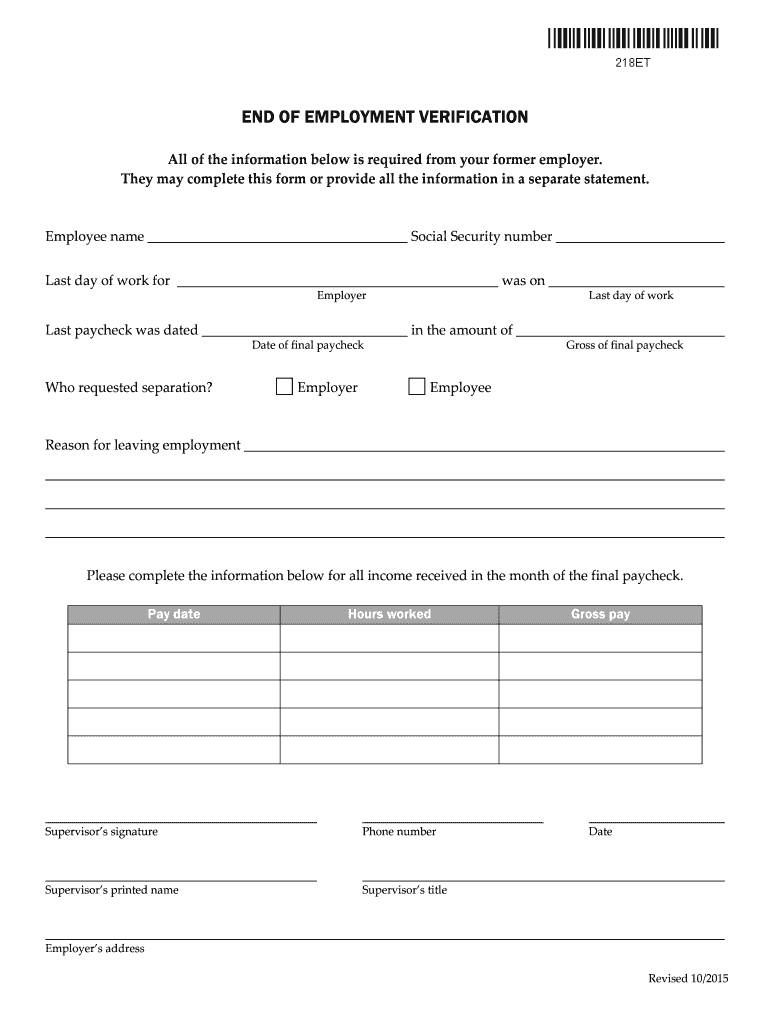
The "End of Employment Verification - dcfvermontgov" is a specific form used to confirm details related to an individual's departure from employment. It typically includes information such as the employee's last date of work, the reason for their separation, and final paycheck details. This verification is crucial for validating employment history and can be necessary for various legal, financial, or administrative purposes. The form might be particularly relevant for former employees needing to secure benefits or new employment opportunities.
How to Use the END OF EMPLOYMENT VERIFICATION - dcfvermontgov
- Obtain the Form: The form can be obtained from the Vermont Department for Children and Families or accessed through relevant online portals.
- Gather Required Information: Before completing the form, collect necessary details such as the employee’s last working day and reason for leaving.
- Complete the Form: Fill in all required sections accurately, including personal details, employment terms, and financial information.
- Sign and Authenticate: Include signatures from both the employer and supervisor to verify the information provided.
- Submit: Once completed, submit the form to the appropriate office or recipient as instructed, ensuring all information is complete and correct.
Steps to Complete the END OF EMPLOYMENT VERIFICATION - dcfvermontgov
- Employee Information: Begin by providing the employee's full name, social security number, and contact details.
- Employment Details: Indicate the position held, employment start date, and end date.
- Financial Information: Record the employee’s final paycheck amount, including any outstanding payments or benefits.
- Reason for Leaving: Check the appropriate box or provide a detailed explanation for the employee’s departure from the company.
- Signatures: Secure signatures from the relevant supervisor and employer official, verifying that all information provided is truthful and accurate.
Who Typically Uses the END OF EMPLOYMENT VERIFICATION - dcfvermontgov
This form is primarily used by former employees, employers, and government agencies. Former employees might use it to apply for unemployment benefits or new job positions, requiring validation of previous job roles and service duration. Employers utilize it to provide official documentation of employment details, ensuring transparency and accuracy. Government agencies, such as those providing unemployment benefits, require this form to verify claims of unemployment and calculate potential benefits.

Key Elements of the END OF EMPLOYMENT VERIFICATION - dcfvermontgov
- Employee and Employer Information: Clear identification of both parties involved.
- Employment Dates: Specific start and end dates for record accuracy.
- Final Pay Details: Itemized breakdown of the last payment, including outstanding dues.
- Reason for Termination: Defined cause of employment cessation, aiding legal and administrative understanding.
Required Documents
To complete the "End of Employment Verification," you will need to provide:
- The original employment agreement or contract (if applicable).
- Recent pay stubs to verify financial arrangements and final payments.
- Identification documents for both the employee and employer representatives.
- Any previous correspondence related to the employment termination, including resignation letters or dismissal notices.
Form Submission Methods (Online / Mail / In-Person)
- Online: Access and fill out the form through designated online government portals, ensuring to follow digital submission guidelines.
- Mail: Send a completed physical copy of the form to the specified address indicated by the issuing authority.
- In-Person: Some organizations may allow in-person submission at designated office locations, offering an opportunity for immediate feedback or correction if required.
Penalties for Non-Compliance
Failing to submit the "End of Employment Verification" when required can result in significant consequences:
- Delays in Benefits: Incomplete verification can delay unemployment or other benefit claims for the former employee.
- Fines or Legal Action: Employers may face legal ramifications or penalties for not providing accurate or timely verification, as per regulatory requirements.
- Reputational Damage: Non-compliance might impact the employer's reputation, affecting future dealings with governmental agencies and potential employees.
State-Specific Rules for the END OF EMPLOYMENT VERIFICATION - dcfvermontgov
Regulations can vary across states:
- Vermont: Specific adherence to state guidelines as prescribed by the Vermont Department for Children and Families, including detailed reporting on financial compensation and reasons for departure.
- Cross-State Employment: If employment extends beyond Vermont, additional documentation may be required to satisfy rules of other jurisdictions.
Understanding the unique stipulations in Vermont ensures compliance and accurate processing of the "End of Employment Verification."


