







Definition and Meaning
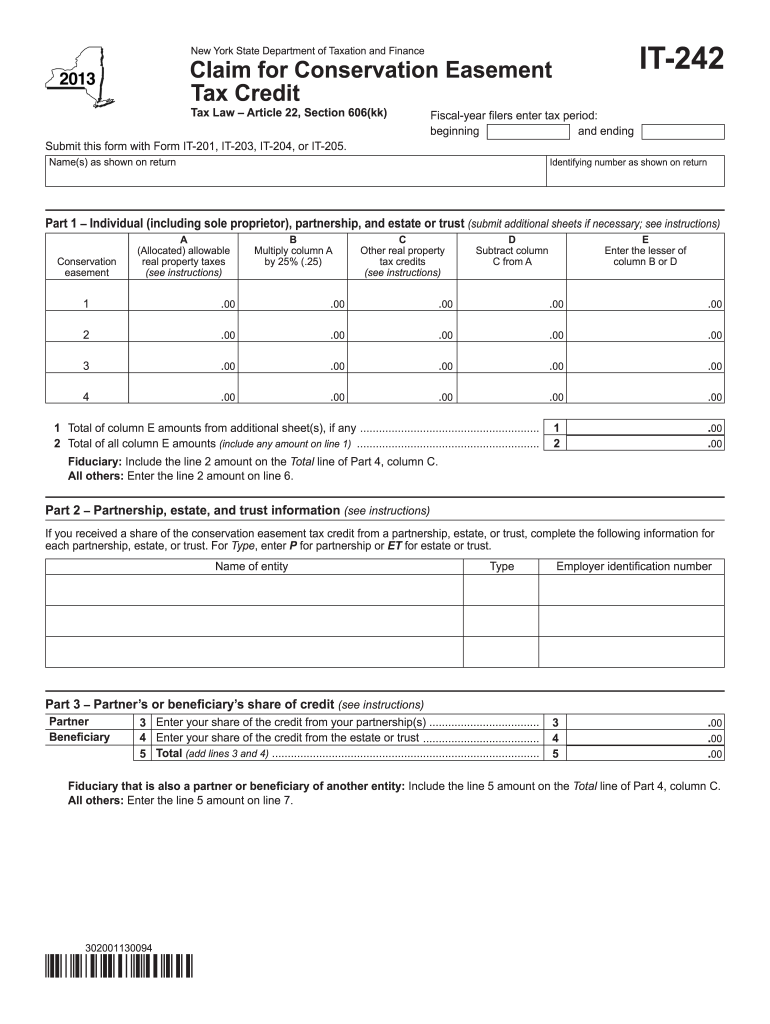
Form IT-242:2013, known as the Claim for Conservation Easement Tax Credit, is a crucial document used primarily by residents of New York State. It facilitates the claiming of tax credits associated with conservation easements, aligning with Article 22, Section 606(kk) of the tax law. Conservation easements involve legal agreements where a landowner voluntarily limits the use of their land to protect its conservation value. Understanding the specifics of this form is essential for taxpayers who participate in land conservation efforts and wish to benefit from accompanying tax credits.
How to Use Form IT-242:2013
To effectively utilize Form IT-242:2013, individuals must input all required data accurately. Begin by detailing your total allowable conservation easement credit. Taxpayers should be prepared to report real property taxes paid on the land involved in the conservation easement, along with any shares of credits received from partnerships or estates. Precise documentation ensures proper calculation of the tax credit and facilitates a smoother filing process. Consult the detailed instructions provided with the form for guidance on each section to avoid errors and ensure compliance.
Steps to Complete Form IT-242:2013
- Gather Necessary Documents: Collect all relevant documents, including property tax bills and any shares of credits from partnerships or estates.
- Calculate Real Property Taxes: Accurately calculate the real property taxes paid on the conservation easement property.
- Record Easement Details: Provide comprehensive information about the conservation easement, documenting its scope and purpose.
- Report Credit Shares: If applicable, note any conservation easement tax credits received through partnerships or estates.
- Review and Verify: Double-check all inputs for accuracy to prevent discrepancies that could delay processing.
Eligibility Criteria
The primary eligibility for using Form IT-242:2013 hinges on ownership of land with a qualifying conservation easement in New York State. Eligible owners can be individuals, partnerships, estates, or trusts. Because tax laws are subject to adjustments, review the latest requirements from the New York State Department of Taxation and Finance to ensure compliance. Ensure the conservation easement aligns with state standards and is correctly documented to qualify for the tax credit.


Key Elements of the Form
- Taxpayer Identification: Includes information such as the taxpayer's name and identification number.
- Real Property Taxes: Details concerning the calculation of taxes paid on the conserved land.
- Credit Calculation Section: Calculate the allowable credits specific to conservation easements.
- Certification: A signed declaration verifying the accuracy and honesty of the information provided.
Important Terms Related to Form IT-242:2013
- Conservation Easement: A legally binding agreement that permanently limits uses of the land to protect its conservation value.
- Tax Credit: A reduction of taxes owed, directly deducted from total tax liability, related to conservation activities.
- Real Property Tax: Taxes assessed on immovable property, such as land and buildings.
Application Process and Approval Time
Applying for the conservation easement tax credit using Form IT-242:2013 involves a straightforward procedure but requires diligence in completing sections accurately. After submission, the approval timeline depends on the New York State Department of Taxation and Finance's processing speed. While not strictly defined, receipt confirmations or requests for additional information typically occur within weeks.
Filing Deadlines and Important Dates
Form IT-242:2013 should be filed in conjunction with the taxpayer's annual state income tax return. Adherence to the filing deadline for state taxes is critical, generally aligning with the federal tax filing date in April. Late filings could result in penalties or loss of the credit for that tax year. Stay informed about any state announcements regarding deadline extensions or protocol changes, especially due to extraordinary circumstances.
Required Documents
When preparing Form IT-242:2013, several supporting documents are typically required:
- Documentation of the Conservation Easement: Legal agreement evidencing the easement.
- Real Property Tax Receipts: Proving taxes paid on the easement property.
- Partnership Credit Statements: If involved in partnerships, documents detailing shared tax credits.
Retain copies of all submitted documents to address any inquiries or audits from the tax authorities.




