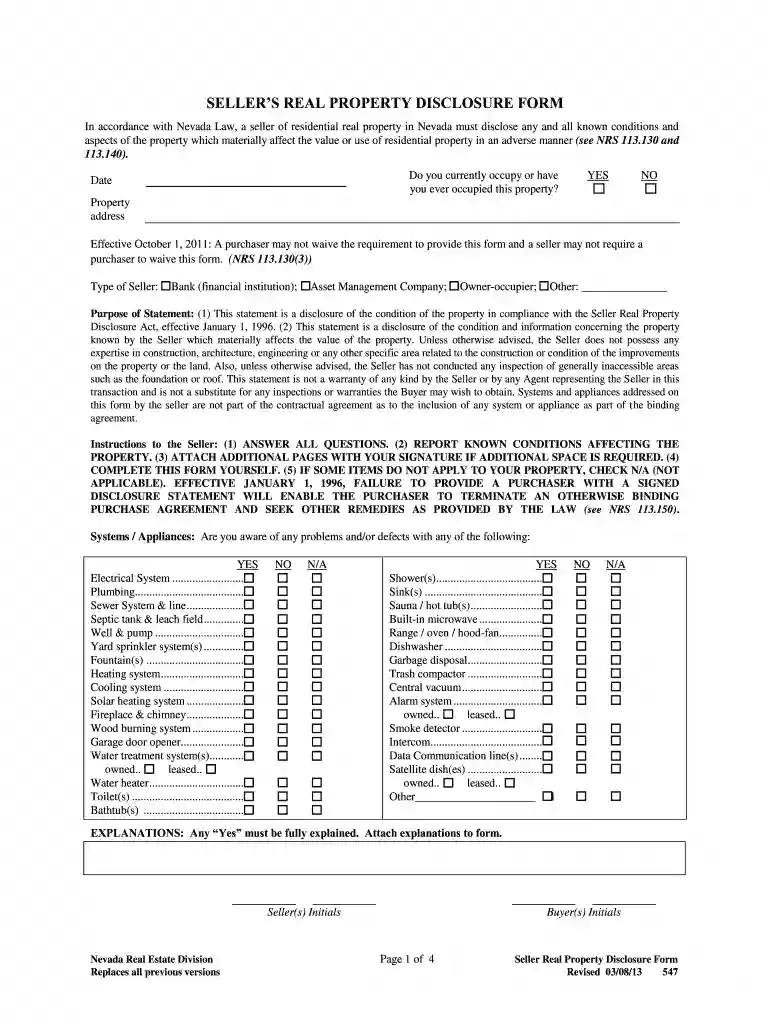
Seller's Real Property Disclosure Form 2026

Get Form
Seller's Real Property Disclosure Form Preview on Page 1

Here's how it works

01. Edit your form online
Type text, add images, blackout confidential details, add comments, highlights and more.

02. Sign it in a few clicks
Draw your signature, type it, upload its image, or use your mobile device as a signature pad.

03. Share your form with others
Send it via email, link, or fax. You can also download it, export it or print it out.

Definition & Meaning

The Seller's Real Property Disclosure Form is a key document used in real estate transactions, primarily within the United States, to provide transparency regarding the condition of a property being sold. This disclosure form mandates that sellers disclose known defects or issues that could impact the property's value or usability. Unlike a warranty, it does not guarantee the property's condition but serves to inform potential buyers, allowing them to make educated purchasing decisions.

  • It includes details about structural integrity, the presence of pests, environmental issues, and any legal encumbrances on the property.
  • The form is essential for buyer protection, reducing the likelihood of post-purchase disputes.
  • It aids in meeting legal compliance, as many states have specific legislations requiring such disclosures.

How to Use the Seller's Real Property Disclosure Form

Using the Seller's Real Property Disclosure Form involves several steps to ensure it is filled out correctly and comprehensively.

  1. Review the Form: Start by thoroughly reading through the form to understand all sections and requirements.

  2. Gather Information: Compile all necessary information about your property’s condition, including past repairs, ongoing maintenance issues, and existing warranties.

  3. Complete the Form: Fill out each section of the form with accurate and honest details. Be transparent about any known issues, such as leaks, foundation problems, or mold.

  4. Seek Clarification: If unclear about any part of the form, consult with a real estate attorney to ensure all statements are correct and legally sound.

  • Complete the form with factual information to avoid potential legal implications or disputes after the sale.
  • Ensure that any included details are supported with documentation, like repair receipts or inspection reports.

Steps to Complete the Seller's Real Property Disclosure Form

Filling out the Seller's Real Property Disclosure Form correctly is crucial. Here’s a step-by-step guide:

  1. Basic Information: Start with the general information section, including the property address and the seller's details.

  2. Property Condition: Document all known issues with the property. Sections generally include plumbing, electrical, structural, and environmental concerns.

  3. Enhancements and Repairs: List any major upgrades or repairs undertaken, specifying the dates and contractors involved.

  4. Additional Disclosures: Note any unusual property features, such as shared driveways or encroachments.

  5. Review and Sign: After entering all details, thoroughly review the form for completeness and accuracy. Sign the form to validate the information provided.

  • Maintain a copy of the completed form for your records and provide one to the buyer as part of the sale documentation.
  • Ensure transparency and honesty to protect yourself from legal action once the property is sold.

Key Elements of the Seller's Real Property Disclosure Form

Understanding the significant elements of the Seller's Real Property Disclosure Form helps ensure comprehensive and accurate completion.

  • Structural Information: Describes physical aspects of the property such as foundation integrity, roof condition, and construction materials.
  • Utilities and Systems: Covers heating and cooling systems, plumbing, and electrical work.
  • Hazardous Conditions: Includes disclosures of known environmental hazards like asbestos, lead paint, or radon.

Importance of Accuracy

Accuracy in these elements:

  • Protects against future legal repercussions from misrepresentation.
  • Ensures that both parties have a clear understanding of the property’s condition.

State-specific Rules for the Seller's Real Property Disclosure Form

The requirements for the Seller's Real Property Disclosure Form can vary significantly depending on the state. States like California and Nevada have strict disclosure laws to protect buyers.

  • Nevada: Requires sellers to provide a filled-out disclosure form to prospective buyers detailing specific property concerns.
  • California: Enforces comprehensive disclosure laws requiring sellers to reveal both visible and latent defects.

Example Scenarios

  • California: Sellers must disclose any death on the property within the last three years.
  • Nevada: The omission of known material defects may allow for rescindment of the purchase agreement by the buyer.

Examples of Using the Seller's Real Property Disclosure Form

Real-world application of disclosure forms is vital for understanding its implications.

  • Transaction Security: A Nevada resident selling residential real estate must disclose recent roof repairs and a known plumbing problem.

  • Legal Compliance: Failing to disclose termite damage could result in a lawsuit from the buyer for breach of contract.

  • These examples underscore the form’s role in ensuring transparency and fostering trust between buyers and sellers.

Legal Use of the Seller's Real Property Disclosure Form

The legal weight of the Seller's Real Property Disclosure Form can influence the outcome of property disputes.

  1. Documentation: Ensures that any known issues are documented and disseminated to all parties involved.

  2. Legal Protection: Acts as a legal shield for sellers if they’ve disclosed all known facts, thus limiting liability.

Legal Recommendations

  • Engage legal counsel to navigate complex disclosure laws, particularly in states with unique prerequisites or stricter compliance standards.
  • Regular updates to the form might be necessary as new information about the property becomes available.

Penalties for Non-Compliance

Non-compliance with Seller's Real Property Disclosure Form requirements can lead to severe penalties.

  • Financial Penalties: States may impose fines or require the seller to compensate the buyer for repair costs.
  • Rescission of Sale: Buyers may be legally entitled to void the purchase agreement if it is found that material issues were withheld.

Examples of Penalties

  • In a typical case, if a disclosed issue leads to significant property damage undisclosed prior to the sale, the seller may be held financially responsible for repairs.

  • These penalties enforce the importance of honesty and thoroughness in the disclosure process.

See more Seller's Real Property Disclosure Form versions

We've got more versions of the Seller's Real Property Disclosure Form form. Select the right Seller's Real Property Disclosure Form version from the list and start editing it straight away!
Versions Form popularity Fillable & printable
2021 4.8 Satisfied (65 Votes)
2021 4.3 Satisfied (154 Votes)
2017 4.3 Satisfied (138 Votes)
2013 4.3 Satisfied (157 Votes)
be ready to get more

Complete this form in 5 minutes or less

Get form

Got questions?

We have answers to the most popular questions from our customers. If you can't find an answer to your question, please contact us.
Contact us
Before committing to a residential real estate purchase, potential buyers have the right to thoroughly inspect a property. New Jerseys statutes do not require sellers to offer specific disclosures about a property. Sellers must, however, disclose any known material defects or negative issues.
The updated Sellers Disclosure Statement requires all sellers, without distinction between residential, commercial and industrial properties, to divulge whether any part of the property falls within either (1) FEMAs designated Special Flood Hazard Area or 100-year floodplain,; or (2) FEMAs designated Moderate Risk
Sellers must disclose the condition of all items on a seller disclosure form, plus any known material defects not listed on the form. Seller need not disclose a leaky roof unless the buyer specifically asks whether the roof has leaked.
This disclosure is intended to put the buyer on notice of any defects with the home. Defects might include something as small as a cracked window or as docHub as a large-scale termite infestation.
56:8-19.2. Although using the actual form is not required by law, disclosing the relevant information about material defects is. New Jersey statutes also contain a section that affects home sellers real estate agents.

Security and compliance

At DocHub, your data security is our priority. We follow HIPAA, SOC2, GDPR, and other standards, so you can work on your documents with confidence.

Learn more
ccpa2
pci-dss
gdpr-compliance
hipaa
soc-compliance

People also ask

Indiana law (IC 32-21-5) generally requires sellers of 1-4 unit residential property to complete this form regarding the known physical condition of the property. An owner must complete and sign the disclosure form and submit the form to a prospective buyer before an offer is accepted for the sale of the real estate.
The Property Condition Disclosure Act requires the seller of residential real property to cause this disclosure statement or a copy of thereof to be delivered to a buyer or buyers agent prior to the signing by the buyer of a binding contract of sale.
In Georgia, sellers are not required to fill out a disclosure form. Georgia is a caveat emptor (buyer beware) state, meaning that buyers are charged with performing their own due diligence in real estate transactions. What Do Sellers Have To Disclose About Their Home? atlantagaestateplanning.com 2023/05/03 atlantagaestateplanning.com 2023/05/03
In full disclosure states, the sellers agent has a responsibility to notify the seller of the duty to disclose all known material facts.
Filling Out the SPQ Accurately Sellers should detail issues like past property repairs, environmental hazards, and any legal disputes. Professional assistance from a real estate agent can help in this process. They ensure all required data is correctly filled out. Accuracy is key to avoid future disputes. Ultimate Guide to in Real Estate filerequestpro.com articles seller-property-que filerequestpro.com articles seller-property-que

Related links