
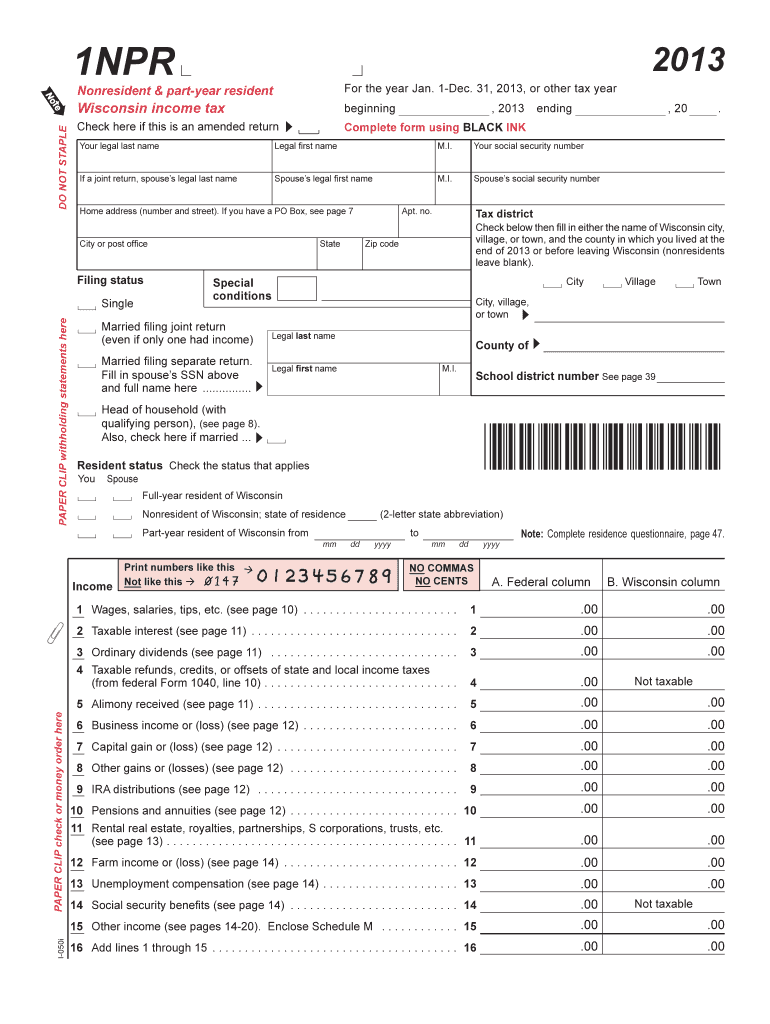







Definition and Purpose of the 2013 Wisconsin Form 1NPR
The 2013 Wisconsin Form 1NPR serves as the income tax form specifically for nonresident and part-year resident taxpayers in Wisconsin. It facilitates the state tax reporting for individuals who lived in Wisconsin for part of the year or derived income from Wisconsin sources while residing elsewhere. The form is crucial in determining the taxable income attributed to Wisconsin and ensuring proper state income tax compliance for nonresidents and part-year residents.
Key Elements of the 2013 Wisconsin Form 1NPR
- Personal Information: Includes taxpayer's name, social security number, and address.
- Filing Status: Determines the applicable tax rates and standard deductions based on the taxpayer's marital status.
- Income Reporting: Requires detailed reporting of various income sources, including wages, dividends, and rental income.
- Adjustments to Income: Allows for specific adjustments that can affect taxable income, such as retirement contributions.
- Tax Computation: Involves calculating the tax owed based on income and applicable deductions.
- Credits: Provides potential credits that can reduce the amount of tax owed, like the school property tax credit.
Steps to Complete the 2013 Wisconsin Form 1NPR
- Gather Required Documents: Obtain all necessary financial documents, such as W-2s, 1099s, and any records of taxable income.
- Verify Residency Status: Confirm details of residence within or outside Wisconsin during 2013 to determine eligibility for Form 1NPR.
- Complete Personal Information Section: Fill out the taxpayer's personal data accurately, including social security numbers.
- Determine Filing Status: Select the appropriate filing status based on marital and residency status.
- Report Income Sources: Accurately report all taxable income earned both within and outside Wisconsin.
- Calculate Adjustments and Deductions: Enter any relevant adjustments and deductions that apply to your situation.
- Compute Taxes and Credits: Use the form to compute taxes owed and apply any eligible credits.
- Review and Sign: Check for accuracy, sign the form, and attach necessary documentation.
Important Terms Related to the 2013 Wisconsin Form 1NPR
- Nonresident: An individual who does not physically reside in Wisconsin during the tax year.
- Part-Year Resident: A taxpayer who lived in Wisconsin for a portion of the tax year.
- Taxable Income: The segment of income subject to state taxation after deductions and exemptions.
- Credits: Tax benefits that directly reduce the amount of tax owed.
Eligibility Criteria for Using the 2013 Wisconsin Form 1NPR
The form is primarily used by individuals who fall under the nonresident or part-year resident categories. Key eligibility factors include:
- Having lived in Wisconsin for part of 2013.
- Earning income from a Wisconsin source as a nonresident.
- Meeting specific income reporting thresholds necessitating state tax submission.


State-Specific Rules for Completing the 2013 Wisconsin Form 1NPR
Different states may have varied rules regarding nonresident and part-year resident tax forms. Wisconsin stipulates that:
- Only income derived from Wisconsin sources by nonresidents is taxable by the state.
- Part-year residents must report income for the duration of their Wisconsin residency.
Examples of Using the 2013 Wisconsin Form 1NPR
- Self-Employed Professionals: A nonresident with a business in Wisconsin needs to report income from Wisconsin-based clients.
- Retirees: A part-year retired individual who moved to Wisconsin mid-year should report all income earned post-move.
- Students: A student who works a summer job in Wisconsin must file to report that income.
Penalties for Non-Compliance with the 2013 Wisconsin Form 1NPR
Failing to file the Wisconsin Form 1NPR when required can lead to significant penalties, including:
- Monetary fines depending on the tax owed and the delay in filing.
- Interest on unpaid taxes that accumulates until the full amount is settled.
Filing Deadlines and Important Dates for the 2013 Wisconsin Form 1NPR
The deadline for submitting the 2013 Wisconsin Form 1NPR typically aligns with federal tax deadlines, normally due by April 15, 2014. Any necessary extensions must be filed within this timeframe to avoid penalties.


