






Definition and Purpose of Form 8840
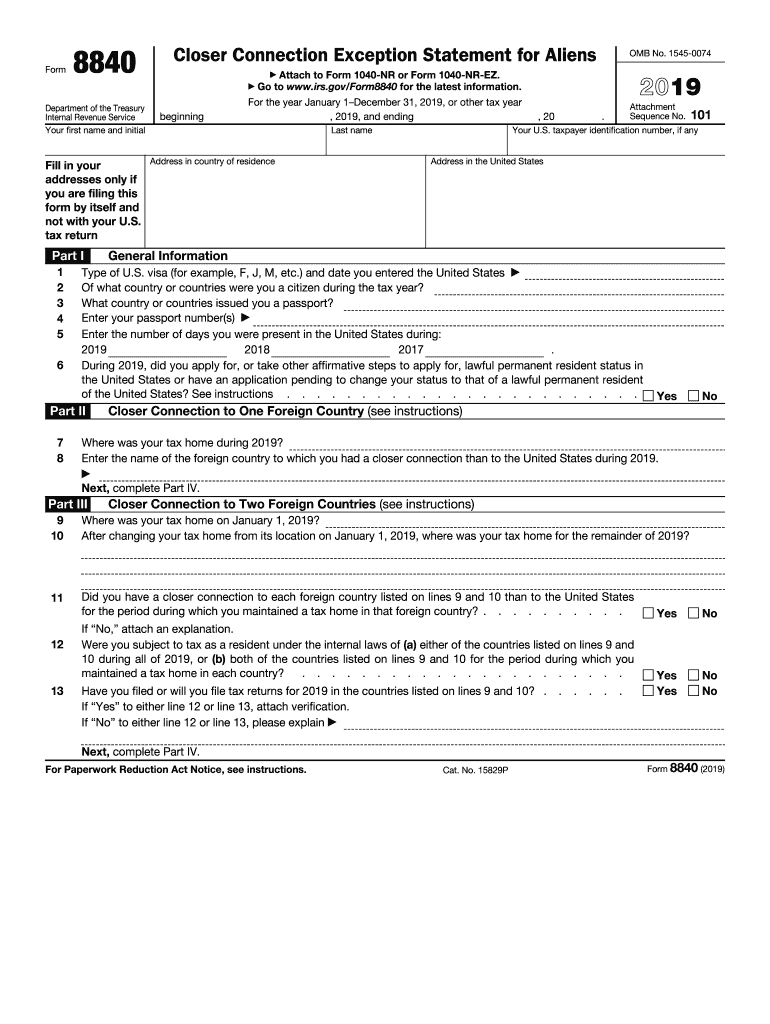
Form 8840, officially known as the Closer Connection Exception Statement for Aliens, is crucial for nonresident aliens who wish to demonstrate a closer connection to a foreign country than to the United States for tax purposes. This form allows individuals who physically spend a significant amount of time in the U.S. but maintain stronger residential ties abroad to potentially avoid being classified as resident aliens under the substantial presence test. Filling out Form 8840 accurately ensures compliance with U.S. tax regulations while potentially limiting tax liability.
Steps to Complete Form 8840
Successfully completing Form 8840 involves several critical steps:
-
Gather Essential Information:
- Collect details about your visa status, tax home, and significant contacts within your home country. This information will form the core evidence of your closer connection abroad.
-
Complete Personal Information:
- Fill in your name, taxpayer identification number (TIN), and other personal details as requested at the top of the form.
-
Provide Details on U.S. Presence:
- List each day spent in the U.S. during the past three years, focusing particularly on the current year's presence to ensure the calculation aligns with IRS requirements.
-
Document Foreign Ties:
- Specify your residence, family connections, personal property, business activities, and social ties that tie you to another country more closely than to the U.S.
-
Sign and Date the Form:
- Ensure to sign and date the form to affirm the provided information is accurate and complete.
Eligibility Criteria for Filing Form 8840
Eligibility to file Form 8840 hinges on specific criteria:
-
Substantial Presence Test:
- You must have spent at least 31 days in the U.S. during the current year and a cumulative total of 183 days over the current year and the two preceding years.
-
Visa or Immigration Status:
- Your visa or immigration status must classify you as a nonresident alien.
-
Establishing a Closer Connection:
- You must convincingly demonstrate a closer connection with a foreign country than with the U.S., focusing on the factors outlined in the form.


IRS Guidelines for Form 8840
The IRS provides comprehensive guidelines for completing and filing Form 8840, directing attention to:
-
Form Attachments:
- Form 8840 must be filed alongside Form 1040-NR if you are filing a tax return. If no tax return is required, it must be filed independently.
-
Deadline for Submission:
- Typically due on June 15th for nonresident aliens, although variations may apply depending on individual circumstances or extensions.
-
Accuracy and Records:
- Maintain accuracy in all parts of the form and retain copies of supporting documents to substantiate the connection claims made.
Key Elements of Form 8840
Several elements are vital when completing Form 8840:
-
Tax Home Details:
- Clearly state your tax home country, emphasizing business, family, and financial ties supporting this designation.
-
Substantial Presence Day Count:
- Precisely calculate and report day counts spent in the U.S. over relevant years to demonstrate compliance with the substantial presence test.
-
Connection Support Evidence:
- Include detailed explanations of social, economic, and residential connections with the foreign country that outweigh U.S. ties.
Filing Deadlines and Important Dates
Adhering to important filing dates ensures compliance:
-
Annual Submission Required:
- Even if circumstances remain consistent, Form 8840 must be re-evaluated and filed annually to maintain exemption status.
-
Stay Updated on Changes:
- IRS updates can impact deadlines; therefore, it is important to check for the latest filing instructions each year.
Penalties for Non-Compliance
Failure to comply with requirements for Form 8840 can result in:
-
Denial of Closer Connection Claim:
- Non-filing or incomplete filing may lead to the IRS rejecting the closer connection claim, resulting in potential taxation in line with resident alien regulations.
-
Late Fees and Additional Charges:
- Late or incorrect submissions might attract fines or additional charges, reinforcing the necessity of accurate and timely filing.
Form Submission Methods: Online and Traditional
Understanding proper submission methods is part of compliant filing:
-
Online Filing:
- Utilize authenticated IRS or third-party software to complete and submit the form electronically, ensuring immediate acknowledgment of receipt.
-
Mail Submission:
- Employ traditional mailing through IRS-approved addresses for those who prefer or require hard-copy submissions.
Each submission method necessitates careful confirmation of form completeness before final transmission to avoid unnecessary filing complications.
By addressing these focused aspects of Form 8840, individuals can better navigate its complexities, ensuring compliance and optimizing their tax situation in relation to U.S. regulations and their international status.