Definition & Meaning
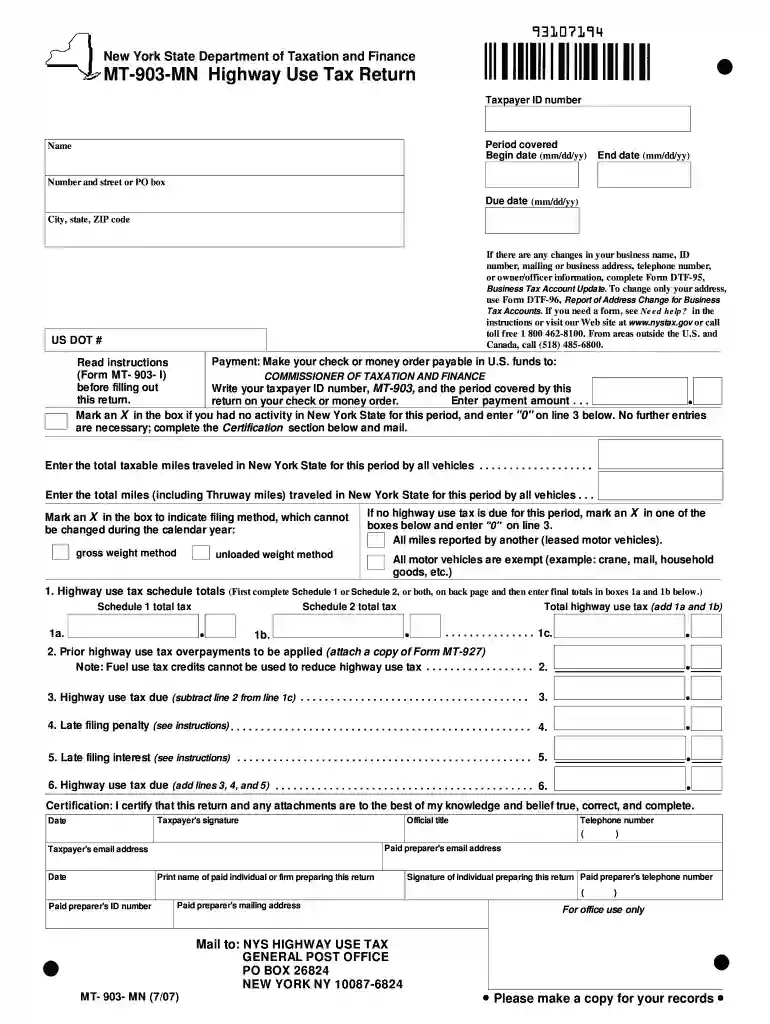
Form MT-903-MN, officially known as the Highway Use Tax Return, is issued by the New York State Department of Taxation and Finance. This form is essential for taxpayers to accurately report highway use tax based on the taxable miles traveled across New York State. The form plays a crucial role in ensuring that the state collects the appropriate amount of taxes from commercial vehicles operating within its jurisdiction. The purpose is to support infrastructure maintenance by levying a tax on vehicles that contribute to wear and tear on public highways.

Steps to Complete Form MT-903-MN
Gathering Necessary Information
- Taxpayer Identification: Begin by ensuring you have your taxpayer identification number, which is necessary to fill out the form.
- Business Information: Collect relevant business details, such as the business name, address, and contact information.
Completing Mileage and Weight Sections
- Calculate Mileage: Document the total miles traveled by your vehicle(s) on New York State highways to determine taxable mileage.
- Vehicle Weight: Include the weight of each vehicle, which, combined with mileage, helps compute the tax due.
Finalizing Tax Details
- Payment Information: Enter payment information and review calculations to ensure accuracy.
- Schedules and Attachments: Attach any schedules required for mileage calculations and weight classifications.
Submission
- Review: Double-check the entire form for completeness and accuracy before submission.
- Sign and Date: Ensure the form is signed and dated, as unsigned forms will not be processed.
Who Typically Uses the Form MT-903-MN
Target Audience
- Trucking Companies: These businesses, which operate large fleets of vehicles traveling through New York, are primary users.
- Independent Drivers: Owner-operators who frequently transport goods on New York highways must also file this form.
- Logistics and Supply Companies: Businesses involved in the supply chain that require regular interstate and intrastate travel also utilize this form.
State-Specific Rules for Form MT-903-MN
Highway Use Tax Regulations
New York imposes specific rules concerning highway use taxes, which require compliance from all entities operating heavy vehicles on state roads.
- Weight Classifications: Tax rates may vary depending on vehicle weight, influencing how the form is filed.
- Deadline Adherence: Filing must adhere strictly to New York’s tax calendars to avoid penalties.
Exceptions and Special Cases
- Exempt Vehicles: Certain farm vehicles and state-owned vehicles may be exempt from this form's requirements.
Key Elements of the Form MT-903-MN
Essential Sections
- Taxpayer and Business Information: These sections gather identifying data crucial for tax processing.
- Payment Details: Ensures that all calculations are completed for accurate tax remittance.
- Mileage Schedules and Vehicle Details: Required to substantiate the tax amounts based on tangible usage.
Form Submission Methods
Online, Mail, and In-Person Options
- Online Submission: Utilize the state’s online portal for fast, efficient form submission.
- Mail Submission: Send completed forms via post, ensuring they are addressed correctly to avoid delays.
- In-Person Filing: Submit forms directly at designated local offices for immediate processing.
Penalties for Non-Compliance
Consequences of Failing to File
Failure to file Form MT-903-MN carries significant penalties, including fines and interest on unpaid amounts.
- Financial Penalties: Late submissions may incur financial penalties, escalating with prolonged non-compliance.
- Legal Repercussions: Continuous neglect can result in legal actions, impacting business operations.
Business Types That Benefit Most
Optimal Users
- Freight Transportation Firms: Businesses transporting goods across state lines benefit by staying compliant.
- Division-Specific Entities: Organizations with specific divisions accommodating logistics operations also find the form crucial.
These detailed sections provide comprehensive guidance on using Form MT-903-MN, helping businesses comply with taxation requirements effectively.