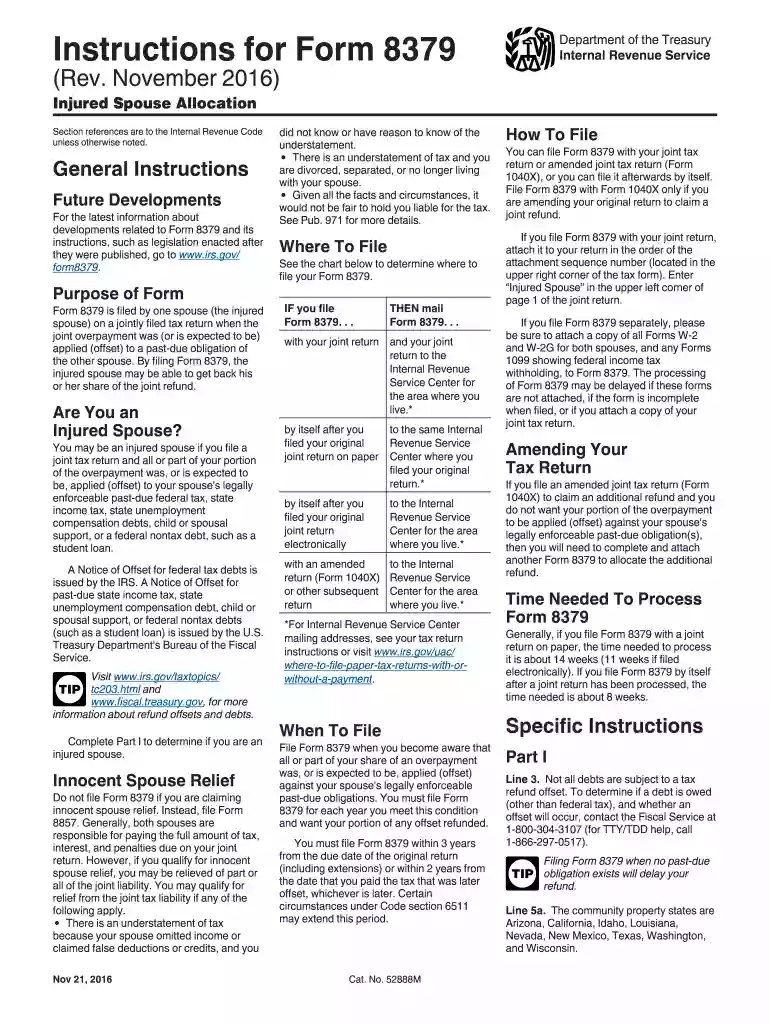
Definition & Purpose of Form 8379
Form 8379, known as the Injured Spouse Allocation, is used by individuals in the United States to claim their portion of a tax refund that may have been seized to fulfill their spouse's outstanding debts, such as child support or federal loans. This form allows the "injured" spouse to recover their share of a joint refund that was offset due to the other spouse's financial obligations.
Key Situations for Using Form 8379
- Debts Not Belonging to Both Spouses: When one spouse has debts that the other is not responsible for, Form 8379 can help reclaim the injured spouse's part of the refund.
- Tax Refund Offsets: If the IRS has applied the joint refund to the offset, the injured spouse can file this form to request their portion.
Steps to Complete Form 8379
- Identify Offset: Ensure that the tax refund has been applied to a debt for which you are not responsible.
- Access the Form: Obtain Form 8379 from the IRS website or by calling the IRS forms phone number.
- Complete the Form: Fill out the form carefully, ensuring accurate entries in all sections, such as personal information and income allocation.
- Attach to Tax Return: If filing jointly, attach Form 8379 to the joint tax return at the time of submission.
- Submit Separately if Needed: If the tax return has already been submitted, Form 8379 can be filed independently.
Common Mistakes to Avoid
- Incorrect Personal Details: Entering incorrect social security numbers or names can delay processing.
- Misallocation of Income: Ensure income is correctly allocated between spouses as indicated on the W-2s.
Filing Deadlines and Important Dates
- Original Filing: Attach Form 8379 to the original tax return to expedite processing.
- Separate Filing: It can be filed separately if the tax return was previously submitted. It's recommended to file as soon as you receive notification of the offset.
- Amendments and Corrections: Generally, you have up to three years from the due date of the tax return to file Form 8379.
Who Typically Uses Form 8379
Form 8379 is primarily used by married couples who file their taxes jointly but encounter issues with tax refund offsets due to one spouse's debt. It is particularly relevant for:
- Spouses with Separate Debts: Individuals whose earnings are separate from the debts of their partner.
- Joint Filers Facing Offsets: Couples who encounter refund offsets affecting their financial situation.
IRS Guidelines for Form 8379
- Eligibility Requirements: Must be a joint filer with a spouse who alone incurred certain debts.
- Documentation: Required to have joint income, and must provide documentation such as W-2 forms or pay stubs.
Required Documents for Completion
- Tax Return Copy: Include a full copy of the joint tax return.
- Spouse-Specific Income Information: W-2 forms or detailed income information clearly delineating each spouse's contributions.
- Offset Notice: Any documentation from the IRS or treasury department regarding the offset.
Software Compatibility
- Electronic Filing: Form 8379 can be filed electronically if attached to an e-filed tax return.
- Tax Software: Compatible with major tax preparation software like TurboTax and H&R Block, which provide guided processes to complete Form 8379.
Key Legal References
- ESIGN Act Compliance: Electronic submissions of Form 8379 are protected under the ESIGN Act, ensuring the legitimacy of e-signed documents.
- IRS Privacy Policies: Adherence to federal tax privacy laws is critical to protect personal information when completing and sending Form 8379.