




01. Edit your form si 200 online
Type text, add images, blackout confidential details, add comments, highlights and more.

Type text, add images, blackout confidential details, add comments, highlights and more.

Draw your signature, type it, upload its image, or use your mobile device as a signature pad.

Send california secretary of state via email, link, or fax. You can also download it, export it or print it out.
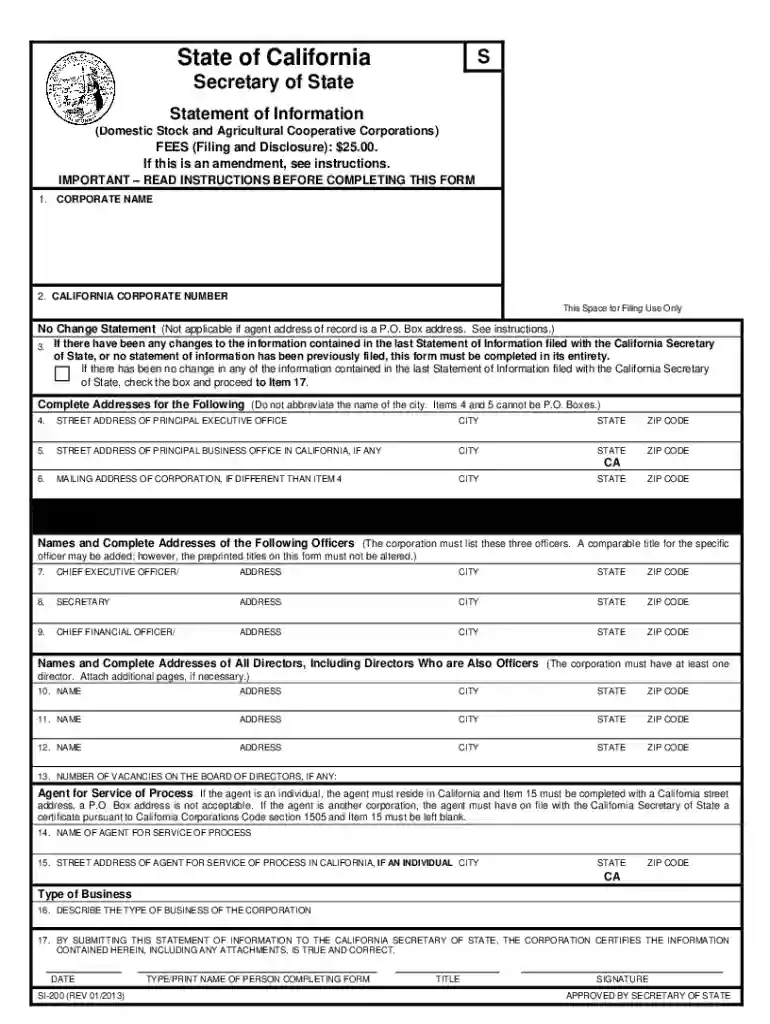
The state of California Statement of Information, commonly referred to as SI-200, serves as a crucial document that corporations, limited liability companies (LLCs), and other business entities must file with the California Secretary of State. This form provides essential details about a company's address, current officers, directors, and agent for service, ensuring that state authorities have up-to-date contact information.
The significance of the SI-200 lies in its role in promoting transparency and accountability within the business environment in California. By requiring entities to disclose this information, the state aims to protect consumers and foster a legitimate business climate. The SI-200 also aligns with compliance requirements, as it helps businesses fulfill their legal obligations, thereby avoiding penalties associated with non-compliance.
Determine Eligibility: Confirm that your business type is required to file the SI-200. Corporations and LLCs are generally mandated, while other entities may have different filing requirements.
Gather Information: Compile necessary details, including:
Access the Form: Obtain a blank SI-200 form. This can typically be done through the California Secretary of State's website, where the form is available for both online filing and printing.
Complete the Form: Fill out the SI-200 with accurate information. Ensure that all required fields are filled out correctly to avoid delays or rejections.
Review and Submit: After completing the form, review all entries for accuracy. Upon confirmation, submit the form either online or via mail:
Keep a Copy: After submission, retain a copy of the filed statement for your records. This is important for future reference and for confirming your business's compliance with state requirements.
Filing deadlines for the SI-200 can vary based on the business entity type. Typically, the following guidelines apply:
Initial Filing: New corporations and LLCs must file their first SI-200 within ninety days of formation in California.
Subsequent Filings: Thereafter, corporations are required to file the SI-200 annually, while LLCs must do so every two years.
Penalties for Late Filing: Failure to file the SI-200 within the specified time may result in fines or penalties. Additionally, it could lead to a suspension of the business status, affecting the entity’s ability to operate legally.
Maintaining a calendar that includes these critical dates helps ensure compliance and avoids unnecessary legal complications.
Generally, the following entities must file the SI-200:
Corporations: All domestic and foreign corporations registered to do business in California must file the SI-200. This includes both stock and non-stock corporations.
Limited Liability Companies (LLCs): All LLCs operating in California are required to submit the SI-200 every two years.
Partnerships: While limited partnerships may have different reporting requirements, they should confirm if they are obligated to submit the SI-200 based on their organizational structure.
Understanding if your entity type falls under these categories is essential to ensure compliance with state regulations.
The SI-200 form serves several legal purposes:
Compliance with State Law: Filing the SI-200 is a legal requirement under California Corporations Code. It ensures that businesses meet ongoing compliance requirements.
Updating Records: Changes to corporate officers or address can be efficiently updated through the SI-200, thereby maintaining accurate records with the California Secretary of State.
Legal Liability and Accountability: By maintaining transparency through the SI-200, entities are held accountable, which can protect consumers and other businesses. This transparency is crucial in facilitating both public and private engagement in corporate governance.
Failure to adhere to these legal obligations can result in administrative penalties, so understanding the scope of SI-200 is vital for all business entities operating within California.
Consider these scenarios illustrating when and how to file the SI-200:
Example 1: A newly formed corporation in California files its initial SI-200 form within the ninety-day period following its incorporation. This filing includes details about its officers, principal address, and corporate agent for service, thus complying with state requirements.
Example 2: An existing LLC completes its SI-200 form, noting updates such as a change in its registered office location and new managing members. The completion and timely filing of this form ensures the LLC remains in good standing with the state.
These practical instances underscore the necessity of timely and accurate filings.
The SI-200 form includes several components that must be addressed:
Entity Information: Names and registration numbers must be clearly specified, allowing state officials to identify the business.
Registered Agent: It is critical to provide the contact information for the entity's registered agent, who acts as the official point of contact for legal documents.
Management Team: The names and addresses of the individuals occupying primary leadership roles within the organization must be disclosed.
Business Purpose: While not always required, describing the principal business activities can provide context and further clarity about the entity's operations.
Detailed and accurate information in these areas facilitates effective communication between the business and state authorities.
We've got more versions of the form si 200 form. Select the right form si 200 version from the list and start editing it straight away!
At DocHub, your data security is our priority. We follow HIPAA, SOC2, GDPR, and other standards, so you can work on your documents with confidence.
This report summarizes the approach to be followed when evaluating the natural attenuation of. MTBE and other fuel oxygenate and considers the consequences ofRead more
Statements of Information, Common Interest Development Statements and Publicly Traded Disclosure Statements can be filed online at bizfileOnline.sos.ca.gov.Read more


