




01. Edit your form online
Type text, add images, blackout confidential details, add comments, highlights and more.

Type text, add images, blackout confidential details, add comments, highlights and more.

Draw your signature, type it, upload its image, or use your mobile device as a signature pad.

Send it via email, link, or fax. You can also download it, export it or print it out.
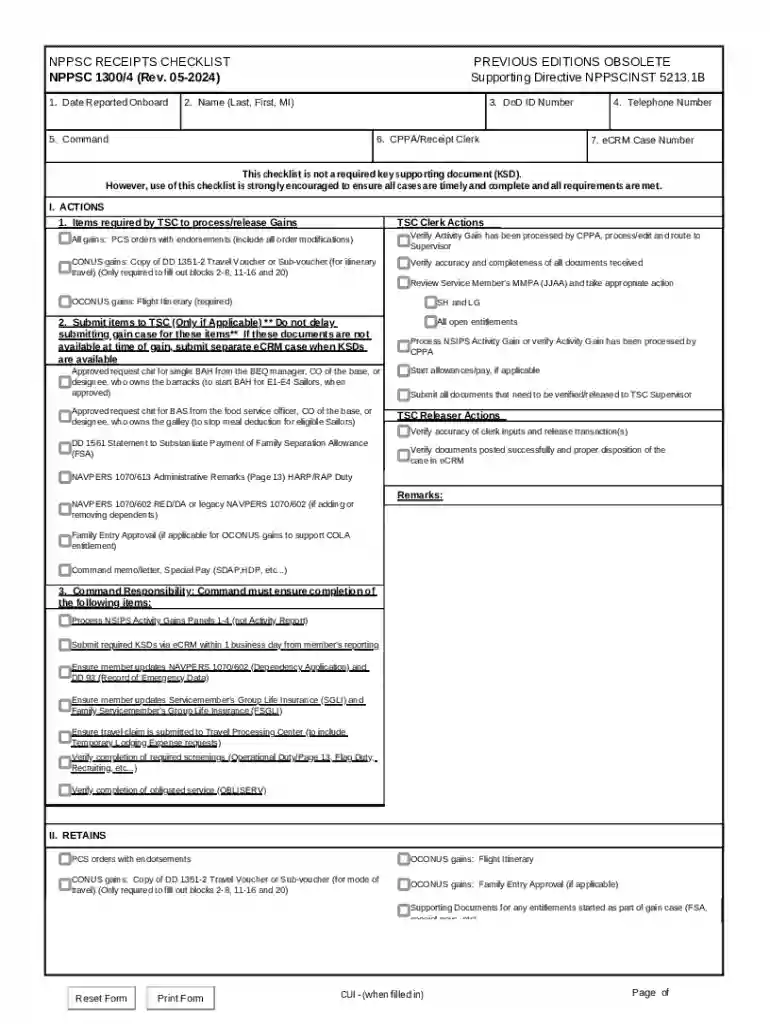
The NPPSC Receipts Checklist serves as a structured guide for processing gains within the Department of Defense (DoD). It outlines the necessary actions and documentation to ensure compliance with DoD regulations. This checklist is essential for clerks and commands to manage military personnel movements, such as Permanent Change of Station (PCS) orders, both within and outside the continental United States (CONUS and OCONUS). By detailing the specific items needed for processing, it helps streamline administrative tasks and avoid delays.
The checklist is a crucial tool for maintaining accuracy and timeliness in military personnel transactions. Its detailed structure ensures that all required documents, such as travel vouchers and various approvals, are collected and submitted correctly. This precision aids in the seamless processing of entitlements and supports effective resource management within the DoD.
Using the NPPSC Receipts Checklist involves a systematic review of required documents and procedures. Users should follow a step-by-step approach, ensuring all listed items are accounted for before submission. This methodical process reduces the risk of errors and omissions, facilitating smoother processing of personnel movements.
Review PCS Orders: Verify the accuracy of orders and ensure all necessary approvals are attached.
Collect Travel Vouchers: Gather all travel-related documents, including transportation receipts and lodging confirmations.
Verify Certifications: Ensure any required certifications are complete and included.
Organize Documents: Arrange all documents in the order specified by the checklist.
Submission: Submit the complete package for processing, ensuring adherence to any deadline.
Completing the NPPSC Receipts Checklist requires attention to detail and organizational skills. Each step must be followed precisely to ensure full compliance with military regulations.
Understand Requirements: Familiarize yourself with the checklist and understand each requirement.
Document Collection: Gather all necessary documents specified in the checklist.
Cross-Check Details: Ensure all personal information and dates align across documents.
Final Verification: Conduct a final review to ensure nothing is missed or incorrectly filled out.
Submit Documents: Submit the completed checklist and associated documents through the appropriate channel, whether online, by mail, or in-person.
The checklist includes several crucial components that users must prepare for successful submission. These elements ensure comprehensive data collection, aiding in accurate and efficient processing.
The NPPSC Receipts Checklist is primarily used by military personnel and administrative staff within the DoD. These users rely on the checklist to ensure compliance with procedural standards and to expedite processing.


Certain documents must be included with the NPPSC Receipts Checklist to facilitate a complete submission. These documents are critical for verifying eligibility and processing gains.
The checklist must be used in accordance with legal and regulatory guidelines within the DoD. This ensures that personal data is handled appropriately and that all procedures are followed strictly.
Failure to comply with legal standards can result in processing delays or disciplinary action. Proper use of the checklist supports operational integrity and legal compliance within the Department of Defense.
Submitting the NPPSC Receipts Checklist can be done through various methods, each with its own set of procedures. Understanding these methods helps ensure timely processing.
We've got more versions of the NPPSC RECEIPTS CHECKLIST form. Select the right NPPSC RECEIPTS CHECKLIST version from the list and start editing it straight away!
At DocHub, your data security is our priority. We follow HIPAA, SOC2, GDPR, and other standards, so you can work on your documents with confidence.


