
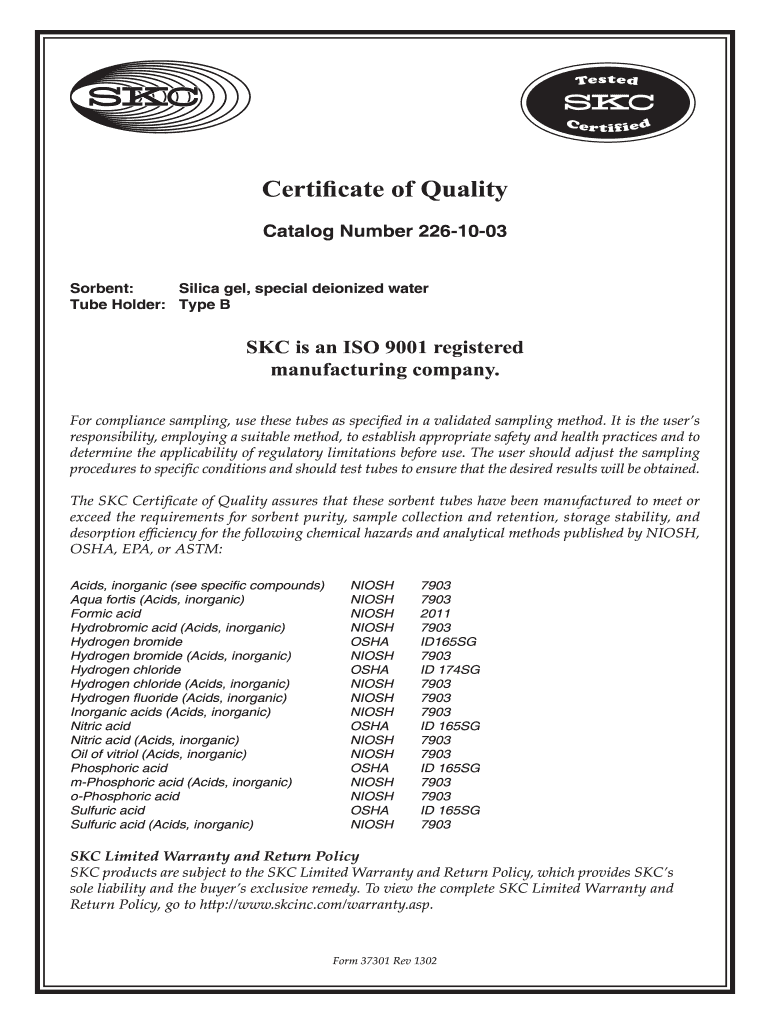







Understanding the Certificate of Quality Template
The certificate of quality template is a crucial document designed to validate the quality and compliance of products or services. It functions as a formal assurance that specified standards have been met, often necessary in industries such as manufacturing, food production, and pharmaceuticals. Typically used to communicate quality assurance to clients and regulatory bodies, the certificate can vary in format but generally includes essential information about the product, manufacturer, and compliance with regulatory standards.
Key Elements of a Quality Certificate Template
A well-structured certificate of quality includes several critical components:
- Title of the Certificate: Clearly stating it as a Certificate of Quality.
- Company Information: Name, address, and contact details of the issuing organization.
- Product Details: A clear description of the product, including any identification numbers or model references.
- Assurance Statement: A declaration affirming that the product complies with specified quality standards.
- Standards Referenced: Clear citations of relevant standards (such as ISO, ASTM, etc.) under which the quality was assessed.
- Date of Issue: The date when the certificate is issued, to establish a validity timeline.
- Authorized Signature: A space for the signature of the individual responsible for issuing the certificate, providing authenticity.
How to Create a Quality Certificate Template
Creating a quality certificate template requires careful consideration of the information to be included. Follow these steps:
- Select a Format: Identify whether you will use a word processor (like Microsoft Word) or a template tool (like DocHub).
- Input Company Details: Begin with your company’s name and address at the top of the document.
- Title the Document: Clearly label the document as a Certificate of Quality.
- Provide Product Information: Include a detailed description of the product or service being certified.
- Include Compliance Statements: Add text that specifically references compliance with quality standards.
- Designate Responsible Parties: Include space for signatures from responsible employees, affirming their approval of the document.
- Finalize: Review the document for clarity, accuracy, and compliance with any relevant regulations.
Example Use Cases for a Quality Certificate
- Manufacturing Industries: A manufacturer may issue a certificate of quality for products that have passed comprehensive testing for safety and performance.
- Food Production: Food companies often require these certificates to verify that their products meet health and safety regulations.
- Pharmaceuticals: Certificates are vital in the pharmaceutical industry to confirm compliance with stringent testing protocols before drugs are released to market.
- Exporting Goods: When selling internationally, companies often need to provide certificates of quality to meet importing countries' regulatory requirements.
Variants of the Certificate of Quality
Various forms or templates may be tailored to specific industries or regulations. Some examples include:
- Product Quality Certificate Format: Tailored specifically for goods manufactured in compliance with defined quality standards.
- Quality Assurance Certificate Sample: Designed for service industries to assure clients of service quality.
- Certificate of Quality for Export Template: Used specifically to meet international shipping and regulatory standards.
Digital vs. Paper Quality Certificates
With the advance of digital technology, many organizations are shifting towards electronic documentation:
- Paper Versions: Traditional format, often seen as more formal in certain industries.
- Digital Certificates: Increasingly accepted; can be generated through platforms like DocHub and shared electronically, allowing for easier management and distribution.
Importance of the Certificate of Quality
The certificate of quality enhances trust and reliability between businesses and their clients. It serves several key purposes:
- Compliance Verification: Confirms that products are manufactured according to established standards.
- Marketable Assurance: Acts as a marketing tool that can differentiate a company in a competitive market.
- Regulatory Requirement: Provides necessary documentation for regulatory inspections, helping businesses avoid legal issues.
Conclusion on Utilizing Quality Certificates
The certificate of quality template is more than a mere formality; it is a critical tool in maintaining transparency and trust in various industries. Effective usage of this template can significantly enhance credibility and comply with mandatory regulations, fostering stronger relationships with clients and stakeholders.




