
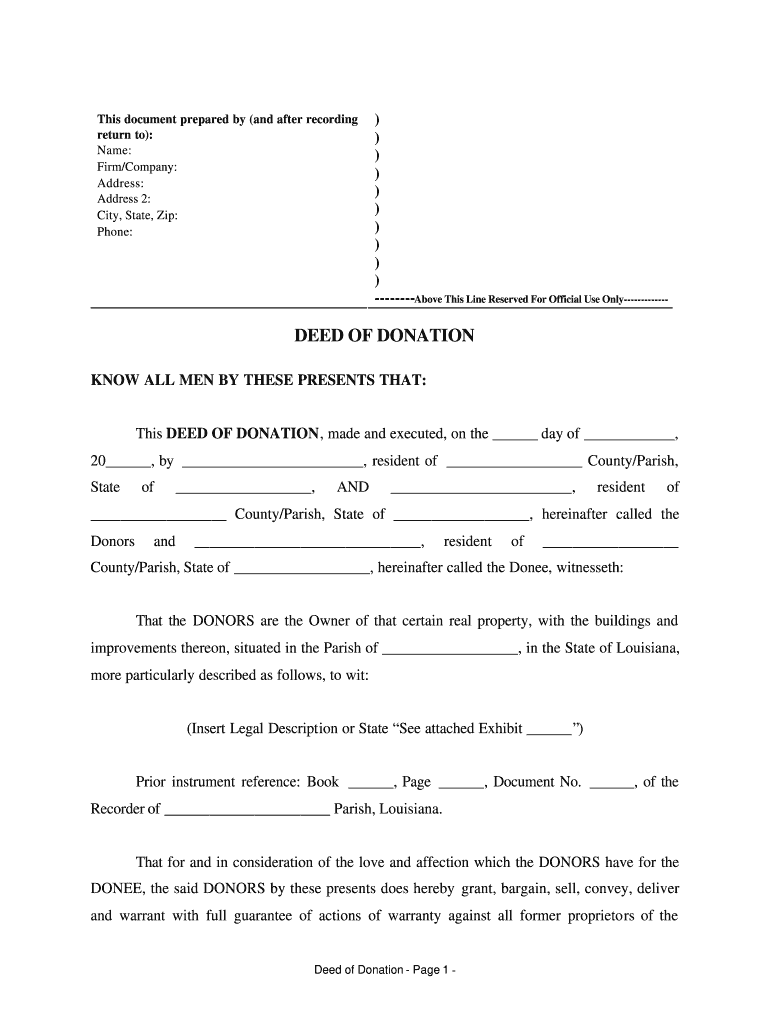







Definition and Meaning of Deed of Donation
A deed of donation is a legal document that formalizes the transfer of ownership of an asset, typically real property, from one party (the donor) to another (the donee) without monetary compensation. This act reflects a voluntary gift motivated by love, affection, or charity. The deed outlines the specific details of the property being donated, which may include residential lots, land parcels, or even personal effects. Importantly, this document also includes the legal descriptions necessary to clearly identify the property involved.
The deed of donation must adhere to applicable legal requirements to be valid, which typically include the need for witnesses or notarization. Such safeguards ensure that the transaction is legally enforceable and protects the rights of both parties involved. Understanding the deed of donation meaning is essential for donors and donees to ensure compliance with jurisdictional laws, particularly when it comes to tax implications or property status.
Essential Components of a Deed of Donation
When drafting a deed of donation, several key elements must be included to ensure its legal validity and clarity. These components help to clearly document the intention of the donor and the acceptance by the donee.
- Donor and Donee Information: Full names and addresses of both parties must be stated.
- Description of the Property: A detailed legal description of the property being donated, which may include parcel numbers or addresses.
- Intent to Donate: A clear statement indicating the donor's intention to give the property without expecting anything in return.
- Signatures: The signatures of both parties are essential for validating the document.
- Witnesses/Notarization: Depending on state requirements, the presence of witnesses or a notary public may be necessary to validate the deed.
For example, if an individual wishes to donate a residential land parcel to their sibling, the deed must include all pertinent information about both parties, a detailed description of the land, and evidence of the donor's intent.
Steps to Complete a Deed of Donation
Completing a deed of donation requires several steps to ensure all necessary information is included and that the document is legally binding.
-
Prepare the Document:
- Start with a deed template or create a document containing all the essential components identified previously.
-
Detail the Donor and Donee Information:
- Clearly state the full names and addresses of both the donor and the donee.
-
Describe the Property:
- Provide a comprehensive description of the property being donated, including any legal identifiers.
-
Include a Statement of Intent:
- Explicitly state that the donor is gifting the property voluntarily and without expectation of compensation.
-
Obtain Signatures:
- Have both parties sign the document in the presence of witnesses or a notary, as required by local laws.
-
Distribute Copies:
- Provide copies of the signed deed to both the donor and donee for their records and file with appropriate local authorities if needed.
Each step must be carefully executed to avoid any issues related to the validity of the donation.
Legal Implications of a Deed of Donation
Understanding the legal implications of a deed of donation is critical. The deed serves as a binding contract between the donor and the donee, and it establishes ownership of the property being gifted. Some legal considerations include:
- Tax Implications: Donations may have tax consequences for both parties. For example, the donor might be eligible for a tax deduction, while the donee may face property tax obligations.
- Revocation Process: While a deed of donation is generally irrevocable once executed, understanding grounds for revocation is important. If the donor feels there was undue influence or fraud, they may seek legal counsel regarding how to challenge the deed.
- State-Specific Requirements: Each state has different laws governing how deeds of donation must be executed; hence, it is vital to be aware of local regulations to ensure compliance.
The legal framework surrounding a deed of donation safeguards the interests of both parties while promoting fair and just transfers of property.
Examples of Situations Involving a Deed of Donation
A deed of donation is often used in various contexts. Understanding real-world examples can illustrate how these documents function.
- Family Gifts: An individual wishes to donate their house to a child, using a deed of donation to formalize the transfer and ensure the child's ownership.
- Charitable Contributions: A business owner donates a piece of commercial property to a nonprofit organization, enabling the organization to utilize the space for community service.
- Land Transfers Among Siblings: In situations where a parcel of land is inherited, one sibling might choose to donate their share to others in the family, using the deed to formalize this decision.
Each of these scenarios highlights the versatility of deeds of donation and their significance in fostering generosity within families and communities.
Variations and Formats of Deeds of Donation
Deeds of donation can take on various formats tailored to the specifics of different situations. A few common variations include:
- Deed of Donation of Lot: Typically used for smaller lots or parcels of land, this format simplifies the transfer process for minimal properties.
- Sample of Deed of Donation of House and Lot: This format includes more detailed provisions due to the complexities involved with housing, such as utilities or existing liens.
- Revocation of Deed of Donation Sample: A specific document utilized when a donor seeks to revoke a previously executed deed, emphasizing the importance of legal language in such situations.
Selecting the appropriate format based on the asset and conditions involved is crucial to ensuring that the deed serves its intended purpose effectively.
Conclusion: Importance of Understanding Deed of Donation
Recognizing the significance of a deed of donation cannot be overstated. This document not only facilitates the legal transfer of ownership but also embodies the goodwill and intentions of the donor. Whether for personal relationships or charitable purposes, understanding its components, legal implications, and practical applications enhances the effectiveness of gifting assets through a deed of donation.
Being equipped with knowledge about deeds of donation enables individuals to navigate property transfers smoothly while ensuring compliance with legal requirements in their jurisdiction.




