




01. Edit your printable release of lien form florida online
Type text, add images, blackout confidential details, add comments, highlights and more.

Type text, add images, blackout confidential details, add comments, highlights and more.

Draw your signature, type it, upload its image, or use your mobile device as a signature pad.

Send release of lien form florida via email, link, or fax. You can also download it, export it or print it out.
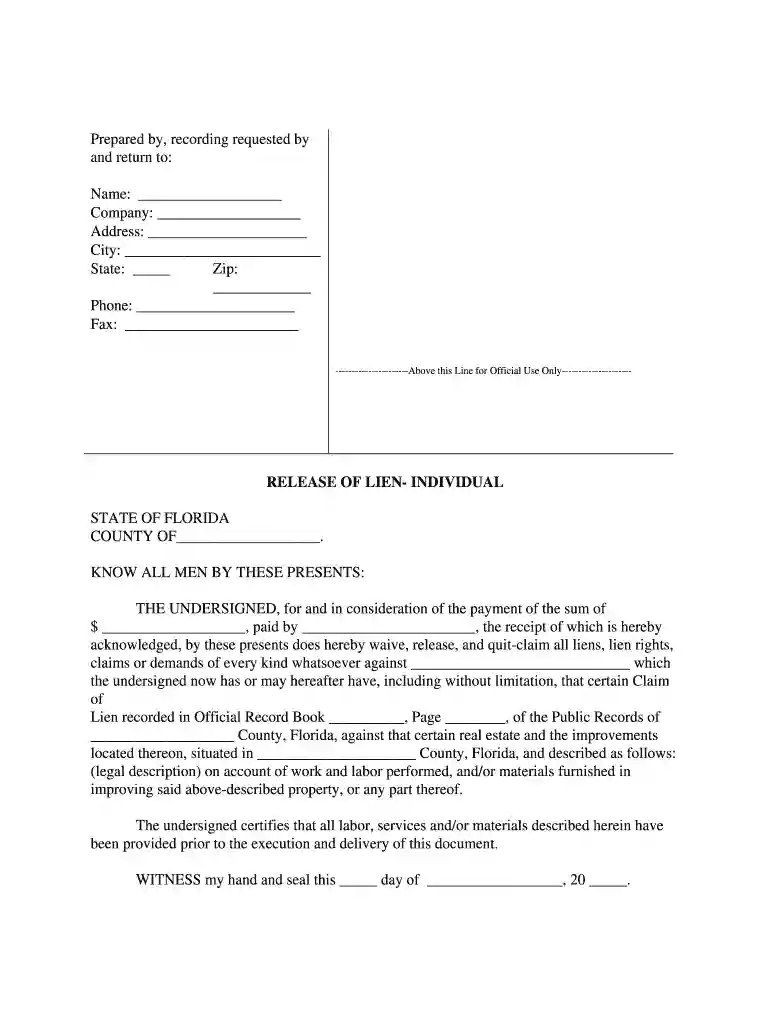
The Florida release of lien form is a crucial legal document used to formally waive and release any lien rights against a specified property when payment has been made. This form plays a significant role in real estate transactions, construction projects, and any situation where a lien may have been placed on a property as security for a debt. Understanding its components and functioning helps both payers and payees navigate the process effectively.
A typical Florida release of lien form includes several essential components:
Parties Involved: The form must clearly identify the lien claimant (the party releasing the lien) and the property owner. This identification helps to establish a clear record of everyone involved in the transaction.
Property Description: A detailed description of the property subject to the lien is necessary. This should include the property's address and any relevant identifiers, such as parcel numbers.
Payment Details: The form should specify the amount paid in exchange for the release of lien. This transparency ensures clarity on the terms of the transaction.
Notarization Requirement: In Florida, a release of lien form generally requires notarization to be enforceable. Proper notarization validates the identities of the parties involved and ensures that the document holds legal weight.
Notarization plays a vital role in the execution of the Florida release of lien form. Although the law may vary slightly based on individual circumstances, the following points highlight why notarization is often required:
Legal Validity: A notarized lien release form is less likely to be contested in court. The involvement of a notary public provides an additional layer of authentication.
Protection Against Fraud: Notarization acts as a safeguard against fraudulent representations. The notary public verifies the identities of the parties and ensures they willingly sign the document.
Compliance with Florida Law: Certain transactions, particularly those involving property, may necessitate notarization to comply with Florida statutes, reinforcing the document's legality.
Completing the release of lien form involves a systematic approach to ensure all information is accurate and complies with legal requirements. Here are the steps to follow:
Obtain the Form: The specific Florida release of lien form can be downloaded from legal resources or created using document editing platforms.
Fill in the Required Information: Input the details of all parties involved, including the lien claimant, property owner, and a thorough description of the property.
Specify Payment Terms: Clearly state the payment amount that concludes the lien rights.
Gather Signatures: Ensure that both parties sign the document, indicating their agreement to the terms.
Notarize the Form: Schedule a visit with a notary public to validate the signatures. This step is crucial in safeguarding the document against future disputes.
Distribute Copies: After notarization, provide copies of the signed form to all stakeholders, including the property owner and the original lien claimant.
The Florida release of lien form is utilized in various scenarios, including:
Construction Projects: Contractors and subcontractors may file liens if they are not paid for work completed. Upon receiving payment, they will use the release form to confirm the debt has been settled.
Property Sales: When real estate transactions occur, any existing liens must be addressed to enable a clear title. The release of lien form helps facilitate this process.
Debt Settlements: Individuals or businesses that have placed liens for unpaid debts will use this form to acknowledge and validate that the debt has been fully paid.
While the general structure of the Florida release of lien form remains consistent, there may be variations based on the context of the lien:
Conditional Release: This variation releases the lien upon the fulfillment of specific conditions, rather than unconditional payment.
Partial Release: This type of release pertains to situations where only a portion of the lien is being released, particularly in large construction projects.
Final Waiver and Release of Lien: This form signifies that the claimant has received the final payment and releases all potential future claims related to the lien.
Proper understanding and use of the Florida release of lien form can significantly impact transactions involving property and debt obligations. It provides security and clarity for all parties involved while ensuring compliance with state laws. Recognizing the critical components, steps, and variations of this document allows individuals and businesses to navigate lien releases efficiently and effectively.
At DocHub, your data security is our priority. We follow HIPAA, SOC2, GDPR, and other standards, so you can work on your documents with confidence.
The undersigned, for and in consideration of the sum of $. , does hereby waive its right to claim and release any and all lien or claim or right of lien underRead more
Signature of Authorized Agent For Lienholder: NOTE: LIENHOLDER MUST COMPLETE ALL APPLICABLE SECTIONS OF THIS FORM INCLUDING DESCRIPTION OF THE MOTOR VEHICLE,Read more
Feb 17, 2017 release of all claims by the settling plaintiffs. The MDL Settlement priority lien on substantially all of Chemours and itsRead more


