
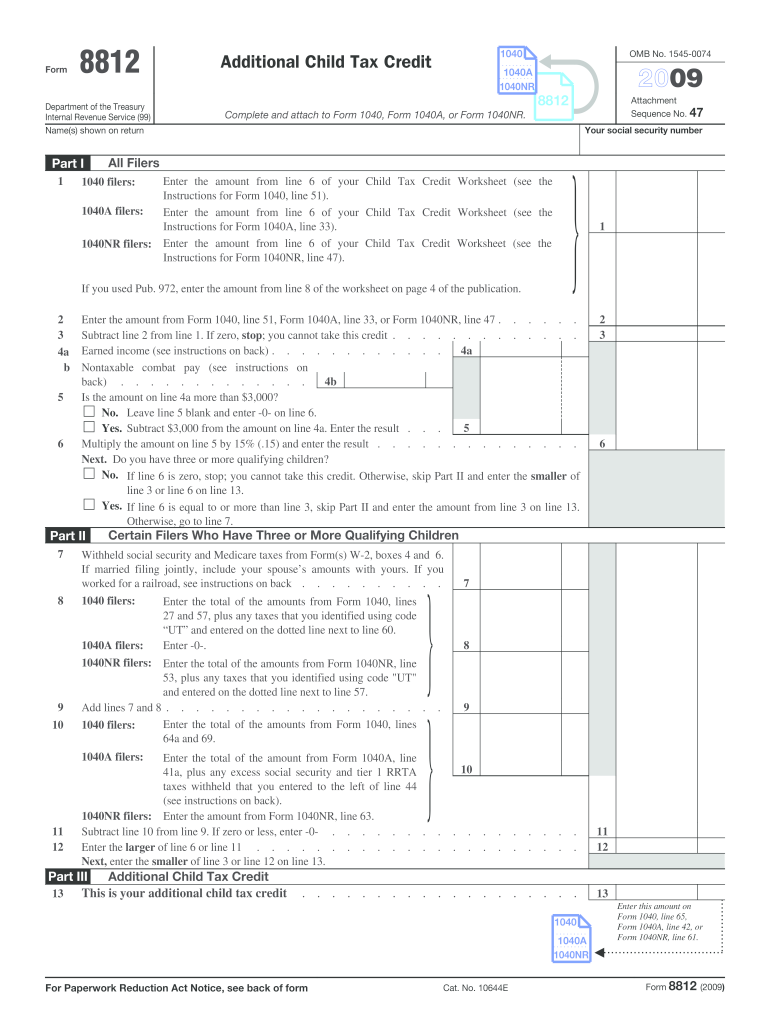







Definition & Significance of the 8812 Form
Form 8812 is used to calculate the Additional Child Tax Credit (ACTC), a tax benefit designed to help families with qualifying children receive a tax refund even if they do not owe any income tax. This form is critical for taxpayers who want to claim the additional credit beyond the standard Child Tax Credit. Introduced to ensure that low-income working families benefit from tax credits, Form 8812 allows families to leverage these credits based on their earned income levels and the number of qualifying children in the household. The form includes various calculations essential for determining the correct credit amount and aligns with IRS mandates.
Comprehensive Steps to Complete the 8 Form
-
Gather Required Information:
- Collect the Social Security Numbers of each qualifying child.
- Have your tax return forms, such as the 1040, 1040NR, or 1040A, ready for reference.
-
Calculate Earned Income:
- Use your total earned income from your tax return to determine eligibility.
- Follow the instructions regarding the inclusion of specific income types, such as wages and self-employment earnings.
-
Complete the ACTC Worksheet:
- Fill out the worksheet to calculate your additional credit based on income and children.
-
Transfer Calculations to Form 8812:
- Use the figures from the worksheet to populate the fields on Form 8812.
- Ensure all calculations are accurate to avoid processing delays or discrepancies.
-
Submit the Form with Your Tax Return:
- Attach the completed Form 8812 to your tax return form.
- Ensure all documentation is filed by the IRS deadline to qualify for the credit.
Who Typically Uses the 8 Form?
Form 8812 is primarily used by individuals or families with dependent children under the age of 17 who qualify for the Child Tax Credit. Taxpayers who fall into lower-income brackets and may not owe sufficient taxes to claim the full $1,000 credit per child turn to this form to access potential refunds from the ACTC. It is commonly utilized by:
- Low to moderate-income families.
- Self-employed individuals with dependent children.
- Taxpayers reporting nontaxable combat pay.


Key Elements of the 8 Form
- Child's Eligibility: Ensures each child qualifies based on age, residency, and relationship criteria.
- Earned Income Consideration: Focuses on calculating the credit based on earned income levels.
- Nontaxable Combat Pay: Allows military families to include nontaxable combat pay to maximize the credit.
- Credit Calculation: Detailed instructions on computing the additional tax benefits using provided worksheets.
Important Terms Related to the 8812 Form
- Earned Income: Includes wages, salaries, tips, and professional income, pivotal in calculating credit eligibility and amounts.
- Qualifying Child: A dependent under 17 who meets IRS criteria regarding age, relationship, and residency.
- Nontaxable Combat Pay: Special consideration for military personnel, allowing this income to be counted in credit calculations.
- Refundable Credit: Unlike typical tax deductions, this credit can provide a refund exceeding tax liabilities.
How to Obtain the 8 Form
The 8812 form can be obtained directly from the IRS website, part of a broader suite of forms available for taxpayers. It can also be acquired through most tax preparation software platforms like TurboTax or via physical distribution at IRS countrywide centers.
IRS Guidelines for the 8812 Form
IRS guidelines stipulate the form's use for capturing Additional Child Tax Credit claims. These include instructions on how to complete, calculate eligible credits, and match the criteria set for both children and income. Thoroughly understanding these guidelines ensures compliance and can help prevent errors.
Filing Deadlines for the 8812 Form
The form should be filed by the tax return deadline, typically April 15 of each year, to ensure taxpayers receive their entitled credit on time. Exceptions and extensions may be available under certain conditions, but it is critical to adhere to IRS deadlines to avoid penalties or delayed refunds.
Digital vs. Paper Version of the 8812 Form
The 8812 form is available in both digital and paper formats. The digital version is accessible through various tax preparation software, while the paper version may be preferred by those filing manually or without electronic access. Both versions must conform to the same IRS requirements and completion standards.
Penalties for Inaccuracies or Non-Compliance
Filing an incomplete or inaccurate Form 8812 can lead to processing delays, reduced credit amounts, or potential rejections. Significant discrepancies or deliberate misinformation may result in penalties, including fines or additional tax liabilities. Ensuring accuracy and following IRS instructions is paramount.




