
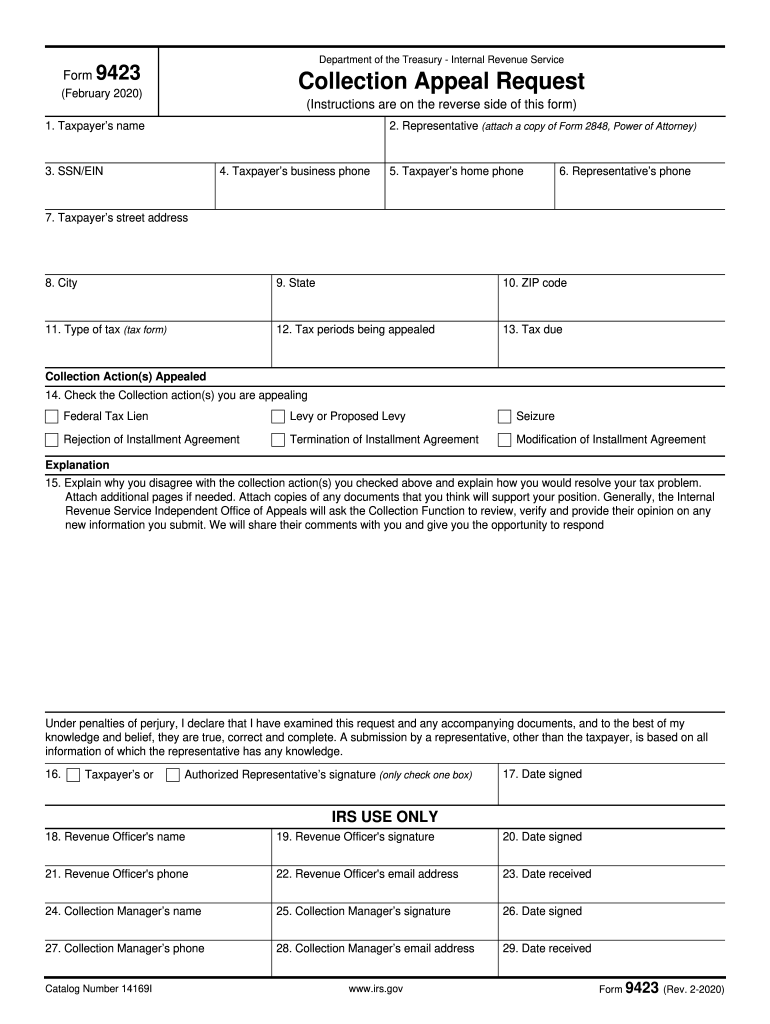







Definition and Purpose of IRS Form 9423
IRS Form 9423, known as the Collection Appeal Request, is a vital tool for taxpayers who wish to appeal specific collection actions initiated by the Internal Revenue Service (IRS). This form is integral to the appeals process concerning levies, liens, and decisions regarding installment agreements. The main objective of Form 9423 is to provide taxpayers an avenue to challenge and request a review of the IRS's collection activities that they believe are incorrect or unfair.
Important Aspects of Form 9423
- Appeal Actions: Taxpayers can use this form to appeal a Notice of Federal Tax Lien, Notice of Intent to Levy, proposed or actual levy actions, and rejections, modifications, or termination of an installment agreement.
- Rights Protection: By using Form 9423, taxpayers can ensure their rights are safeguarded during the collection process, allowing them to argue their case and present additional information that the IRS may not have previously considered.
Steps to Complete IRS Form 9423
Completing IRS Form 9423 involves several steps, each requiring careful attention to detail to ensure accuracy and enhance the effectiveness of the appeal.
- Section Identification: Begin by filling out the taxpayer information section, including name, address, and social security number or taxpayer identification number.
- Description of Issues: Clearly outline the collection action being appealed. It's crucial to provide a detailed description of why the taxpayer disagrees with the IRS decision.
- Documentation: Attach relevant supporting documents that strengthen the appeal, such as financial statements or prior correspondence with the IRS.
Tips for Accurate Completion
- Clarity and Detail: Make sure all information is clear and include specifics regarding the appeal's circumstances.
- Supporting Evidence: Accumulate and submit substantial documentation to validate the taxpayer’s position, improving chances for a favorable outcome.
How to Obtain IRS Form 9423
Acquiring IRS Form 9423 is straightforward, with multiple options available for taxpayers to access the form.
Methods to Obtain the Form
- Online: The IRS website is the most convenient source for downloading Form 9423. The form is available in PDF format, ready for immediate use.
- IRS Offices: Physical copies are obtainable at local IRS offices for those who prefer hard copies.
Accessibility Options
- Digital Access: Using digital platforms such as DocHub can simplify the process by allowing taxpayers to edit, fill out, and submit the form electronically.
- Print Accessibility: For those without digital access, visiting an IRS office is a practical alternative.
Key Elements of IRS Form 9423
Understanding the structural components of IRS Form 9423 is crucial for taxpayers intending to use it effectively.
Main Sections of the Form
- Taxpayer Information: Includes the identification and contact information of the taxpayer requesting the appeal.
- Type of Appeal: Specifies the type of collection action being contested (e.g., levy, lien).
- Reason for Appeal: This part requires a comprehensive explanation of the disagreement with supporting reasons.
Supplementary Components
- Financial Information: If applicable, it's essential to include current financial status details to support the appeal.
- Authorized Representatives: Allows taxpayers to designate an attorney or another qualified individual to represent them in the appeal process.
Legal Use and Compliance with IRS Form 9423
Utilizing Form 9423 involves adhering to strict legal guidelines to ensure the appeal is considered valid by the IRS.
Compliance Guidelines
- Deadline Adherence: Appeals must be filed within the specified time frame related to the collection action notice.
- Authorship and Signatures: The form must be signed by the taxpayer or an authorized representative to validate the request.
Legal Protections
- Utilizing Form 9423 ensures that taxpayers can exercise their right to a fair review.
- Offers a pathway to negotiate settlements or revised installment plans under defined IRS appeal rights.
Who Typically Uses IRS Form 9423
IRS Form 9423 is primarily used by a range of taxpayers who wish to appeal IRS collection decisions.
Common User Profiles
- Individuals: Taxpayers facing garnishment, liens, or levies seeking relief or modification.
- Small Business Owners: Businesses impacted by IRS collection actions affecting liquidity or operations.
- Tax Advisors: On behalf of clients, advisors frequently initiate appeals using Form 9423 to resolve disputes amicably.
Real-World Scenarios
- Self-Employed Individuals: Often use Form 9423 to dispute levies that might impact their business operations.
- Partnerships: May appeal liens or unsatisfactory installment agreements that hinder business activities.
Examples and Scenarios Involving IRS Form 9423
Realistic examples serve to illustrate the practical usage and benefits of filing IRS Form 9423 in various scenarios.
Hypothetical Situations
- Case of Erroneous Levy: A taxpayer receives a levy notice despite having a current and active installment agreement. Filing Form 9423 can help rectify the error and halt levy actions.
- Disputed Lien Imposition: A small business incorrectly identified for a federal tax lien can use Form 9423 to provide evidence of tax compliance and request removal.
Outcome Benefits
- Successful appeals can lead to the reversal of undue stress and financial hardship, exemplifying the power of Form 9423 in protecting taxpayer rights.
Important IRS Guidelines for Form 9423
Adhering to IRS-issued guidelines is crucial for the successful submission of Form 9423, ensuring the appeal is adequately reviewed.
Core Guidelines to Follow
- Filing Procedures: Understand the procedural steps and necessary documentation as per IRS guidelines.
- Communication Protocols: Maintain open lines for communication with the IRS, responding promptly to any requests for additional information during the appeal review process.
Practical Considerations
- Detailed Documentation: Maintain meticulous records throughout the process, from initial submission to resolution.
- Follow-Up: Actively follow up on the appeal status to ensure prompt resolution.




