




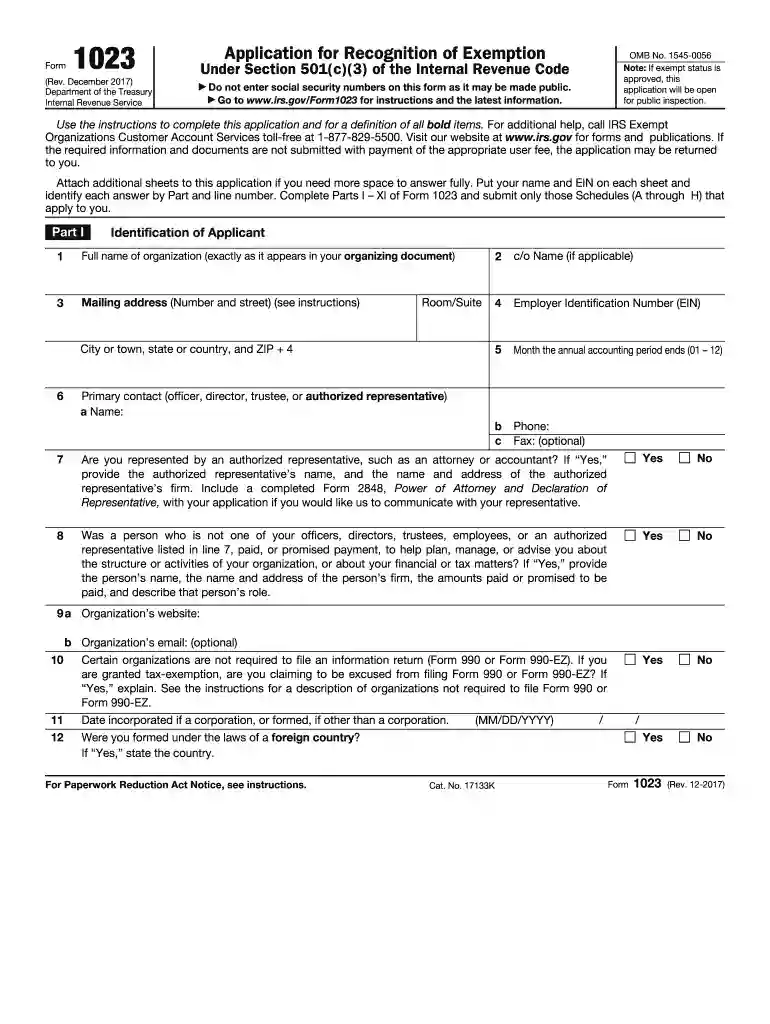
01. Edit your 2017 1023 online
Type text, add images, blackout confidential details, add comments, highlights and more.

Type text, add images, blackout confidential details, add comments, highlights and more.

Draw your signature, type it, upload its image, or use your mobile device as a signature pad.

Send 1023 form 2017 via email, link, or fax. You can also download it, export it or print it out.
Form 1023, officially known as the Application for Recognition of Exemption Under Section 501(c)(3) of the Internal Revenue Code, is essential for nonprofit organizations seeking tax-exempt status. This form guides organizations through the necessary steps to qualify for exemption by providing detailed instructions on compliance requirements, including organizational structure and operations. Recognizing the importance of accurate and honest information, the form outlines essential criteria and standards for legal exemption as a tax-free entity.
Form 1023 instructions serve as a roadmap for organizations as they navigate the process of obtaining tax-exempt status. Understanding and following these instructions is crucial to avoid application errors and delays. Here's how they can be used effectively:
Completing Form 1023 requires careful attention to detail and an understanding of its complex components. The process is structured but demands accuracy and thoroughness. Here's a step-by-step guide:
Organizations aiming to qualify as a 501(c)(3) tax-exempt entity predominantly use Form 1023 instructions. These encompass:
These instructions aid novice founders with limited legal experience and experienced non-profit directors familiar with tax exemption processes.
Understanding the critical elements included in the Form 1023 instructions is vital for a successful application. These components are pivotal:
Delve into provided pertinent guidelines that address these key elements meticulously to eliminate errors during the filing process.
Navigating legal concerns associated with applying for tax-exempt status is a major focus of Form 1023 instructions. Here, they offer clarity on the legal requirements:
Maintaining transparency and precision in providing information safeguards against legal penalties and application rejection. Understanding these legal parameters is critical for organizations to meet IRS standards and operate legitimately.
IRS guidelines included within Form 1023 instructions are crucial for ensuring applicants meet federal requirements for tax exemption. Complying with these guidelines is imperative for successful applications:
Following IRS guidelines not only ensures smoother application processes but reduces the risk of undergoing additional scrutiny or delays.
Understanding and adhering to specified deadlines is essential for timely approval of tax-exempt status. Awareness of these deadlines can prevent unnecessary setbacks:
Staying organized and proactive in tracking these deadlines can ensure compliance and help avoid penalties or loss of status.
We've got more versions of the 2017 1023 form. Select the right 2017 1023 version from the list and start editing it straight away!
At DocHub, your data security is our priority. We follow HIPAA, SOC2, GDPR, and other standards, so you can work on your documents with confidence.

file the interactive Form 1023-EZ. Its three pages and must be filed online. An organization not eligible to file Form 1023-EZ must use Form 1023.Read more
Organizations requesting recognition of tax-exempt status under section 501(c)(3) must complete and submit their Form. 1023 (or Form 1023-EZ, if eligible).Read more
Web this document explains whats required to complete form 1023, application for recognition of exemption under section 501(c)(3) of the internal revenue code,


