



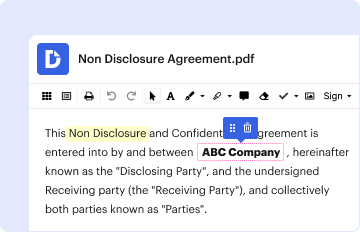
01. Edit your form 1099 k instructions online
Type text, add images, blackout confidential details, add comments, highlights and more.

Type text, add images, blackout confidential details, add comments, highlights and more.
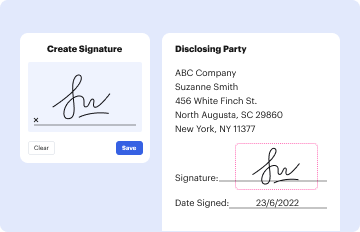
Draw your signature, type it, upload its image, or use your mobile device as a signature pad.

Send it via email, link, or fax. You can also download it, export it or print it out.
The 1099-K 2011 form is a tax document used to report certain types of payment transactions to the Internal Revenue Service (IRS). It is primarily used by entities such as payment settlement entities or third-party payment processors (like PayPal, Stripe, or credit card companies) to report income received via electronic transactions. This form helps ensure that businesses accurately report all relevant income for tax purposes.
To obtain a 1099-K 2011 form, businesses should first contact the payment processor or third-party entity responsible for credit card and electronic payments received throughout the year. These entities typically issue the forms automatically if the business meets the IRS thresholds for reporting. In 2011, the threshold was $20,000 in total payments with more than 200 transactions.
The IRS requires payment processors to provide a 1099-K form to both the recipient of payments and the IRS for transparency. Businesses should reconcile the amounts reported on the 1099-K with their own records to ensure accurate tax reporting. It is crucial to report income accurately as discrepancies might result in an audit or penalties.
The 1099-K forms for the 2011 tax year should have been provided to payment recipients by January 31, 2012, and filed with the IRS by the end of February 2012 if submitting by paper, or the end of March if filing electronically.
Failure to file the 1099-K form accurately and on time may result in penalties. These can range from $50 to $270 for each form, depending on the delay or error, with a maximum annual penalty reaching into the millions for larger entities. Intentional disregard for filing rules can result in penalties of $550 per form with no maximum limit.
The 1099-K form is especially relevant for self-employed individuals and small businesses that rely on electronic payments. These entities must report the income shown on the 1099-K alongside other business income to stay compliant with tax regulations. Failure to do so could result in underreported income and subsequent tax liabilities.


The 1099-K form can be managed in both digital and paper formats. While traditional paper forms exist, many payment settlement entities encourage digital versions for faster processing and reduced errors. Utilizing electronic means can often streamline the process, providing quicker access to the information due for tax filing purposes.
Tax software such as TurboTax and QuickBooks integrates seamlessly with 1099-K forms. They allow users to import form information directly from participating providers, reducing the risk of manual entry errors. This compatibility aids businesses in maintaining accurate and timely tax records while providing tools for a comprehensive overview of business transactions.
Certain states may have additional requirements beyond federal obligations for the 1099-K form. It is important to check state-specific guidelines, as some states might have lower thresholds for reporting or require separate state filings. Businesses must ensure compliance with state tax regulations to avoid regional penalties.
The 1099-K form is issued by third-party payment processors and settlement entities. These include online transaction platforms, credit card companies, and similar services that facilitate electronic and credit payments, ensuring that businesses report and pay taxes on all income appropriately.
We've got more versions of the form 1099 k instructions form. Select the right form 1099 k instructions version from the list and start editing it straight away!
| Versions | Form popularity | Fillable & printable |
|---|---|---|
| 2024 | 4.6 Satisfied (25 Votes) | |
| 2022 | 4.6 Satisfied (21 Votes) | |
| 2021 | 4.8 Satisfied (180 Votes) | |
| 2020 | 4.3 Satisfied (77 Votes) | |
| 2019 | 4.3 Satisfied (216 Votes) | |
| 2018 | 4.3 Satisfied (82 Votes) | |
| 2017 | 4.4 Satisfied (966 Votes) | |
| 2016 | 4.4 Satisfied (348 Votes) | |
| 2015 | 3.9 Satisfied (53 Votes) | |
| 2014 | 4 Satisfied (29 Votes) | |
| 2013 | 4.2 Satisfied (29 Votes) | |
| 2012 | 4 Satisfied (69 Votes) | |
| 2011 | 4 Satisfied (33 Votes) |
At DocHub, your data security is our priority. We follow HIPAA, SOC2, GDPR, and other standards, so you can work on your documents with confidence.
Jan 31, 2012 .2 Form 1099-K, Merchant Card and should. The service is free The 2011 Form 1120S can also be box. If Schedules K-1 are also being.Read more
For contractual obligations starting after January 1, 2011, do not report payments to payees with a foreign address as long as, prior to payment, the payee hasRead more
Dec 1, 2011 Instructions for Form 1099-K (2011). Page 3. For more information on nominee/middleman for the Instructions for Form 1099-K (2011)Read more


