



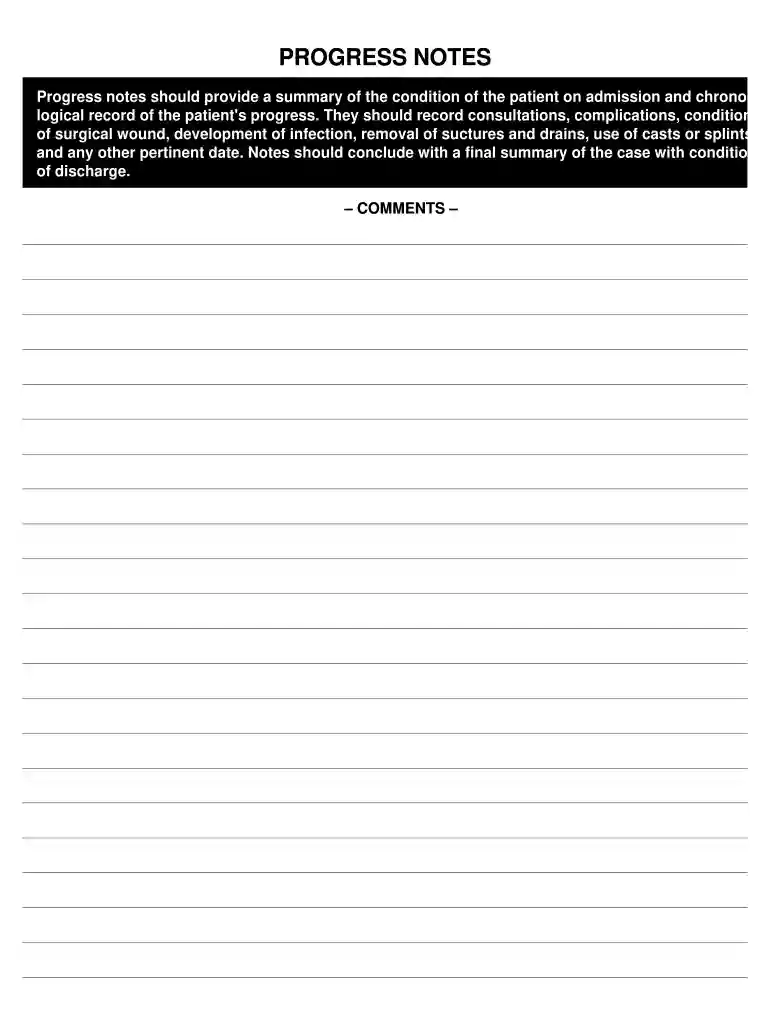
01. Edit your free printable progress notes template online
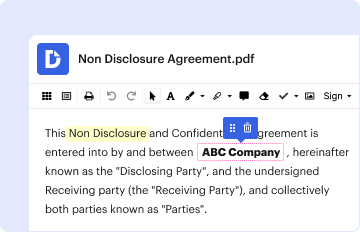
Type text, add images, blackout confidential details, add comments, highlights and more.

Type text, add images, blackout confidential details, add comments, highlights and more.
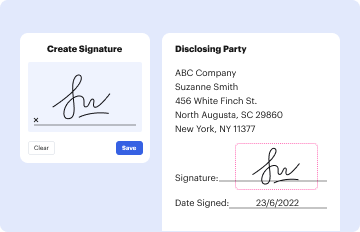
Draw your signature, type it, upload its image, or use your mobile device as a signature pad.
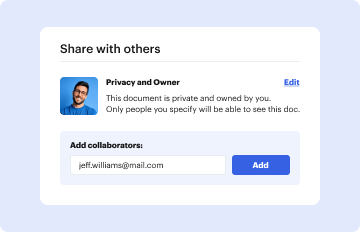
Send medical progress note template pdf via email, link, or fax. You can also download it, export it or print it out.
Patient progress notes are essential documents in healthcare settings that record a patient's condition over time. They provide a comprehensive overview of a patient's treatment journey, detailing clinical observations and changes in their condition following interventions. Typically, these notes include information about symptoms, responses to treatment, changes in medications, and the overall treatment plan. A well-structured progress note not only facilitates better patient care but also acts as a legal record of the clinician's observations and decisions.
These notes are crucial for ensuring continuity of care and enabling healthcare teams to make informed decisions about ongoing treatment options.
Accurate and detailed patient progress notes should contain several critical elements to ensure they serve their intended purpose effectively. Below are the key components typically included in each note:
Patient Identification Information:
Subjective Data:
Objective Data:
Assessment:
Plan:
Incorporating these elements systematically enhances the clarity and usability of progress notes, improving patient safety and care outcomes.
Utilizing a patient progress notes sample can streamline the documentation process for healthcare professionals. Here is a step-by-step guide to effectively implement a progress notes template:
Select a Template:
Personalize the Template:
Document the Encounter:
Review and Update:
Store Safely:
By following this process, healthcare professionals can ensure that patient progress notes are accurate, thorough, and up to date.
Understanding how to effectively use patient progress notes can be illustrated through practical examples across various clinical scenarios:
Example One: Initial Assessment Note
Example Two: Continuity of Care
Example Three: Interprofessional Collaboration
These examples highlight the flexibility of progress notes in different medical contexts and illustrate their importance in supporting effective patient care and communication among providers.
The legal implications of patient progress notes cannot be understated, as these documents may be scrutinized in the event of disputes or inquiries. Considerations for legally compliant progress notes include:
Confidentiality:
Accuracy and Completeness:
Compliance with Standards:
Audit Trails:
Maintaining thorough, accurate, and compliant progress notes is key to avoiding legal implications and supporting effective patient care.
At DocHub, your data security is our priority. We follow HIPAA, SOC2, GDPR, and other standards, so you can work on your documents with confidence.
She was given the homework assignment of writing a poem about any feeling she has this week and bringing it to her to the next individual therapy session.Read more
Aug 21, 2022 Tell readers if the patient is making progress or not (thats why its called a progress note). For example: Mr. Jones is a middle-aged manRead more
Aug 26, 2025 While every of the frameworks for writing progress notes is analogous, listed right here are some suggestions for every one. One Other level toRead more


