






Definition and Meaning of Perio Charting Form
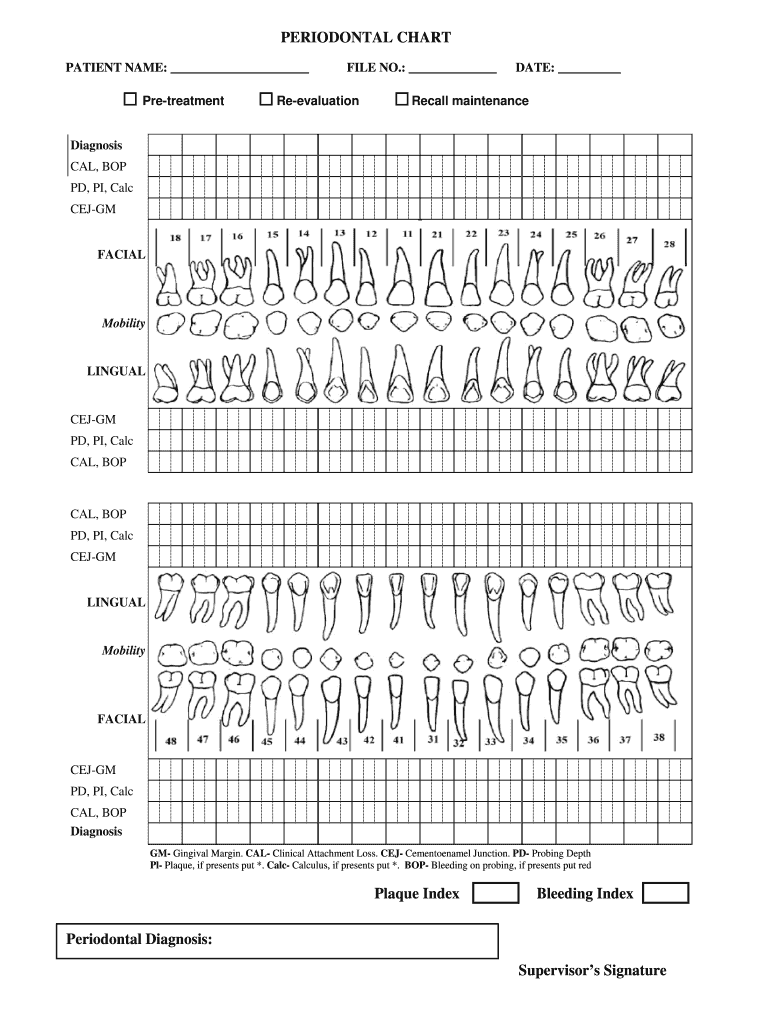
A perio charting form is an essential tool used in dentistry, specifically in periodontal assessments. It serves to document the periodontal health of patients by recording various clinical indicators, such as Clinical Attachment Loss (CAL), Probing Depth (PD), and Bleeding on Probing (BOP). These indicators help dental professionals evaluate the health of the gums and surrounding tissues, making it easier to diagnose conditions like gingivitis or periodontitis. A complete periodontal chart often includes sections for both facial and lingual assessments, mobility of teeth, and requires verification through a supervisor's signature.
The form typically consists of a grid that allows clinicians to record measurements around each tooth systematically. Information captured in the perio charting form plays a critical role in developing a tailored treatment plan, tracking changes in a patient’s gum health over time, and justifying the need for further interventions or referrals. It provides a visual representation of periodontal status, assisting both practitioners and patients in understanding disease progression and management.
Steps to Complete the Perio Charting Form
Completing a perio charting form requires a structured approach to ensure that all relevant data is accurately captured. Here are the steps involved:
-
Prepare the Patient for Evaluation:
- Ensure the patient understands the purpose of the periodontal examination and confirm that they are comfortable.
- Gather any necessary preliminary information regarding their medical history.
-
Conduct a Thorough Examination:
- Use a periodontal probe to measure the probing depth around each tooth.
- Assess for any bleeding on probing, noting the presence of inflammation or other clinical signs in the gingival tissue.
-
Record Measurements:
- Input the measurements directly onto the perio charting form, typically in a designated grid format.
- Note CAL by assessing the distance between the root surface and the gingival margin.
-
Evaluate Additional Factors:
- Observe and record any tooth mobility, furcation involvement, and the overall health of the gingiva.
- Include the Plaque Index (PI) to indicate the patient's oral hygiene status.
-
Review and Verify:
- Ensure all sections of the form are completed accurately before concluding the examination.
- Have a supervisor or colleague verify the form if required, signing to validate the findings.
This systematic approach not only streamlines the periodontal evaluation but also enhances the reliability of the data collected, ultimately benefiting patient care.
Key Elements of the Perio Charting Form
A well-structured perio charting form includes several key elements designed to capture comprehensive patient data. The major components typically found in a perio charting form are:
- Patient Information: Essential details such as name, date of birth, and medical history.
- Probing Depth Measurements: Numeric values indicating how deeply the probe penetrates the gum tissue around each tooth, usually measured in millimeters.
- Clinical Attachment Levels: Measurements reflecting the amount of supporting periodontal tissue around the tooth.
- Bleeding on Probing: Documentation of any bleeding when the probe makes contact with the gum tissue, indicating potential inflammation.
- Tooth Mobility Assessments: Identification of any teeth that exhibit unusual movement, which may be indicative of periodontal disease.
- Additional Observations: Areas to note other findings, such as furcation involvement or localized gingival recession.
These elements work in tandem to provide a complete overview of the patient's periodontal health, making it essential for accurate diagnosis and treatment planning.
Important Terms Related to Perio Charting Form
Understanding the terminology associated with the perio charting form enhances comprehension and utilization in clinical settings. Key definitions include:
- Clinical Attachment Loss (CAL): A measure reflecting the extent of periodontal support loss, indicating the progression of periodontal disease.
- Probing Depth (PD): The distance from the gingival margin to the bottom of the periodontal pocket, critical for identifying periodontal health status.
- Bleeding on Probing (BOP): Presence of blood upon probing, suggestive of inflammation and active periodontal disease.
- Plaque Index (PI): A measurement assessing the level of bacterial plaque accumulation, crucial for evaluating oral hygiene.
- Mobility Grade: Evaluates and classifies the degree of movement of a tooth within its socket, from slight mobility to severe.
By familiarizing oneself with these terms, practitioners can better assess patient conditions and communicate findings effectively.
Who Typically Uses the Perio Charting Form
The perio charting form is primarily utilized by dental professionals, including:
- Periodontists: Specialists focusing exclusively on the diagnosis and treatment of periodontal disease. They employ the form to gather comprehensive clinical data for advanced treatment.
- General Dentists: Many general practitioners incorporate perio charting into routine examinations as part of comprehensive patient care.
- Dental Hygienists: They often conduct periodontal assessments and fill out the perio charting form to track changes in patients’ gum health during cleanings.
- Dental Assistants: Assistants may be responsible for preparing and maintaining the forms, ensuring accuracy in data entry.
In essence, any dental care provider involved in the assessment or management of periodontal conditions may utilize this form to enhance accurate diagnosis and treatment planning.


Legal Use of the Perio Charting Form
The perio charting form serves not only clinical purposes but also complies with various legal requirements in dental practice. These legal aspects are crucial for maintaining patient safety and ensuring ethical treatment protocols. Critical considerations include:
- Patient Consent: Before performing periodontal evaluations, obtaining informed consent is mandatory. The perio charting form should document this consent to protect both the patient and the provider legally.
- Record Keeping Standards: Proper documentation of periodontal health is essential for adherence to state laws and dental board regulations. Accurate recordings can mitigate liability concerns should treatment disputes arise.
- Third-Party Insurers: Insurers may require detailed documentation, including perio charts, to authorize treatments or reimburse providers. Having a well-maintained perio chart can ease the claims process.
- Compliance with HIPAA Regulations: Protecting patient information is paramount. The data collected on the perio chart must be handled sensitively to comply with the Health Insurance Portability and Accountability Act (HIPAA).
Being aware of these legal aspects fosters responsible practice management and enhances the integrity of dental healthcare services.