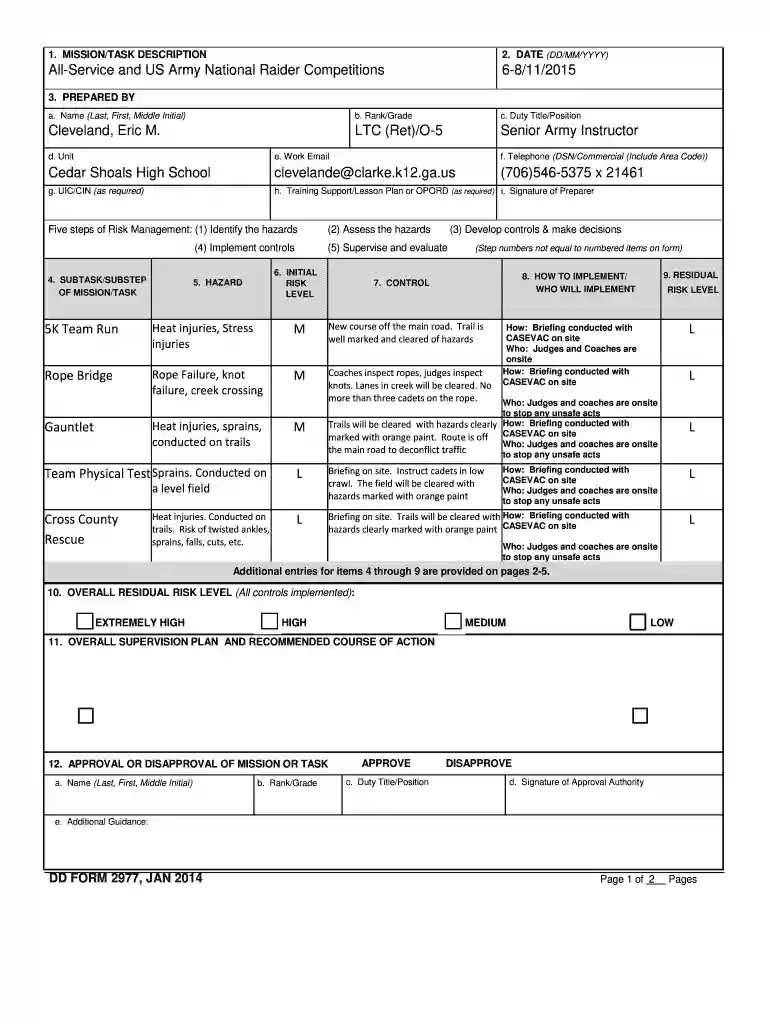
Definition and Meaning of DD Form 2977
The DD Form 2977, also known as the Deliberate Risk Assessment Worksheet, is utilized by the U.S. Army to identify, assess, and mitigate risks associated with specific activities or missions. This document is crucial for ensuring the safety and effectiveness of operations by systematically evaluating potential hazards and implementing controls to minimize risks. The form promotes a culture of safety and preparedness within military operations, allowing leaders to make informed decisions based on thorough risk analysis.
Purpose of DD Form 2977
- Risk Identification: The form captures various mission tasks and associated hazards that could affect personnel and equipment.
- Mitigation Strategies: It outlines specific actions to mitigate identified risks, ensuring a comprehensive approach to safety.
- Documentation: The DD Form 2977 serves as a formal record of risk assessments that can be referenced in future planning or investigations.
How to Use the DD Form 2977
Using the DD 2977 requires a clear understanding of its structure and components. Here’s a guide on effectively utilizing this form in your operational planning.
Steps to Utilize the Form
- Gather Information: Collect details concerning the mission or activity, including objectives, personnel involved, and resources needed.
- Identify Hazards: List all potential hazards related to the tasks involved in the operation. This could include environmental, operational, or equipment-related risks.
- Assess Risks: For each identified hazard, evaluate the level of risk based on likelihood and severity. This assessment will help prioritize which risks require more immediate attention.
- Implement Controls: Document control measures for each identified risk. This could include safety procedures, training, or equipment adjustments designed to minimize risk.
- Review and Finalize: After completing the form, review it with relevant stakeholders. Finalize the document for submission and ensure that all personnel involved understand their roles in risk management.
Key Sections of the Form
- Mission Description: Outline the scope and purpose of the operation.
- Task Breakdown: Detail specific tasks and associated personnel assignments.
- Risk and Control Evaluation: Provide a systematic assessment of each identified risk and the controls applied.
Important Terminology Related to DD Form 2977
Understanding key terms associated with the DD Form 2977 enhances its effective use. Here are some fundamental terms:
Risk Evaluation Terms
- Hazard: A potential source of harm or adverse effect.
- Risk: The chance of harm or loss occurring due to hazards.
- Control Measures: Actions taken to mitigate or eliminate risks identified during the assessment process.
- Residual Risk: The remaining risk after controls have been implemented.
Operational Context
- Operational Environment: External factors affecting the mission, including weather, terrain, and enemy actions.
- Mitigation: The process of reducing the severity or impact of identified risks through planning and intervention.
Who Typically Uses the DD Form 2977
The DD Form 2977 is primarily used within the U.S. Army, but it can also apply to various branches of the military and related agencies.

Typical Users Include
- Military Commanders: Those responsible for mission planning and execution utilize the form for comprehensive risk assessment.
- Safety Officers: Personnel tasked with ensuring compliance with safety regulations and practices within military operations.
- Training Officers: Individuals involved in preparing troops for specific missions can use the form to address potential risks during training exercises.
Steps to Complete the DD Form 2977
Completing the DD Form 2977 requires careful attention to detail. Below are the significant steps involved in filling out the worksheet effectively.
- Mission Identification: Clearly state the mission and its objectives in the designated section.
- Task Identification: Break down the mission into detailed tasks and specific actions required for completion.
- Hazard Identification: For each task, identify hazards that could pose risks. This should involve both a qualitative and quantitative assessment.
- Risk Assessment: Evaluate the identified risks using a defined matrix to determine their level of severity and likelihood.
- Control Measures Implementation: Outline strategies for controlling each risk, detailing how they will be implemented and who is responsible for monitoring them.
- Approval and Review: Submit the completed form for review and approval by leadership to ensure that all stakeholders agree with the identified risks and proposed controls.
- Continual Review: Regularly update and review the DD Form 2977 as circumstances change or new information becomes available.
Legal Use of the DD Form 2977
The DD Form 2977 holds legal significance in military operations, particularly in the context of safety and compliance with military regulations.
Legal Framework
- Adherence to Protocols: Using the DD 2977 ensures that units adhere to Army regulations concerning risk management practices.
- Liability Protection: Proper documentation through this form can protect commanders and units from legal liability resulting from incidents that occur due to unassessed risks.
- Accountability: It formalizes risk management, creating a paper trail that ensures accountability in decision-making and enhances operational readiness.
Compliance Requirements
- Regulatory Guidelines: Units must utilize the DD 2977 in compliance with Army training and operational regulations.
- Record Keeping: Maintaining accurate records as per the form’s recommendations is essential for audits and assessments by superiors.
Examples of Using the DD Form 2977
Practical examples demonstrate the application of the DD 2977 in real-world scenarios.
Case Study 1: Training Exercise
During a training exercise involving water survival techniques, a unit could use the DD Form 2977 to assess the risks associated with cold water exposure and swift currents.
- Hazards Identified: Hypothermia, drowning, and injury from equipment.
- Control Measures Implemented: Use of wetsuits, lifeguard supervision, and strict adherence to safety protocols.
Case Study 2: Field Operations
For a field operation to secure a building in a hostile area, the DD Form 2977 would be essential in assessing risks related to enemy engagement and environmental hazards.
- Hazards Identified: Enemy fire, possible IEDs, and fatigue-related injuries.
- Control Measures Implemented: Use of protective gear, mission timing adjustments, and establishing clear communication.
By comprehensively addressing these aspects, users of the DD Form 2977 can effectively enhance safety and operational effectiveness within military missions.