







Definition & Purpose of the N337 Form
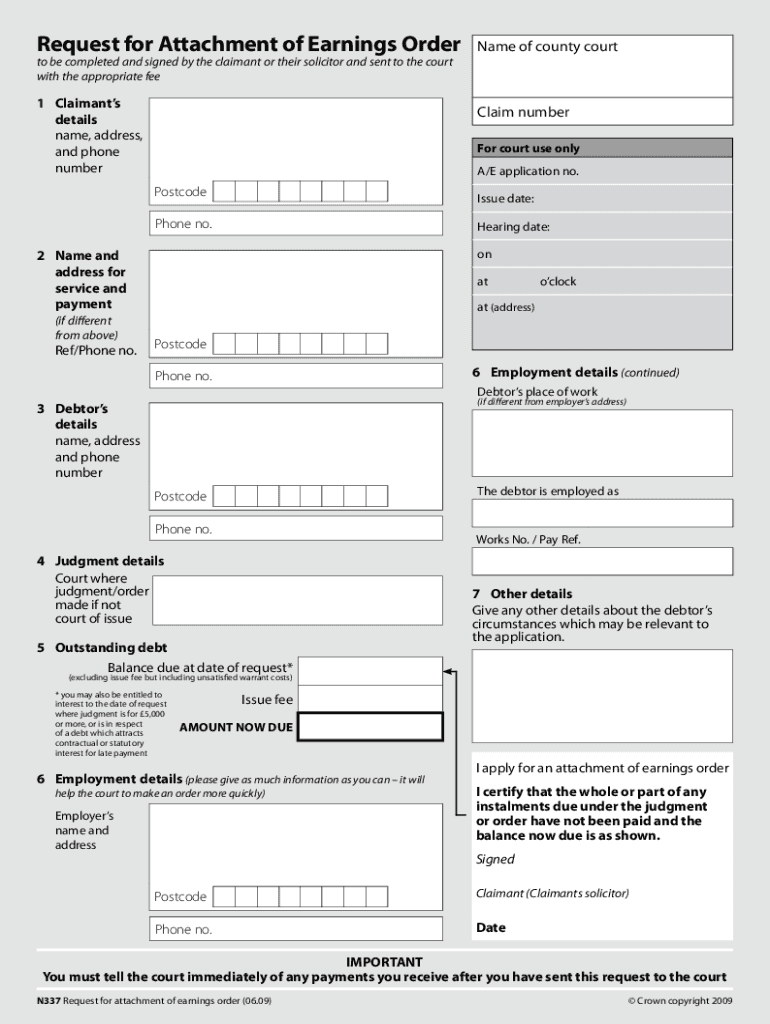
The N337 form, also known as the Application for Attachment of Earnings Order, is a legal document used to request the court's intervention in garnishing an individual's wages to settle an outstanding debt. This form provides essential details about the debtor's employment status and the judgment they are subject to. Its primary purpose is to facilitate the courts in issuing an earnings order, which compels the debtor's employer to direct part of the debtor’s salary towards the unpaid debt. Understanding the significance and the procedural requirements associated with this form is crucial for both creditors and debtors involved in the payment recovery process.
Steps to Complete the N337 Form
Completing the N337 form requires a meticulous approach to ensure all necessary information is accurately provided. Here's a step-by-step breakdown:
-
Claimant Information: Start with the claimant's details, including their name, address, and contact information.
-
Debtor Details: Provide the debtor's full name, address, and other identifying information to ensure accurate processing.
-
Judgment Information: Include comprehensive details of the judgment, such as the case number, court location, and the amount of debt remaining.
-
Employment Information: This section requires details about the debtor's employment, including employer name, address, and the debtor's job title.
-
Financial Assessment: Some parts of the form may require a financial declaration from the debtor to facilitate the court’s decision on the attachment of earnings.
-
Signatures: Ensure that the form is signed by the claimant or the claimant's solicitor to validate the application.
Completing the form accurately ensures a smooth processing experience and increases the likelihood of favorable outcomes.
How to Obtain the N337 Form
Obtaining the N337 form can be straightforward if the correct procedures are followed. The form is typically available through several channels:
-
Online Access: Most legal jurisdictions provide access to the N337 form on their official court websites. Users can download it in PDF format for convenience.
-
Court Offices: Physical copies can often be picked up at local court offices. It's advisable to contact the office beforehand to confirm availability and any specific requirements.
-
Legal Representatives: Solicitors or legal advisors may also provide the form as part of their services, guiding you through the completion process.
Understanding the right place to source the N337 form ensures that applicants have the most current version and necessary guidance for filling it out.
Legal Use of the N337 Form
The legal use of the N337 form is targeted towards enforcing monetary judgments through wage garnishment. This form aligns with U.S. legal protocols for debt recovery by facilitating payment directly from a debtor's income. For creditors, it represents a viable enforcement action when other collection efforts have been exhausted. Debtors should note that this process involves careful legal scrutiny, ensuring fairness and adherence to judgment terms.
This procedure helps maintain legal balance, offering creditors a reliable means to collect dues while safeguarding debtors' rights by involving judicial oversight.
Important Terms Related to the N337 Form
Understanding the terminology associated with the N337 form can aid in comprehending its significance:
-
Claimant: The individual or entity that initiates the attachment of earnings order.
-
Debtor: The person whose earnings are subject to garnishment.
-
Judgment: The court's official decision confirming the debtor’s obligation to pay a specified amount.
-
Earnings Order: A legal mandate directing an employer to withhold a portion of the debtor's wages.
Grasping these terms enables clearer communication and understanding of the form’s implications and processes.
State-Specific Rules for the N337 Form
While the N337 form serves a general function, there can be variations in its application and enforcement based on state regulations. Differences might include:
-
Percentage Limits on Garnishment: States often impose limits on the proportion of wages that can be garnished, ensuring debtors retain sufficient income for living expenses.
-
Exemptions and Protections: Variations in exemptions (e.g., the debtor's primary residence) may apply across states.
-
Procedural Requirements: States might have unique procedural nuances regarding form submission or hearing protocols.
Comprehending these state-specific rules ensures compliance with local laws, preventing legal missteps and fostering an efficient resolution.
Penalties for Non-Compliance
Non-compliance with the N337 form's requirements can lead to several consequences:
-
Legal Sanctions: Courts may impose fines or additional penalties if parties fail to adhere to orders.
-
Liability for Costs: Claimants might incur additional legal costs if submissions are incorrect or incomplete, resulting in delays.
-
Judgment Revisions: Persistent non-compliance could lead to revisiting judgments or enforcement measures.
Understanding and adhering to all procedural requirements can help mitigate potential penalties and foster a smoother legal journey.
Filing Deadlines / Important Dates
Proactively managing deadlines is essential for the timely processing of the N337 form. Key considerations include:
-
Filing Deadlines: Courts usually specify timelines for submitting the form following a judgment. Missing these can delay or nullify the process.
-
Response Periods: Debtors typically receive a window to respond or object to the proposed attachment of earnings.
-
Court Hearings: If hearings are necessary, dates are generally scheduled to discuss the form’s approval.
Meticulous attention to these deadlines ensures a coherent process flow and reinforces procedural accountability.
By thoroughly exploring the N337 form's aspects, users can effectively navigate its application and implications, facilitating informed legal actions and ensuring compliance with judicial requirements.




