
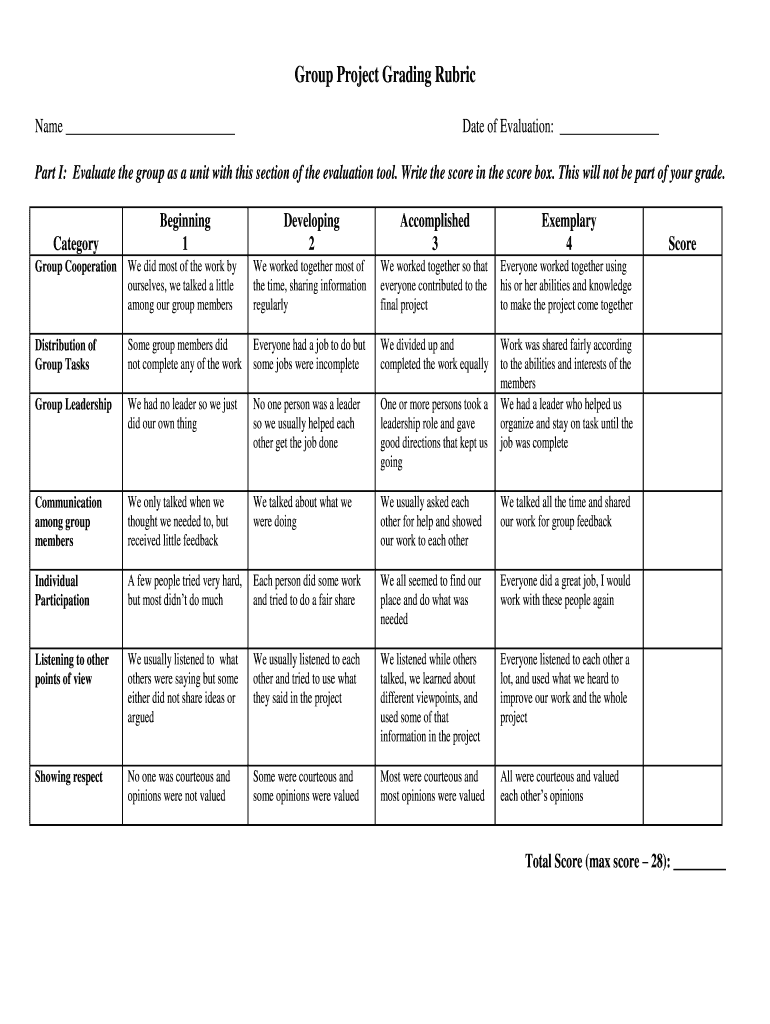







Definition & Meaning of Rubrics in Assessment
Rubrics in assessment are structured frameworks used to evaluate student performance and learning outcomes through specific criteria. They provide clear expectations and standards for assignments, projects, or activities. A rubric typically includes:
- Criteria: These are the specific attributes or skills that are being assessed, such as quality of work, adherence to guidelines, or level of understanding.
- Performance Levels: Most rubrics define a scale (often ranging from poor to excellent) that reflects the quality of performance, often categorized using descriptors like 'Beginning', 'Developing', 'Proficient', and 'Exemplary'.
- Descriptors: These are detailed descriptions of what constitutes performance at each level for each criterion. For example, a rubric assessing communication skills may describe proficient performance as "clearly articulates ideas and engages the audience".
Rubrics clarify expectations for both instructors and students, making it easier to provide feedback and ensure consistency in grading.
How to Use Rubrics in Assessment
To effectively use rubrics in assessment, follow these steps:
-
Develop the Rubric: Identify the learning objectives and the key criteria for evaluation. Ensure the rubric aligns with the goals of the assignment or project.
-
Share with Students: Distribute the rubric before the assignment is due. This transparency allows students to understand how their work will be evaluated and what is expected of them.
-
Evaluate Student Work: Use the rubric to systematically assess student submissions. Award scores for each criterion based on the predefined performance levels.
-
Provide Feedback: In addition to scores, include comments based on the rubric. Highlight strengths and provide specific suggestions for improvement.
-
Reflect and Revise: After the assessment is complete, evaluate the effectiveness of the rubric. Consider student feedback to make adjustments for future assessments to enhance clarity or relevance.
Utilizing rubrics in assessment fosters an objective evaluation process and supports student learning by providing clear performance feedback.
Key Elements of Effective Rubrics
When designing rubrics for assessments, consider these key elements to enhance their effectiveness:
-
Clarity: Use simple and precise language that is easily understood by students. Avoid using technical jargon that might confuse them.
-
Specificity: Each criterion should be clearly defined with specific performance descriptors. This reduces ambiguity in grading and encourages focused improvement.
-
Comprehensiveness: A rubric should address all significant aspects of the assignment to provide a holistic evaluation. This could include content understanding, organization, mechanics, and creativity.
-
Scalability: Ensure the rubric can be easily used for various assignments at different levels of complexity. This consistency can help in tracking student progress over time.
-
Flexibility: Allow room for adjustments based on unique assignment requirements or unforeseen circumstances. This can make the rubric a living document that evolves with teaching practices.
Effective rubrics incorporate these elements to facilitate clear communication of expectations and to provide a consistent assessment process.
Examples of Rubrics for Group Projects
Rubrics tailored for assessing group projects can take various forms, depending on what is valued in the project. Common categories might include:
- Collaboration: Measure how well group members worked together, including communication and support practices.
- Task Distribution: Assess how tasks were allocated amongst group members, ensuring fair participation.
- Leadership: Evaluate the effectiveness of leadership within the group, looking at who took initiative and how they motivated the team.
- Individual Contributions: Focus on what each member brought to the group, emphasizing personal accountability within the collective effort.
- Overall Effectiveness: Examine the final product as a whole, relating quality, creativity, and adherence to project guidelines.
Using a structured rubric not only standardizes grading but also promotes accountability among group members to contribute actively to the group's success.
Steps to Complete the Example of Rubrics in Assessment
To achieve successful implementation of rubrics in your assessment process, follow these detailed steps:
-
Identify Purpose: Clearly define the learning objectives and what you seek to measure through the rubric.
-
Gather Input: Consult with colleagues or fellow educators to gather input on what should be included in the rubric. This collaborative approach can lead to a more robust assessment tool.
-
Draft the Rubric: Create an initial draft that includes all essential criteria, performance levels, and descriptors for scoring.
-
Pilot the Rubric: Test the rubric with a small group of students or through a sample assignment to identify any gaps or ambiguities.
-
Refine and Finalize: Based on the pilot, make adjustments to improve clarity, relevance, and usability before finalizing the rubric.
-
Implement and Assess: Use the final rubric in actual assessments and gather data on its effectiveness.
-
Review Effectiveness: After using the rubric, reflect on student outcomes to determine if it met its intended purpose and if adjustments are necessary for future use.
By following these steps, educators can create rubrics that not only guide assessments but also enhance the learning experience for students.




