







Definition & Meaning
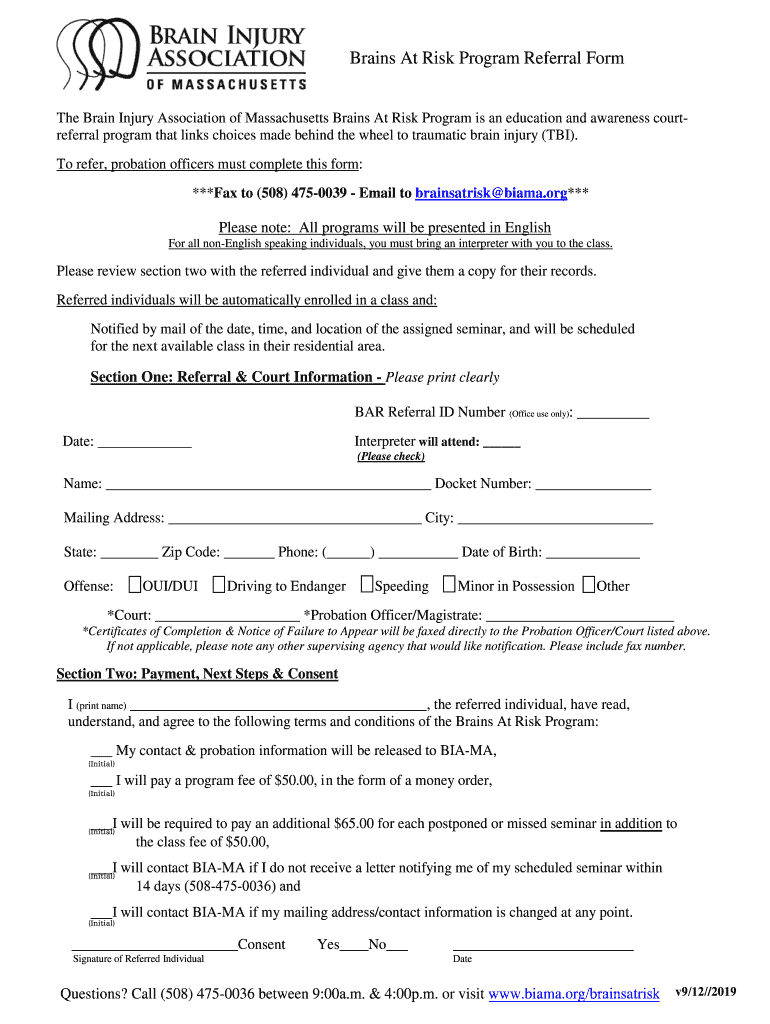
The Brains At Risk Program is an educational initiative aimed at linking driving behaviors to the risk of traumatic brain injuries (TBI). Participants are guided through content that illustrates the significant consequences of reckless driving choices, intending to cultivate safer practices. By understanding the science behind TBIs and how everyday decisions impact brain health, individuals gain a thorough comprehension of how lifestyle changes can prevent catastrophic outcomes.
How to Use the Brains At Risk Program
To utilize the Brains At Risk Program effectively, enrollees must follow a structured curriculum designed to reinforce knowledge and facilitate behavioral change. This involves participating in seminars that focus on the connection between driving habits and TBIs. Attendees should be prepared to engage in discussions, complete assignments, and reflect on personal driving experiences.
Practical Steps
- Enrollment: Individuals typically receive referrals through probation officers.
- Preparation: Gather required materials and complete any pre-seminar assessments.
- Participation: Actively engage in course content, discussions, and activities.
- Reflection: After each session, review key learnings and apply insights to daily routines.
How to Obtain the Brains At Risk Program
Securing a spot in the Brains At Risk Program is typically initiated by a referral from probation officers or legal entities. This is a common procedure for those who have faced legal issues related to driving offenses.
Obtaining Process
- Referral Receipt: Eligible participants receive a formal referral notice outlining their inclusion in the program.
- Contact Information: Use the provided details to reach out to the designated program coordinator for registration.
- Confirmation: Ensure receipt of all necessary enrollment documents, including seminar schedules and preparation guidelines.
Steps to Complete the Brains At Risk Program
Completion of the Brains At Risk Program involves a series of defined stages aimed at ingraining the key lessons into participants' daily lives. The process is designed to be thorough, allowing attendees to fully internalize critical information about safe driving and brain injury prevention.
Key Stages
- Register: Confirm your place in the program through the educator or organization coordinating the sessions.
- Attend All Seminars: Ensure full participation in each seminar to meet the program's requirements.
- Engage with Content: Actively participate in exercises, discussions, and reflective tasks during each session.
- Final Evaluation: Complete all assessments or evaluations to measure understanding and readiness for program conclusion.
Important Terms Related to Brains At Risk Program
Understanding certain terminology related to the Brains At Risk Program can enhance the comprehension and engagement of participants.
Key Terms
- Traumatic Brain Injury (TBI): An injury occurring when an external force disrupts normal brain function.
- Probation Officer: A supervisor responsible for monitoring individuals on probation and managing program referrals.
- Referral: A recommendation made by an official entity to participate in the educational program as part of a legal procedure.
Who Typically Uses the Brains At Risk Program
The primary audience for the Brains At Risk Program includes individuals referred through legal or probation systems due to offenses associated with unsafe driving habits. The structured educational format is particularly beneficial for drivers who require rehabilitation regarding the awareness of driving safety and health implications.


Target Groups
- Offenders with Driving Violations: Typically, those who have committed traffic violations that pose safety risks.
- Probationary Individuals: Program participation may be mandated as a term of probation.
- Rehabilitative Candidates: Individuals seeking education to proactively rectify unsafe driving behaviors.
Key Elements of the Brains At Risk Program
The program consists of several vital components that work together to deliver its core message. Each element plays a critical role in ensuring participants gain full insight into the correlation between their behavior and potential brain injury risks.
Program Components
- Educational Seminars: Focused on evidence-based content regarding driving safety and brain health.
- Interactive Workshops: Provide practical sessions that engage participants in real-world application of safety principles.
- Resource Materials: Offers supportive documents and media to facilitate learning and understanding.
- Feedback and Assessment: Designed to evaluate participant progress and program effectiveness.
State-Specific Rules for the Brains At Risk Program
While the Brains At Risk Program follows a universal curriculum, specific state regulations may dictate variations due to differing legal, cultural, and procedural standards. These differences can influence aspects such as program duration, content delivery, and eligibility criteria.
Understanding State Variations
- Legislative Requirements: Some states may have unique mandates regarding the accreditation or certification of programs.
- Cultural Considerations: Adjustments to accommodate demographic realities, including language differences or region-specific driving issues.
- Program Administration: Differences in how states allocate resources to operate and supervise the initiative effectively.




