




01. Edit your form online
Type text, add images, blackout confidential details, add comments, highlights and more.

Type text, add images, blackout confidential details, add comments, highlights and more.

Draw your signature, type it, upload its image, or use your mobile device as a signature pad.

Send it via email, link, or fax. You can also download it, export it or print it out.
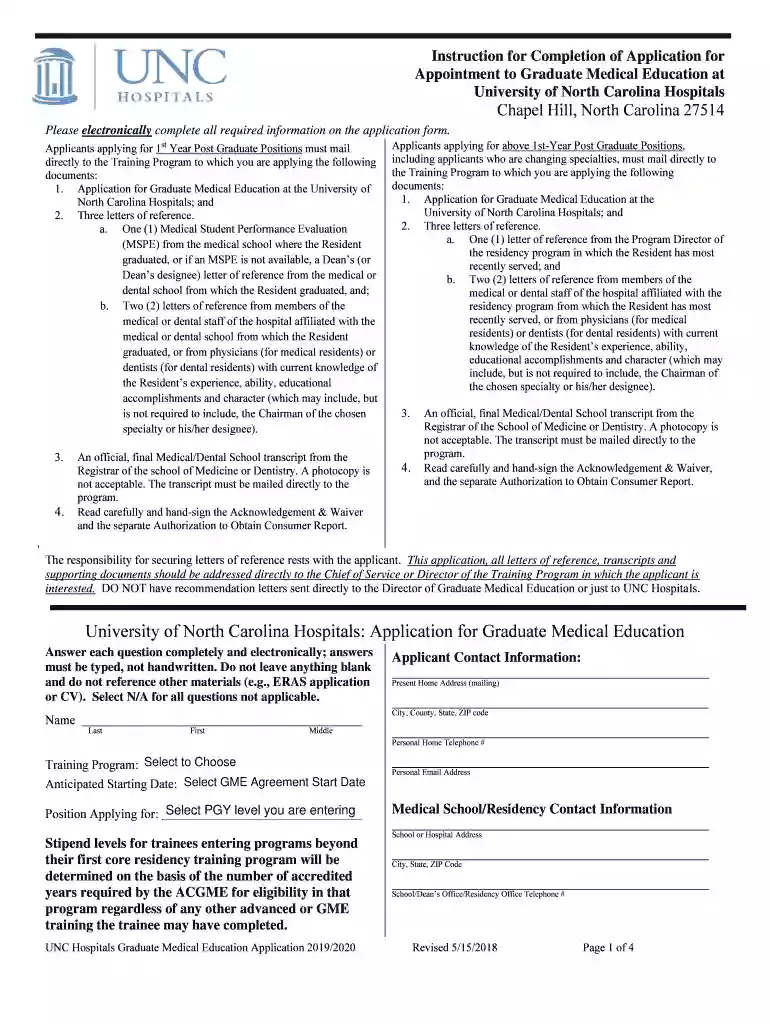
The "Instruction for Completion of Application for Appointment to" is a vital resource designed to guide applicants through the process of filling out a specific form necessary for appointments, frequently in professional or educational contexts such as medical education or legal appointments. This set of instructions ensures that applicants provide all required information accurately and completely, reducing the likelihood of errors that could delay or complicate their application. The form's primary purpose is to ensure a standardized approach to collecting applicant data, facilitating a smooth and efficient review process by the hosting institution.
Gather Required Documents: Before starting the application, applicants must collect all necessary documents, such as official transcripts, letters of reference, and any forms that require signatures. Having these on hand prevents delays during the submission process.
Fill Out Personal Information: Enter all personal details as requested, ensuring accuracy to avoid potential discrepancies that might affect the application’s validity.
Provide Professional Information: Include detailed work or educational background, aligning with the form’s specifications. This section might require supplemental documents or references.
Consent and Authorization: Carefully read through any sections requiring consent for background checks or authorization for information release. Ensure all necessary boxes are checked and signatures are provided.
Review and Sign: Go through the entire form to verify information accuracy. Pay particular attention to required fields to ensure nothing is missed. Sign the form where indicated to authenticate the submitted information.
Submit the Form: Follow the specified submission methods, which might include mailing, online submission, or dropping off the application in person to the corresponding office.
Letters of Reference: Typically three to five letters may be needed from professional contacts who can vouch for the applicant's qualifications and experiences.
Official Transcripts: Applicants should obtain and submit sealed transcripts from all attended post-secondary institutions.
Identity Verification: Photocopies of identification such as a driver’s license or passport might be required to confirm identity.
Authorization Forms: Completed consent forms for background checks and information verification.
Applicant: The individual seeking an appointment through the completion of the application form.
Transcripts: Official records from educational institutions, detailing courses taken and grades received.
Consent: The agreement by the applicant to allow the entity to conduct background checks or verify information provided.
Signature: A handwritten or digital signature that authenticates an applicant’s agreement to the terms and the truthfulness of the information supplied.
The process typically begins with the submission of the application form and required documents. Following this, the institution conducts a comprehensive review, potentially involving further interviews or assessments. Approval time can vary significantly, often taking several weeks to months, depending on the complexity and requirements of the position or program. During this period, applicants might be contacted for additional information or clarification.
This form is predominantly used by individuals applying for residency positions in medical institutions, legal appointments, or similar high-level placements requiring thorough vetting. This group often includes recent graduates, professionals transitioning into specialized roles, or individuals seeking advanced training or certification within their fields.


Online Submission: Many institutions offer digital platforms where applicants can upload forms and documents securely. This option often provides immediate confirmation of receipt.
Mail Submission: Hard copies can be mailed to the specified institution’s address. This method might require extra time for delivery and processing.
In-Person Submission: Dropping off application materials directly at the institution can mitigate the risk of items lost in the post and allows for direct communication if issues arise during submission.
Digital Version: Offers convenience, fast submission, and often immediate feedback or acknowledgment of receipt. It helps in minimizing errors through auto-check features.
Paper Version: Preferred by institutions or applicants who require or prefer tangible records. This version must be handled with care to ensure no documents are lost or damaged.
Failing to complete the application properly or omitting key elements can result in rejection of the application. Furthermore, misrepresentation or falsification of information can lead to severe consequences, including disqualification from consideration or even legal actions. It is crucial for applicants to adhere closely to the instructions provided to avoid such outcomes.
We've got more versions of the Instruction for Completion of Application for Appointment to form. Select the right Instruction for Completion of Application for Appointment to version from the list and start editing it straight away!
| Versions | Form popularity | Fillable & printable |
|---|---|---|
| 2023 | 4.8 Satisfied (35 Votes) | |
| 2022 | 4.3 Satisfied (46 Votes) | |
| 2022 | 4.6 Satisfied (38 Votes) | |
| 2021 | 4.8 Satisfied (67 Votes) | |
| 2021 | 4.8 Satisfied (37 Votes) | |
| 2021 | 4.8 Satisfied (155 Votes) | |
| 2021 | 4.5 Satisfied (34 Votes) | |
| 2020 | 4.8 Satisfied (133 Votes) | |
| 2020 | 4.8 Satisfied (53 Votes) | |
| 2020 | 4.8 Satisfied (161 Votes) | |
| 2020 | 4.4 Satisfied (124 Votes) | |
| 2020 | 4.7 Satisfied (43 Votes) | |
| 2020 | 4.8 Satisfied (135 Votes) | |
| 2019 | 4.3 Satisfied (31 Votes) | |
| 2019 | 4.4 Satisfied (24 Votes) |
At DocHub, your data security is our priority. We follow HIPAA, SOC2, GDPR, and other standards, so you can work on your documents with confidence.
Any applicant seeking a judicial appointment from Governor Newsom must complete and submit an application. The link to the applications can be found below.Read more
When should I apply for OPT? You may apply for OPT 90 days before the completion of your program of study or up to 60 days after, during your grace period.


