




Definition and Meaning
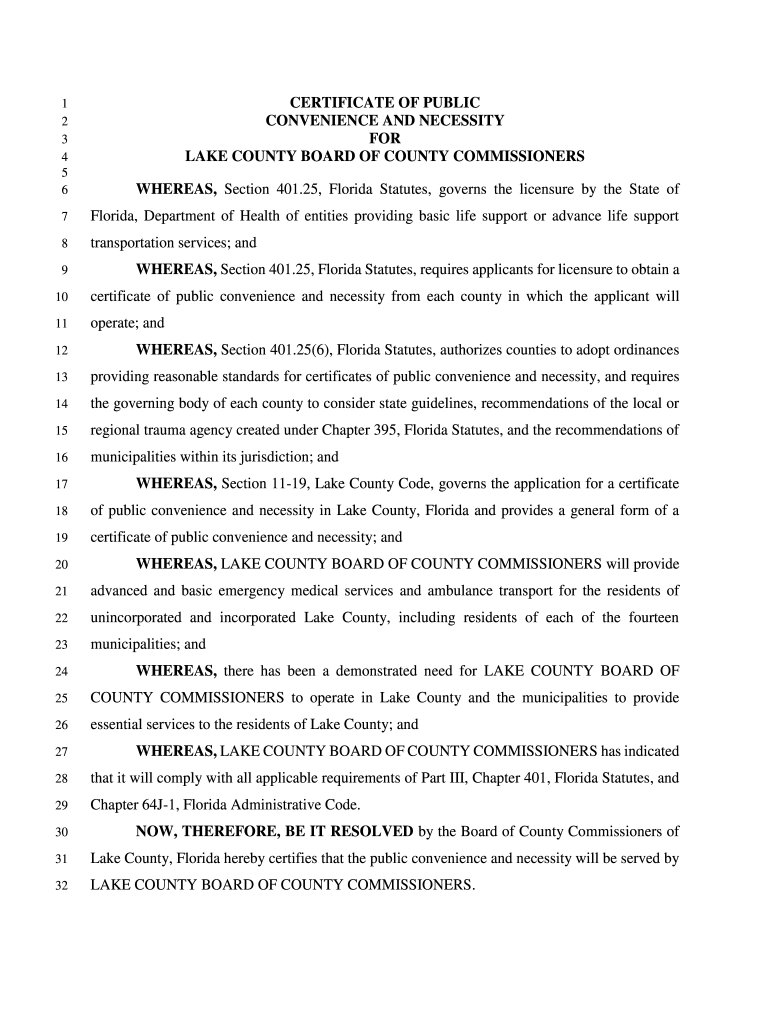
The Certificate of Public Convenience and Necessity (CPCN) is a legal document required for entities looking to provide certain services, such as emergency medical services and public utilities, within a specific jurisdiction. The certificate confirms that the service is both necessary for the public good and that the provider is fit to deliver it. This balances public need with regulatory oversight.
Core Functions
- Ensures services provided meet the essential needs of the community.
- Authenticates the service provider's ability to deliver according to established standards.
- Facilitates regulation and oversight by government bodies.
Legal Background
Typically rooted in state regulations, the CPCN process involves assessments that consider local demands, provider qualifications, and potential impacts on existing services. For instance, in Florida, entities seeking to operate ambulances need this certificate, ensuring they fit local legal and operational prerequisites.
How to Obtain the CERTIFICATE OF PUBLIC CONVENIENCE AND NECESSITY
Securing a CPCN involves distinct procedural steps, primarily designed to align the service with the public's needs while ensuring compliance with regulatory standards.
Primary Steps
- Application Submission: Entities must submit a comprehensive application detailing proposed services, operational plans, and compliance with local statutes.
- Needs Assessment: Regulators conduct a thorough evaluation to determine if the service aligns with community necessities.
- Public Hearings: Some jurisdictions may require public forums to gather input from residents and stakeholders.
- Approval Process: Post-assessment, regulatory bodies either grant or deny the certificate, often providing justifications for their decisions.
- Continuous Compliance: Once granted, maintaining certification demands ongoing adherence to regulations and periodic reviews.
Steps to Complete the CERTIFICATE OF PUBLIC CONVENIENCE AND NECESSITY
Completing this form involves various steps, from gathering necessary information to fulfilling specific administrative requirements.
Detailed Procedure
- Collect Necessary Documentation: Gather business licenses, financial statements, and operational plans.
- Complete Application Forms: Accurately fill out required sections, focusing on service specifications and compliance metrics.
- Attach Required Documents: Include supplementary materials such as municipality endorsements and community impact assessments.
- Submit Application: Depending on jurisdictional rules, submission can be digital or physical, adhering to stated deadlines.
- Follow Up on Feedback: Address any feedback or requests for additional information promptly to expedite the process.
- Monitor Application Status: Stay informed about the status and participate in hearings or meetings as required.
Key Elements of the CERTIFICATE OF PUBLIC CONVENIENCE AND NECESSITY
The CPCN form contains several critical sections, each vital to the successful application and operation of the proposed service.
Main Components
- Applicant Information: Details about the business entity, such as name, address, and contact numbers.
- Service Description: Detailed explanation of the services proposed, including scope and intended beneficiaries.
- Operational Standards: Information about how the services will adhere to regulatory and safety standards.
- Community Impact Analysis: Assessment of the proposed service's effect on local communities and existing services.
Who Issues the Certificate
Typically, government entities or designated regulatory bodies issue CPCNs. These can vary from state to state, commonly involving state-level agencies, county boards, or specific committees.
Examples
- State Public Utilities Commissions: Often responsible for utility service certification.
- County Health Departments: May handle certifications related to emergency services such as ambulance operations.
- Transportation Authorities: Oversee certifications for transit-related services.
Legal Use of the Certificate
The CPCN serves as a key regulatory instrument, ensuring that service provisions meet public standards and legal requisites.
Specific Legal Functions
- Authorization: Empowers service providers to legally operate within prescribed regions.
- Regulatory Compliance: Mandates adherence to specific industry standards and practices.
- Public Accountability: Provides a mechanism for public oversight and input into service provision.
State-Specific Rules for the CERTIFICATE OF PUBLIC CONVENIENCE AND NECESSITY
The regulatory specifications for CPCNs can differ greatly depending on state and local laws.
Diverse Regulations
- Florida: Requires specific approvals for emergency services from county commissioners based on state statutes.
- California: Involves energy regulators for utility services, emphasizing environmental and economic impacts.
- New York: Requires transportation services to demonstrate definitive need and fiscal responsibility before issuing certificates.
Who Typically Uses the CERTIFICATE OF PUBLIC CONVENIENCE AND NECESSITY
Various business entities and public organizations rely on the CPCN to conduct their operations legally.

Common Users
- Ambulance Services: Need certification to ensure compliance with health regulations.
- Utility Companies: Obtain CPCNs to expand or establish services within new locales.
- Transportation Providers: such as intercity bus services use CPCNs to secure operational legitimacy in their areas.

Important Terms Related to the CERTIFICATE OF PUBLIC CONVENIENCE AND NECESSITY
Understanding the terminology associated with CPCNs is crucial for applicants and regulatory bodies alike.
Key Terms
- Necessity: The fundamental requirement that the service is essential for the community.
- Convenience: Indicates the proposal aligns with public interest and benefits.
- Public Interest: The welfare or well-being of the general public, considered in regulatory assessments.
Additional Context
These terms underscore the CPCN's dual focus on ensuring services are both necessary and beneficial, emphasizing regulatory responsibility while prioritizing community needs.