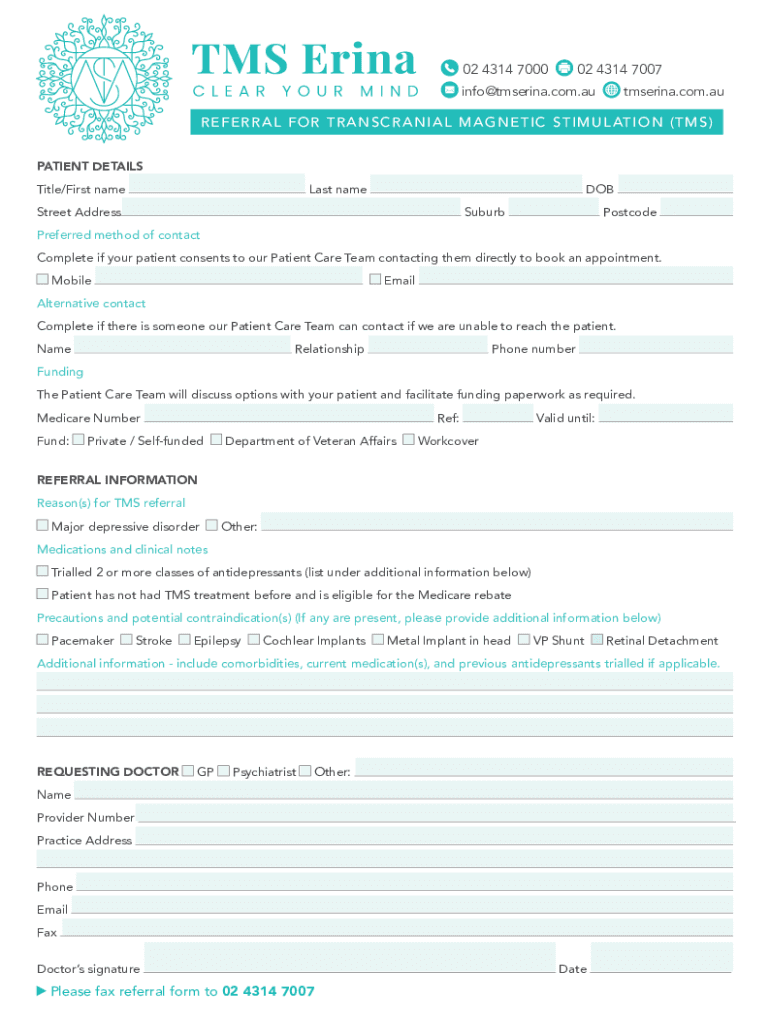







Definition and Meaning of the Referral for Transcranial Magnetic Stimulation (TMS)
Transcranial Magnetic Stimulation (TMS) is a non-invasive treatment procedure primarily used to treat major depressive disorder by stimulating specific brain areas using electromagnetic pulses. A referral form for TMS is a critical document that healthcare providers use to initiate this therapy for patients. It typically contains patient information, diagnostic details, and previous treatment history, which qualified healthcare practitioners use to determine a patient’s eligibility for TMS therapy. This document ensures that patients receive appropriate assessment and care, considering their specific medical needs.
How to Obtain the Referral for Transcranial Magnetic Stimulation (TMS)
To acquire a TMS referral, patients generally begin by consulting their primary healthcare provider, who will evaluate their mental health condition and treatment history. If TMS is deemed a suitable option, the primary care provider or psychiatrist will complete the referral form. Key steps include:
- Scheduling an appointment with your primary healthcare provider for an initial evaluation.
- Undergoing a detailed mental health assessment and discussing your treatment history.
- If recommended, the healthcare provider will fill out the referral form with pertinent details such as diagnosis and previous therapy attempts.
- The form is then submitted to a TMS treatment facility or a specialist for further assessment and initiation of therapy.
Steps to Complete the Referral for Transcranial Magnetic Stimulation (TMS)
Completing the TMS referral form requires accurate information and cooperation between the patient and healthcare provider. Here are the steps:
-
Patient Details: Fill in accurate patient information, including full name, date of birth, and contact details.
-
Clinical Information: Healthcare providers should document the patient’s psychiatric diagnosis and the basis for recommending TMS.
-
Treatment History: Include previous treatment modalities like therapy or medication and any relevant outcomes.
-
Referral Reason: Clearly state why TMS is a suitable treatment option, emphasizing areas such as treatment resistance.
-
Provider Information: Include contact details and credentials of the referring healthcare provider.
-
Signatures: Ensure necessary signatures from the patient and provider are included for consent and verification.
Important Terms Related to Referral for Transcranial Magnetic Stimulation (TMS)
Understanding the terminology associated with TMS is crucial for both patients and healthcare providers:
- Non-Invasive: A treatment that does not involve surgery or insertion into the body.
- Major Depressive Disorder (MDD): A mental disorder characterized by a persistently depressed mood or loss of interest in activities.
- Electromagnetic Pulses: Energy pulses used in TMS to stimulate nerve cells in the brain.
- Treatment-Resistant Depression: A form of depression that does not respond to traditional treatments like medication and psychotherapy.
- Initial Assessment: An in-depth evaluation conducted to determine the suitability for TMS therapy.
Key Elements of the Referral for Transcranial Magnetic Stimulation (TMS)
The referral form for TMS therapy must include several critical elements to ensure successful submission and processing:
- Patient Identification: Accurate details to ensure the correct patient is assessed and treated.
- Diagnosis and Reason for Referral: Specify the mental health condition and why TMS is recommended as part of the treatment plan.
- Previous Treatments: A comprehensive list of treatments tried and their outcomes.
- Consent: Documented consent from the patient for treatment and information sharing.
- Referring Clinician Information: The credentials and contact of the professional recommending the treatment.
Legal Use of the Referral for Transcranial Magnetic Stimulation (TMS)
The legal aspect of TMS referrals involves ensuring compliance with medical standards and privacy laws. It is essential for:
- Patient Consent: Obtain explicit consent to share medical information as per HIPAA regulations to protect patient privacy.
- Accurate Documentation: All details must be accurately documented to avoid any legal challenges in the patient's treatment journey.
- Authorization: Only authorized healthcare practitioners should complete and sign referral forms, ensuring the legitimacy of the referral process.
Who Typically Uses the Referral for Transcranial Magnetic Stimulation (TMS)
The typical users of TMS referral forms include:
- Healthcare Providers: Psychiatrists and general practitioners assessing the viability of TMS as a treatment option for their patients.
- Mental Health Clinics: Facilities offering TMS treatments use the referral form to record and verify the suitability and authorization for therapy.
- Insurance Companies: For coverage purposes, to verify the treatment necessity and patient eligibility.
- Patients: To initiate the process of receiving TMS therapy as recommended by their healthcare provider.


Eligibility Criteria for TMS Referral
To qualify for TMS therapy, there are specific eligibility criteria outlined in the referral process, including:
- Diagnosis of Major Depressive Disorder: With documented cases of treatment resistance or inability to tolerate medication.
- Age Specifications: Most centers require patients to be over 18, though specific guidelines may vary.
- Medical History: Comprehensive psychiatric and medical history evaluation for appropriateness of TMS therapy.
- Previous Treatment Attempts: Exploration and documentation of at least one but often multiple failed depression treatments.