






Definition and Purpose of the DIV 2014 Form
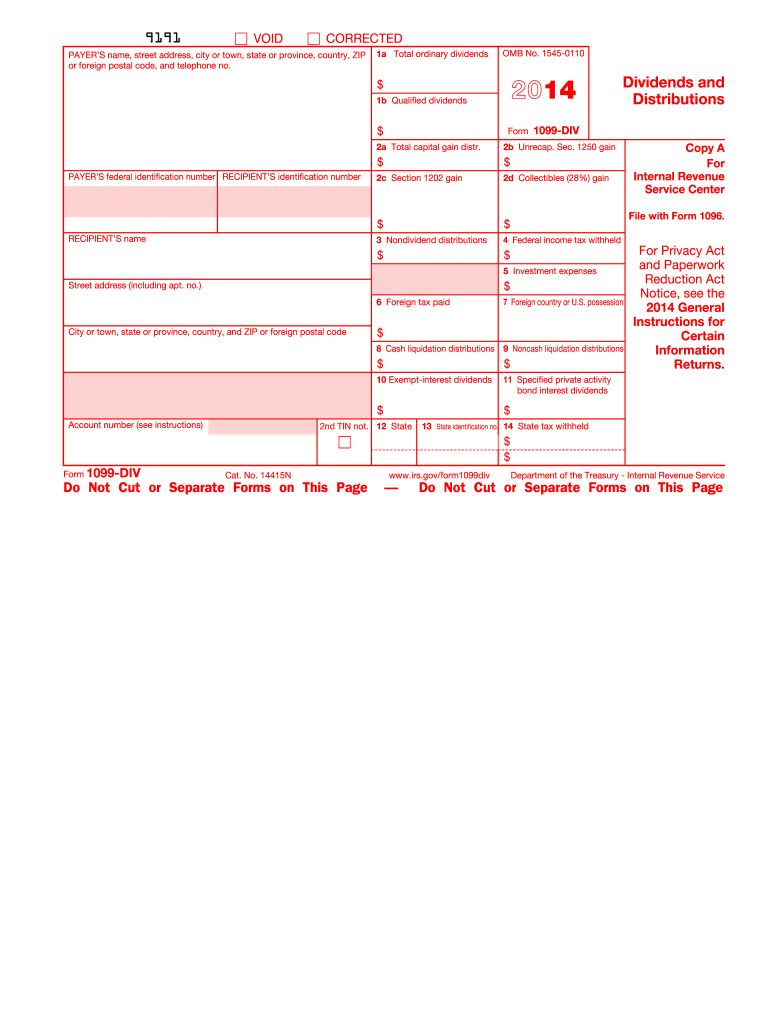
The DIV 2014 form is primarily used for reporting dividend income. These dividends typically originate from investments in stocks or mutual funds. The form helps both recipients and the IRS track and report dividend income. This ensures accurate taxation practices for income generated through dividends. Understanding its purpose is essential for accurate filing and compliance.
How to Use the DIV 2014 Form
Using the DIV 2014 form involves a series of steps designed to ensure accurate reporting of dividend income. The form should be filled out with details about the dividends received, including the amount, the entity paying the dividend, and any pertinent tax information. This data helps in calculating any taxes owed on the dividend income.
Completing the Form Correctly
- Gather Documents: Collect documents from financial institutions that report dividend income.
- Fill in Recipient Information: Provide personal details such as name, address, and taxpayer identification number.
- Report Dividend Income: Enter the total dividends received during the fiscal year.
- Submit the Form: Ensure the form is filed before the designated IRS deadlines.
How to Obtain the DIV 2014 Form
Obtaining the DIV 2014 form is a straightforward process. It is available on the IRS website for download. Alternatively, individuals can request a physical copy from the IRS or receive it from a financial institution that issues dividends.
Sources for Acquiring the Form
- IRS Website: Download a copy directly for free.
- Financial Institutions: Some institutions provide the form alongside year-end statements.
- Postal Requests: Request a form to be mailed from the IRS.
Steps to Complete the DIV 2014 Form
Completing the DIV 2014 form requires attention to detail to ensure all information is accurate. Misreporting can result in penalties or inaccurate taxation.
Detailed Filing Instructions
- Obtain the Form: Access from official IRS sources or accompanying documentation from issuers.
- Input Dividend Information: Carefully enter all dividend income information.
- Verify Entries: Double-check all data for accuracy and completeness.
- File with IRS: Submit the form by mail or electronically as per IRS guidelines.
Key Elements of the DIV 2014 Form
Understanding the key elements of the DIV 2014 form can aid in its accurate completion.
Main Sections of the Form
- Recipient's Information: Name, address and TIN.
- Dividend Details: Breakdown of ordinary dividends and qualified dividends.
- Payer’s Information: Details of the company or funds dispersing the dividends.
Who Typically Uses the DIV 2014 Form
The DIV 2014 form is commonly used by individuals and entities that receive dividend income. This includes investors, trust funds, and certain corporations. Understanding who should use the form aids in compliance.


Typical Users
- Individual Investors: Report income from stock investments.
- Trust Administrators: Compile dividend income for trust beneficiaries.
- Corporate Entities: Include dividend income in fiscal reports.
Filing Deadlines and Important Dates
Filing deadlines for the DIV 2014 form align with the IRS's fiscal calendar to ensure timely submission and processing.
IRS Deadlines
- Form Issuance Deadline: Financial institutions often send forms by January 31.
- Submission Deadline: Usually April 15, aligning with tax filing deadlines, unless extensions apply.
Legal Use of the DIV 2014 Form
Understanding the legal implications of the DIV 2014 form ensures compliance and avoids penalties. Using the form within legal guidelines is crucial to avoid misreporting and associated repercussions.
Compliance Guidelines
- Accurate Reporting: Mandatory declaration of all dividends.
- Meet Filing Requirements: Ensure submission by specified deadlines.
- Maintain Records: Keep copies of forms and supporting documents for reference and audit purposes.
Penalties for Non-Compliance
Failure to comply with the requirements for filing the DIV 2014 form may result in penalties. It's important to adhere to all guidelines to avoid unnecessary fines or legal issues.
Types of Penalties
- Late Filing Penalties: Fines for submissions past the due date.
- Underreporting Fines: Penalties for incorrect or incomplete reporting of dividend income.
- Legal Actions: Possible legal proceedings for gross negligence.
Examples of Using the DIV 2014 Form
Providing practical examples illustrates the application and filing process of the DIV 2014 form.
Common Scenarios
- Individual Taxpayers: Reporting dividend income from personal investments.
- Investment Funds: How trust funds or investment accounts leverage the form for dividend data.
- Corporate Filings: Large corporations include dividend income in earnings reports.