







Definition and Meaning
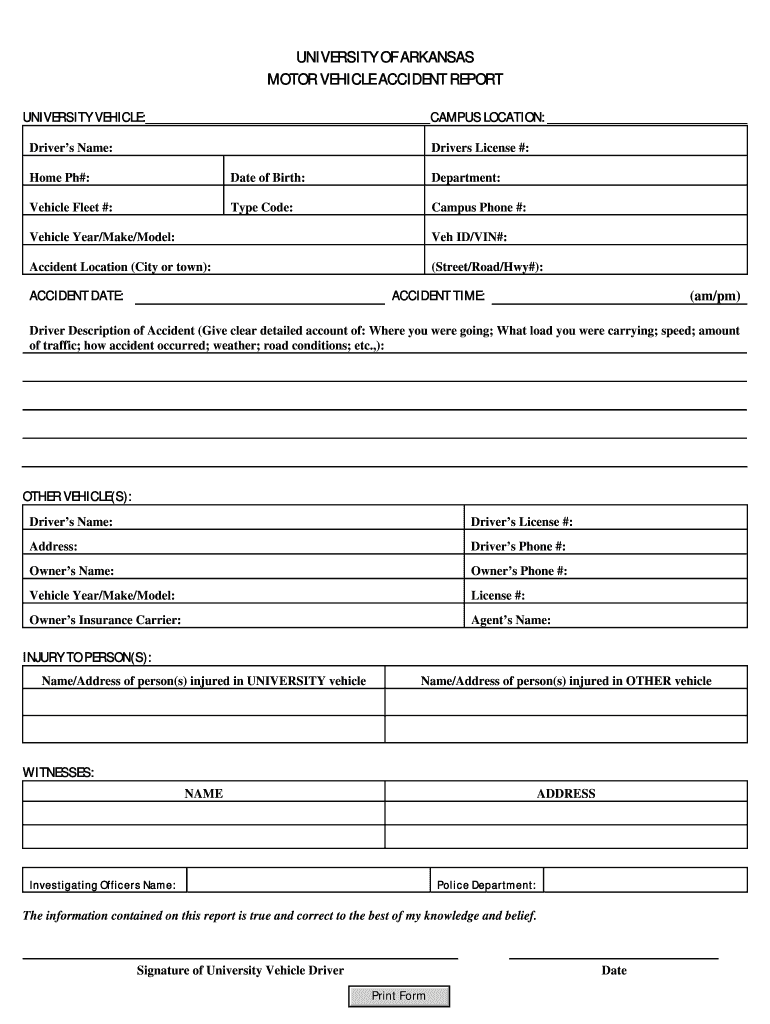
A Motor Vehicle Accident Report is a formal document detailing the specifics of an incident involving one or more vehicles. It serves as an official account used to record essential information such as the time, date, location, parties involved, damage sustained, and any injuries. This report helps in documenting facts for insurance purposes, legal inquiries, and internal record-keeping, particularly for organizations like the University of Arkansas. Comprehensive reports are vital in understanding the accident's dynamics and attributing responsibility correctly.
Key Elements of the Motor Vehicle Accident Report
Essential components of a Motor Vehicle Accident Report ensure comprehensive coverage of the incident. These elements include:
- Driver and Vehicle Details: Information about the driver(s) and vehicle(s) involved, including license plate numbers, vehicle identification numbers (VIN), and driver license details.
- Accident Specifics: Details on how the accident occurred, including location, weather conditions, time, and whether law enforcement was notified.
- Other Vehicles Involved: Information on any additional vehicles, including make, model, and damage sustained.
- Injuries and Witnesses: Details about injuries to any parties involved and statements from witnesses or bystanders.
- Investigating Officers: Names and badge numbers of the officers handling the case.
How to Use the Motor Vehicle Accident Report
Completing a Motor Vehicle Accident Report follows a structured approach:
- Gather Information: Immediately collect all relevant details from the scene, including witness names, contact information, and vehicle registration details.
- Document the Scene: Take photos of the vehicles, surroundings, and any visible injuries.
- Complete the Report: Fill out all sections methodically, ensuring accuracy in detailing what transpired.
- Signatures: Ensure all involved parties provide signatures to confirm the accuracy of the information.
- Submit: Depending on the jurisdiction and requirements, submit the report to local authorities or your insurance company.
Steps to Complete the Motor Vehicle Accident Report
Filling out a Motor Vehicle Accident Report involves several key steps:
- Start with Basic Information: Date, time, and location of the incident.
- Detail Driver and Vehicle Information: Include all relevant personal and vehicle information for each party.
- Accurate Accident Description: Provide a clear narrative of how the accident occurred.
- Identify Witnesses: Record names and contact details of anyone who witnessed the accident.
- Check for Omissions: Double-check that no details are missing and all sections are filled in completely.
- Sign the Document: All parties should review and sign the report to validate its contents.
Who Typically Uses the Motor Vehicle Accident Report
Various individuals and organizations utilize Motor Vehicle Accident Reports:
- Insurance Companies: Assess claims and determine liability based on documented facts.
- Law Enforcement Agencies: Investigate incidents and enforce traffic laws.
- Legal Professionals: Evaluate liability, injury claims, and possible litigation.
- Organizations: For internal tracking and reporting purposes, particularly when company vehicles are involved.


Legal Use of the Motor Vehicle Accident Report
The Motor Vehicle Accident Report holds significant legal value. It serves as an official record that can be referenced in court to establish facts and responsibility. Accurately completed reports are pivotal in resolving disputes, assessing damages, and processing insurance claims. Legal practitioners and insurers reference these reports to construct a reliable narrative of the events.
State-Specific Rules for the Motor Vehicle Accident Report
Each state may have distinct rules governing the use and submission of Motor Vehicle Accident Reports. For instance:
- Some states mandate reporting when damages exceed a certain monetary threshold or when there are injuries.
- Different timeframes for filing the report may exist, ranging from immediate submission to a window of several days post-accident.
- Requirements may also vary in terms of who can access these reports and for what purposes.
Digital vs. Paper Version
Motor Vehicle Accident Reports can be filed in both digital and paper formats, depending on local rules and personal preference. Digital forms offer easy submission and faster processing but may depend on having internet access and a computer. Paper forms, while more traditional, can be more accessible in locations where digital infrastructure is lacking. Choosing the appropriate medium often depends on convenience and the jurisdiction's options for submission.




