
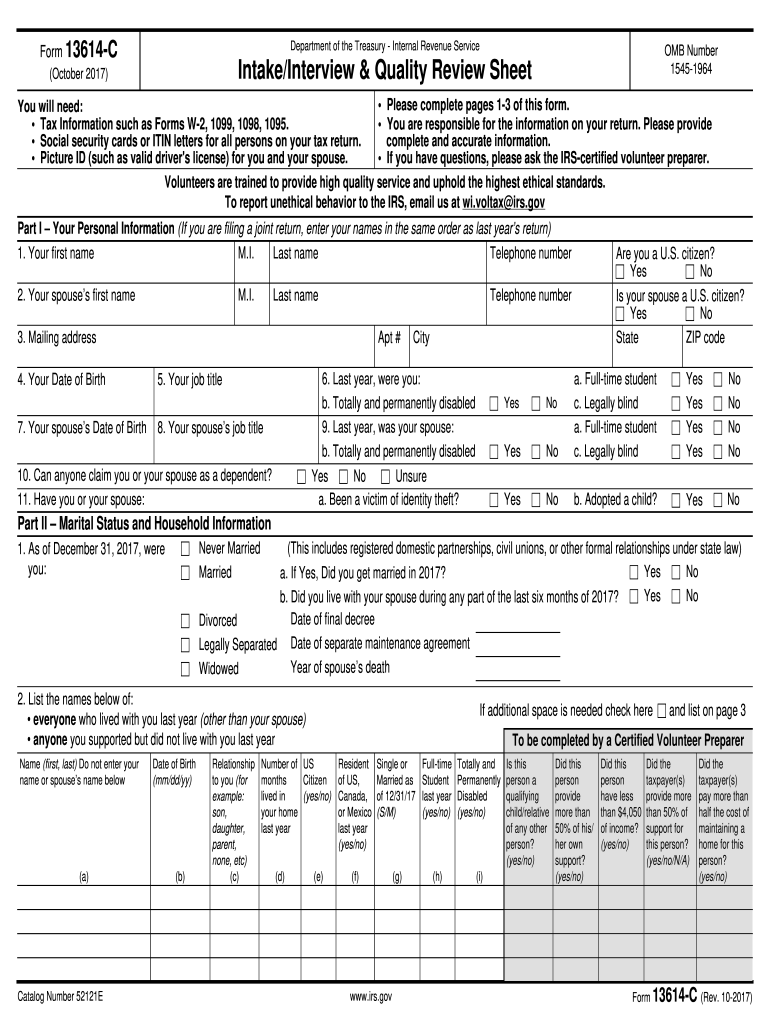







Definition and Purpose of Form 13614-C
Form 13614-C, also known as the Intake/Interview & Quality Review Sheet, is utilized by the IRS as an essential document during tax preparation assistance. This form serves primarily to collect crucial information from taxpayers, ensuring comprehensive and accurate tax filing. It features sections for taxpayers to provide personal details, income data, and health care coverage information. Additionally, it helps IRS tax volunteers verify identities and review tax returns for compliance. The detailed and strategic design of the form ensures that all necessary taxpayer information is captured effectively to support accurate and efficient tax preparation and filing.
How to Use Form 13614-C for Tax Preparation
To effectively use Form 13614-C, taxpayers must ensure that they provide complete and correct information across all relevant sections. This involves:
-
Personal Information: Filling out basic identification details such as name, address, and Social Security number.
-
Income and Deductions: Listing all income sources, including wages, interest, dividends, and any deductions or credits applicable for the tax year.
-
Health Care Coverage: Specifying details regarding health insurance coverage, which is crucial for determining potential penalties or exemptions under the Affordable Care Act.
-
Verification by Volunteer: Once completed, the form will be reviewed by a volunteer tax preparer who verifies the information to ensure correct filing.
-
Feedback from Volunteers: Taxpayers should anticipate questions from volunteers regarding any incomplete or unclear sections to promote a seamless filing process.
Steps to Complete Form 13614-C
Completing Form 13614-C involves a systematic approach to accounting for every aspect of a taxpayer's financial and personal situation. Here is a step-by-step guide:
-
Gather Information: Collect documents such as income statements (W-2s, 1099s), healthcare forms, prior year tax returns, and any relevant deduction records.
-
Fill Out Personal Information: Start with personal details, ensuring they are clear and current.
-
Report Income: Accurately list all types of income, including wages and other sources, and cross-reference with supporting documentation.
-
Outline Deductions and Credits: Identify any applicable deductions or credits and ensure supporting documents are provided.
-
Health Coverage Information: Clearly state health insurance details for every month of the tax year covered.
-
Review and Double-Check: Before submission, revisit all sections to check for omissions or errors that could delay or affect the accuracy of your tax return.
-
Submit to IRS Volunteer: Hand over the completed form to a certified IRS volunteer for final review prior to filing.
Key Elements of Form 13614-C
Understanding the critical components of Form 13614-C is vital for accurate completion. Key elements include:
- Personal Information Section: Includes taxpayer identity details crucial for verification.
- Income Reporting Area: Captures all forms of income to facilitate proper tax calculation.
- Healthcare Coverage Segment: Pertinent for determining compliance with health insurance mandates.
- Verification Fields: Allow IRS-certified volunteers to affirm the accuracy and completion of the form before proceeding.
These elements collectively form the backbone of the tax preparation process, enabling thorough assessment and filing with the IRS.
Required Documents for Form 13614-C
To complete Form 13614-C with a higher degree of accuracy, certain documents are indispensable. Taxpayers should have:
- Identification: Such as Social Security cards for all listed family members.
- Income Statements: W-2s, 1099s, and any other forms indicating earnings.
- Healthcare Documentation: Including Form 1095-A, B, or C as applicable.
- Prior Year Tax Returns: Providing a baseline for assessing any significant changes.
These documents ensure all the information needed to complete the form comprehensively is available, thus promoting efficiency and accuracy.
IRS Guidelines for Form 13614-C
The IRS provides specific guidelines to ensure the form accomplishes its objectives effectively:
- Accuracy and Completeness: Forms must be completed with utmost accuracy to avoid compliance issues.
- Timeliness: Forms should be prepared and reviewed in advance to accommodate any potential filing corrections or additional submissions.
- Confidentiality: Personal and tax information should be safeguarded in compliance with IRS security standards.
Taxpayers and volunteers must adhere strictly to these guidelines, enhancing the reliability and security of the tax preparation process.
Legal Use of Form 13614-C
The legal framework governing the use of Form 13614-C underlines its importance in tax administration:
- Compliance with the IRS Procedures: Ensures that tax assistance is performed under the regulatory umbrella.
- Confidentiality Enforcement: Legal provisions around data protection must be followed, especially for sensitive information.
- Verification by Authorized Personnel: Only IRS-certified volunteers should review and submit the completed forms for official processing.
Understanding the legal underpinnings of this form guarantees adherence to all operational and procedural requirements, safeguarding both the taxpayer and IRS interests.
Penalties for Non-Compliance
Non-compliance with the requirements associated with Form 13614-C can lead to:
- Filing Delays: Incomplete or incorrect forms can result in delays in processing tax returns.
- Penalties: Deliberate misinformation or omission may incur fines or other legal consequences.
- Audit Risks: Inaccuracies can increase the likelihood of an IRS audit, leading to potential further penalties.
Comprehending these consequences emphasizes the necessity of proper form completion and submission, minimizing risks and promoting compliance.




