
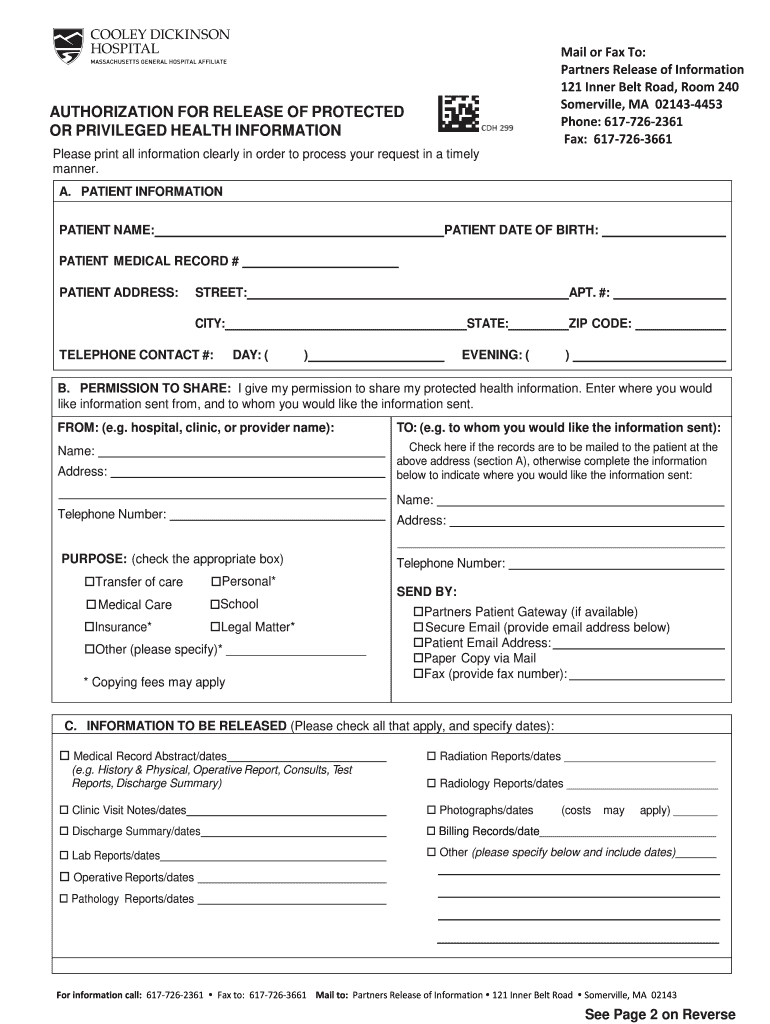







Definition and Meaning of Cooley Dickinson Medical Records
Cooley Dickinson Medical Records are integral documents that contain comprehensive medical information about patients who have received care through the Cooley Dickinson Health System. These records include details about the patient's medical history, treatment plans, diagnosis, medications, lab results, and any follow-up care. Access to such records is vital for both patients and healthcare providers as they enable informed decisions regarding ongoing and future medical treatments. Understanding the scope and content of these records is essential for ensuring continuity in patient care and facilitating effective communication across different healthcare services.
How to Use Cooley Dickinson Medical Records
Utilizing Cooley Dickinson Medical Records involves accessing and reviewing the detailed medical history contained within for various purposes. Healthcare providers use these records to assess past treatments and form treatment plans. Patients may use their records to share health information with new providers or to manage their own healthcare journey. Segments of the medical record can be reviewed for planning surgeries, understanding allergies, synchronizing medications, or tracking recovery progress. The efficient use of medical records enhances healthcare delivery by ensuring that providers can cater to the personalized needs of each patient.
Steps to Obtain Cooley Dickinson Medical Records
To obtain Cooley Dickinson Medical Records, individuals must follow specific procedures to ensure data privacy and compliance with healthcare regulations. The process typically involves:
- Completing a formal request form for the release of medical records, which is available from the Cooley Dickinson Health System.
- Providing proof of identity, such as a government-issued ID.
- Specifying the parts of the medical record required, e.g., lab results, visit summaries, or entire records.
- Submitting the request via mail, fax, or through designated online portals if available.
- Waiting for processing, which can vary but generally takes a few days to weeks depending on the volume and nature of the request.
- Receiving the records in the specified format (digital or physical copy), ensuring confidentiality is preserved during the transfer.
Key Elements of Cooley Dickinson Medical Records
Understanding the key elements within Cooley Dickinson Medical Records is crucial for accurate use and interpretation. These elements typically include:
- Personal information: Full name, date of birth, and contact information.
- Medical history: Allergies, past surgeries, chronic conditions.
- Current medications: A list of prescriptions and dosages.
- Treatment plans: Details about current and proposed treatments or interventions.
- Lab results: Blood tests, imaging reports, and other diagnostic data.
- Provider notes: Observations and advice from healthcare professionals.
Each component plays a vital role in providing a holistic view of a patient's healthcare history, supporting personalized care and treatment plans.
Legal Use of Cooley Dickinson Medical Records
The legal use of Cooley Dickinson Medical Records ensures compliance with healthcare regulations such as HIPAA in the U.S. These regulations underscore patient privacy and dictate how medical information can be accessed, shared, and utilized. Legally, the records can be used for:
- Treating the patient, where healthcare providers exchange necessary information to facilitate patient care.
- Billing and insurance purposes, ensuring that claims are accurate and justified.
- Legal proceedings, if authorized, for matters like personal injury claims.
- Research, with all identifiable information removed, to improve public health outcomes.
Strict adherence to legal guidelines ensures data protection and patient rights are upheld.
State-Specific Rules for Cooley Dickinson Medical Records
Access and management of Cooley Dickinson Medical Records are subject to varying state-specific regulations. These regulations can dictate:
- How records may be requested and shared within Massachusetts, the primary state of the Cooley Dickinson Health System.
- The required retention periods for medical records.
- The rights of patients and providers under both state and federal laws.
- Protocols for the destruction of records that have surpassed their retention period.
Understanding these differences is necessary to navigate effectively within the legal framework for accessing and managing medical records.
Digital vs. Paper Versions of Cooley Dickinson Medical Records
Cooley Dickinson Medical Records are available in both digital and paper formats, each with distinct advantages. Digital records:
- Facilitate quick access and sharing among authorized users, enhancing collaborative healthcare.
- Enable easier storage and retrieval, reducing physical space requirements.
- Offer functionalities such as electronic search, annotations, and integration with other digital systems.
On the other hand, paper records:
- Possibly offer a tangible format that may be preferred by some patients or providers.
- Require secure physical storage to prevent unauthorized access or damage.
- Can be used as official documents in scenarios where digital records are not accepted.
The choice between digital and paper formats often depends on user preference, technology accessibility, and specific legal or institutional requirements.
Important Terms Related to Cooley Dickinson Medical Records
Several important terms are associated with Cooley Dickinson Medical Records that enhance understanding and communication:
- HIPAA (Health Insurance Portability and Accountability Act): U.S. legislation that provides data privacy and protection for medical information.
- EMR (Electronic Medical Record): A digital version of the paper chart in a clinician's office, part of the wider Electronic Health Record (EHR) system.
- PHI (Protected Health Information): Any health information that can identify an individual and pertains to their health condition, treatment, or payment.
- Authorization: The formal consent given by a patient to disclose their medical records to authorized entities.
- Interoperability: The ability of different healthcare systems and software applications to communicate, exchange, and make use of health information.
Familiarity with these terms is essential for effectively navigating and understanding the context and intricacies of medical records.




