







Definition & Meaning
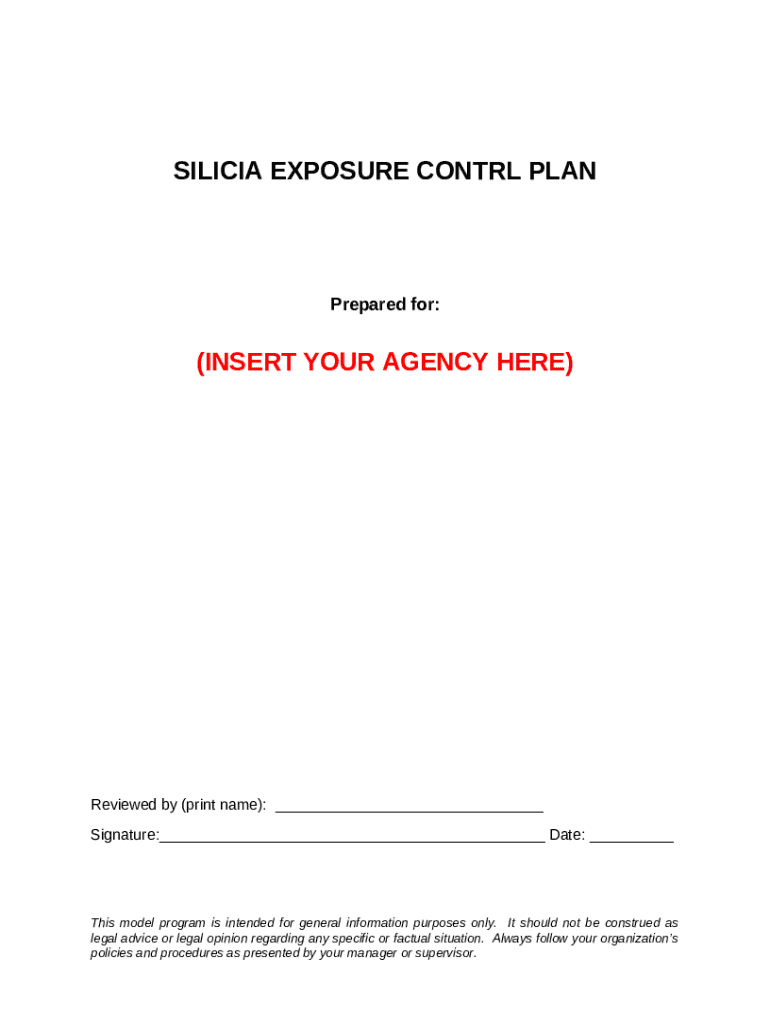
The "Model Written Silica Exposure Control Plan for General" is a comprehensive template designed to assist organizations in mitigating the risks associated with exposure to respirable crystalline silica. It complies with the Occupational Safety and Health Administration (OSHA) standards to ensure workplace safety. This plan outlines necessary procedures, responsibilities, and methods for controlling silica exposure, encompassing housekeeping practices, medical surveillance, and training protocols. It aims to provide a standardized framework for employers to follow, ensuring both employee health and regulatory compliance.
Key Elements of the Model Written Silica Exposure Control Plan
The plan incorporates various crucial elements to effectively manage silica exposure:
- Exposure Control Methods: Encompasses engineering controls such as ventilation systems and wet cutting methods to minimize dust.
- Housekeeping Practices: Details procedures for cleaning dust and maintaining a safe work environment.
- Medical Surveillance: Establishes protocols for monitoring the health of employees potentially exposed to silica, including regular health assessments.
- Training Requirements: Specifies necessary training for employees on silica hazards and safe practices to adopt.
- Record Keeping: Maintains documentation of exposure assessments, medical records, and training sessions.
Steps to Complete the Model Written Silica Exposure Control Plan
- Conduct an Exposure Assessment: Evaluate the workplace to identify areas where silica exposure might occur.
- Implement Control Measures: Introduce appropriate engineering controls, administrative controls, and personal protective equipment (PPE).
- Develop Housekeeping Schedules: Create regular cleaning routines to manage dust accumulation.
- Establish Medical Surveillance Protocols: Implement health monitoring for employees exposed to silica.
- Provide Employee Training: Organize educational sessions to inform workers about silica risks and controls.
- Document the Plan: Record all procedures and updates in the silica exposure control plan.
How to Obtain the Model Written Silica Exposure Control Plan
Organizations can access the model plan through:
- OSHA Website: The primary source for obtaining compliant templates and guidelines.
- Industry Associations: Professional organizations often offer resources tailored to specific sectors.
- Consulting Firms: They provide customized plans and implementation support.
- Online Platforms: Many document management platforms offer downloadable templates.
Business Types Benefiting Most from the Model Written Silica Exposure Control Plan
Certain industries stand to gain significantly from implementing this plan:
- Construction: Heavy use of materials containing silica makes this industry a primary beneficiary.
- Manufacturing: Factories dealing with mineral abrasives or concrete require stringent control measures.
- Mining: Workers are at high risk of silica exposure due to operations like drilling and crushing.
- Glassmaking: Silica is a major component of glass, necessitating careful exposure management.
Legal Use of the Model Written Silica Exposure Control Plan
Adhering to this plan ensures legal compliance with OSHA requirements, mitigating the risk of fines and legal action. It demonstrates due diligence in safeguarding worker health and adhering to federal safety regulations. Employers must accurately document exposure data and training, as these records serve as legal evidence of compliance efforts.
Penalties for Non-Compliance
Failing to implement or adhere to an effective silica exposure control plan can result in:
- Financial Penalties: OSHA imposes fines based on the severity and frequency of non-compliance.
- Legal Liability: Increased risk of lawsuits from employees affected by inadequate safety measures.
- Operational Interruptions: Enforcement actions can disrupt business operations.
Software Compatibility
To streamline the management of the silica exposure control plan, various software platforms offer compatibility, including:
- Document Management Systems: Such as DocHub, which support the annotation and sharing of exposure control documentation.
- Compliance Software: Tools like QuickBooks or specialized safety management software aid in tracking compliance and record-keeping.
- Cloud-Based Solutions: Facilitate real-time collaboration and access to the plan from multiple locations.




