




01. Edit your cms qapi worksheet online
Type text, add images, blackout confidential details, add comments, highlights and more.

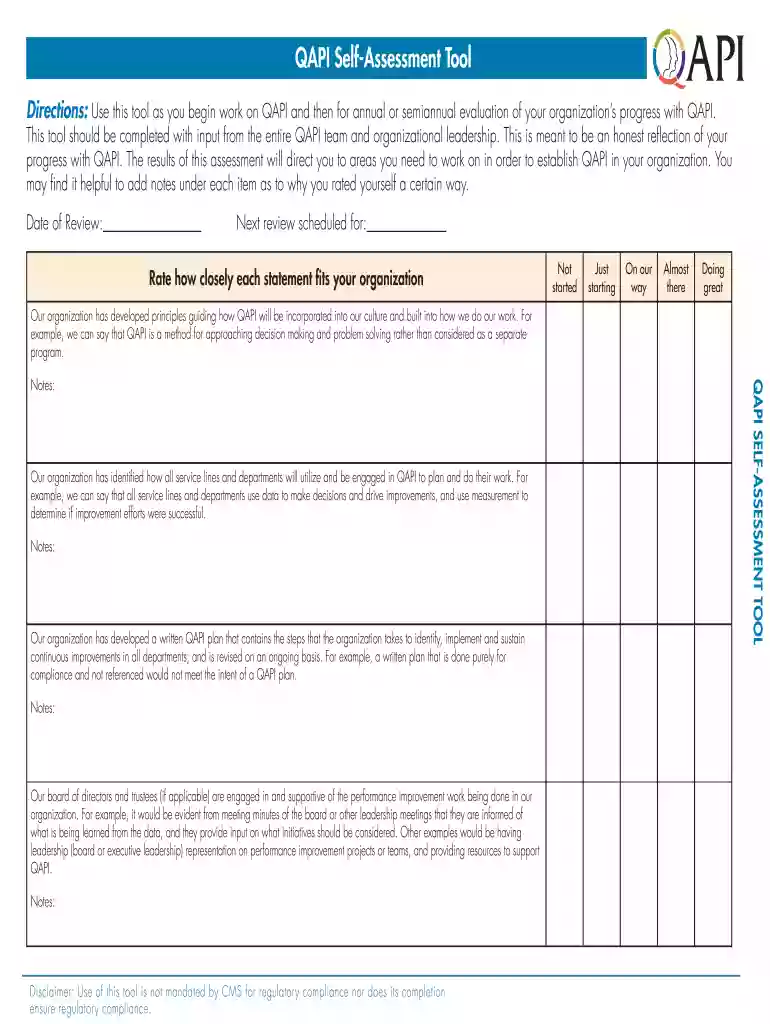
Type text, add images, blackout confidential details, add comments, highlights and more.

Draw your signature, type it, upload its image, or use your mobile device as a signature pad.

Send qapi templates via email, link, or fax. You can also download it, export it or print it out.
The QAPI assessment form is a crucial tool used by healthcare organizations to gauge their adherence to Quality Assurance and Performance Improvement (QAPI) standards. This form not only evaluates current practices but also identifies areas for improvement, ensuring that organizations remain committed to delivering high-quality care.
The primary objective of the QAPI assessment form is to enable organizations to evaluate their performance concerning QAPI principles. It serves as a comprehensive tool that can:
Organizations can utilize this form to systematically assess their alignment with QAPI initiatives, thereby enhancing the quality of care provided.
The QAPI assessment form is typically structured to include the following essential elements:
Organizational Culture: This section evaluates how the culture within the organization supports quality improvement efforts. Considerations may include staff engagement, openness to feedback, and the celebration of successes related to quality care.
Leadership Engagement: An assessment of how involved leadership is in QAPI initiatives. Essential questions might address the visibility of leadership in quality improvement projects and their support in resource allocation.
Data Utilization: This component assesses the effectiveness of data collection processes and the organization’s ability to analyze and use data for performance improvement. Organizations need to ensure appropriate data sources are leveraged.
Performance Improvement Processes: The effectiveness of current processes aimed at resolving identified issues is evaluated here. This includes reviewing strategies for addressing root causes of problems and implementing improvements based on data.
Accountability: Questions in this section focus on how accountability is established regarding quality improvement efforts. This includes the inclusion of staff members at all levels in performance assessment discussions, ensuring collective responsibility is promoted.
To effectively utilize the QAPI assessment form, organizations should follow a structured approach:
Gather the QAPI Team: Form a diverse team that includes representatives from various departments to ensure a comprehensive evaluation.
Distribute the Assessment: Share copies of the QAPI assessment form with team members. Encourage honest feedback to gauge the organization’s current standing.
Collect and Analyze Responses: After the assessment is completed, collect the forms and compile the responses to identify trends and common strengths or weaknesses.
Facilitate a Team Discussion: Host a meeting with the QAPI team to discuss findings, share insights, and brainstorm potential improvements or areas needing attention.
Develop an Action Plan: Based on the assessment results, create an action plan outlining steps for improvement, responsible parties, and timelines for implementation.
Monitor Progress Regularly: Establish a system for ongoing evaluation of the discussed improvements to ensure continuous quality enhancement and adherence to QAPI standards.
There are several different versions and templates available for QAPI assessments, each tailored to specific organizational needs. Common variations include:
CMS QAPI Worksheet: A standardized tool released by the Centers for Medicare & Medicaid Services designed to assist nursing homes and similar organizations in evaluating their QAPI programs.
Customized QAPI Templates: Many organizations develop their own unique templates based on specific operational needs or regulatory requirements.
QAPI Plan Templates: These templates focus on long-term QAPI strategy and planning, outlining objectives and methods for achieving an organization’s quality goals.
To illustrate the application of the QAPI assessment form, consider the following scenarios:
Nursing Home Implementation: A nursing home uses the assessment form to review its practices after receiving feedback from residents and families about inadequate care. By engaging employees in the evaluation process and identifying key areas that require attention, the facility improves resident satisfaction scores significantly.
Hospital Performance Review: A hospital system implements the QAPI assessment form to review its surgical outcomes. The data revealed discrepancies in patient follow-up care, leading management to develop targeted training for surgical staff and improve patient education materials.
Under regulations from bodies like the Centers for Medicare & Medicaid Services (CMS), maintaining an effective QAPI system is a legal requirement for many healthcare providers. Failure to comply with these regulations can lead to negative repercussions, including:
To mitigate these risks, organizations must ensure that their QAPI assessment forms are consistently utilized and incorporate relevant improvements as required.
The QAPI assessment form is a vital instrument for healthcare organizations aiming to maintain high standards of quality care. By systematically reviewing operations through the form, organizations not only comply with legal requirements but foster a culture of continuous improvement and excellence in patient care.
At DocHub, your data security is our priority. We follow HIPAA, SOC2, GDPR, and other standards, so you can work on your documents with confidence.
Jan 29, 2021 The Long-Term Care Survey Process (LTCSP) application supports the survey process for long-term care facilities. The application lets youRead more
Jul 13, 2024 Purpose. The purpose of the Quality Assessment, Performance Improvement (QAPI) and Patient. Safety Plan is to support the University of ToledoRead more


