
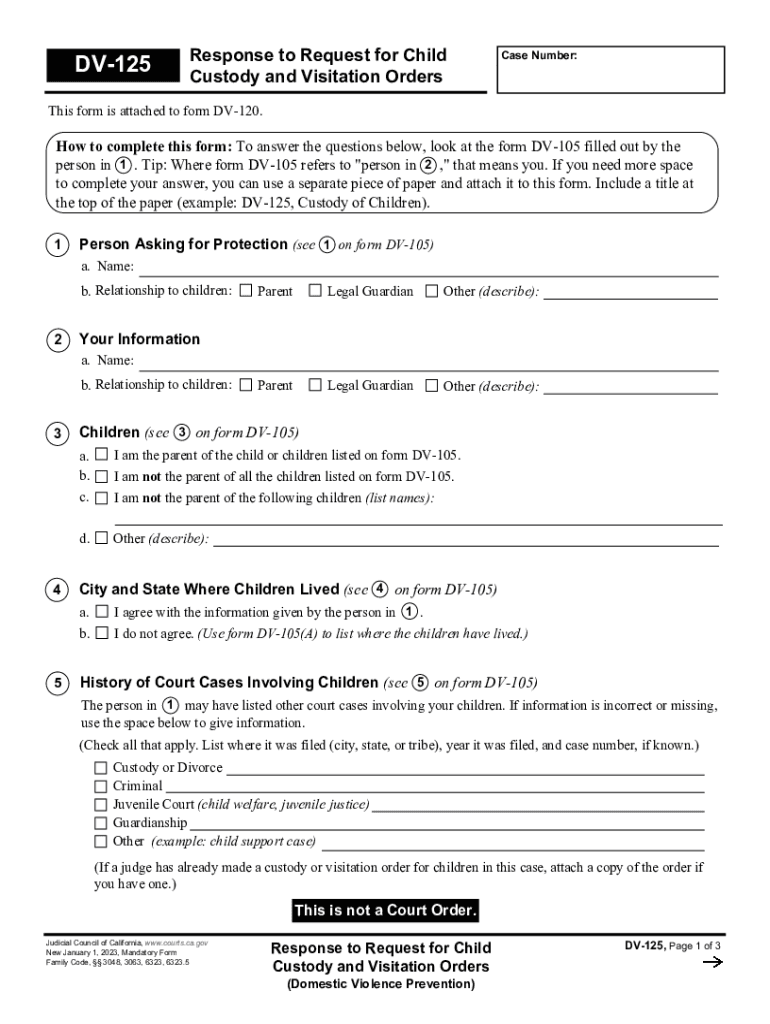







Definition and Purpose of the DVRO Response Form
The DVRO (Domestic Violence Restraining Order) Response Form is a critical document used in legal proceedings related to domestic violence allegations. This form allows the respondent, typically the accused party, to formally express their stance regarding the requests made in the restraining order application. It involves providing detailed information on their relationship with the alleged victim, custody issues if children are involved, and the respondent's perspective or defense regarding the orders sought by the petitioner.
Steps to Complete the DVRO Response Form
-
Review the Restraining Order: Start by thoroughly reviewing the temporary restraining order you received. This document will include specific requests made by the petitioner, which you will need to address on the response form.
-
Provide Personal Information: Fill in your full name, contact information, and any other identifying details as required. Ensure accuracy as this information is essential for the court's records.
-
Address Each Claim Point-by-Point: Respond to each request or allegation made in the restraining order. Whether you agree or disagree with the claims, ensure to provide your statement or evidence to support your position.
-
Detail Child Custody Preferences: If the restraining order involves child custody, clearly outline your views and propose arrangements that align with the children's best interests.
-
Complete the Form: Ensure that each section of the form is filled out completely. An incomplete form may result in delays or a negative impact on your case.
-
Supporting Documentation: Gather and attach any relevant documents, such as witness statements, records, or other evidence that supports your responses.
Legal Use of the DVRO Response Form
In the United States, this form is used in civil courts to facilitate a fair hearing for both parties involved in a domestic violence claim. It is not a court order; instead, it serves as part of the legal documentation process. Respondents use this form to dispute or consent to the requests made in the complaint. Being meticulous and truthful in completing this form is crucial, as it can significantly influence the court's decisions and the outcome of the case.
Key Elements of the DVRO Response Form
- Personal and Contact Information: Accurate identification of the respondent.
- Response to Allegations: Section for agreeing or refuting claims made in the petition.
- Child Custody Arrangements: Proposals or adjustments to suggested custody terms.
- Visitation Preferences: Your stance on visitation rights and any conditions you might prefer.
- Travel Restrictions: Consent or opposition to proposed travel limitations involving the children.
- Background Information: A brief history of previous court cases related to domestic situations, if applicable.
Required Documentation
- Related Case Documents: Copies of any previous court orders or filings relevant to custody or the family dynamics.
- Witness Statements: Signed documents from witnesses who can corroborate your claims.
- Proof of Compliance: Evidence showing adherence to legal or court-mandated conditions, like past orders or agreements.
Form Submission Methods
- Online Submission: Many jurisdictions provide an option to fill and submit the form electronically through official court websites.
- Mail Submission: You can send completed forms via postal mail to the court clerk's office.
- In-Person Filing: Submit the form directly at the courthouse to ensure it is correctly processed and received by the required deadlines.
State-Specific Rules for the DVRO Response Form
Each state may have variations in how this form is processed, and certain legal standards or additional requirements may apply. Applicants should consult local court guidelines or speak with a legal advisor to ensure compliance with the specific directives of their jurisdiction.
Examples of Using the DVRO Response Form
For example, if a partner claims sole custody of children in a DVRO application, a respondent might use the form to provide evidence of shared caregiving responsibility and propose a joint custody arrangement. Another case might involve disputing allegations of harassment by presenting communication records that contradict the claims.
Penalties for Non-Compliance
Failing to respond to a DVRO in a timely manner or providing false information can result in adverse rulings, including the possibility of having the temporary restraining orders converted into permanent ones without further notice.




