




01. Edit your ma 2k 1 online
Type text, add images, blackout confidential details, add comments, highlights and more.

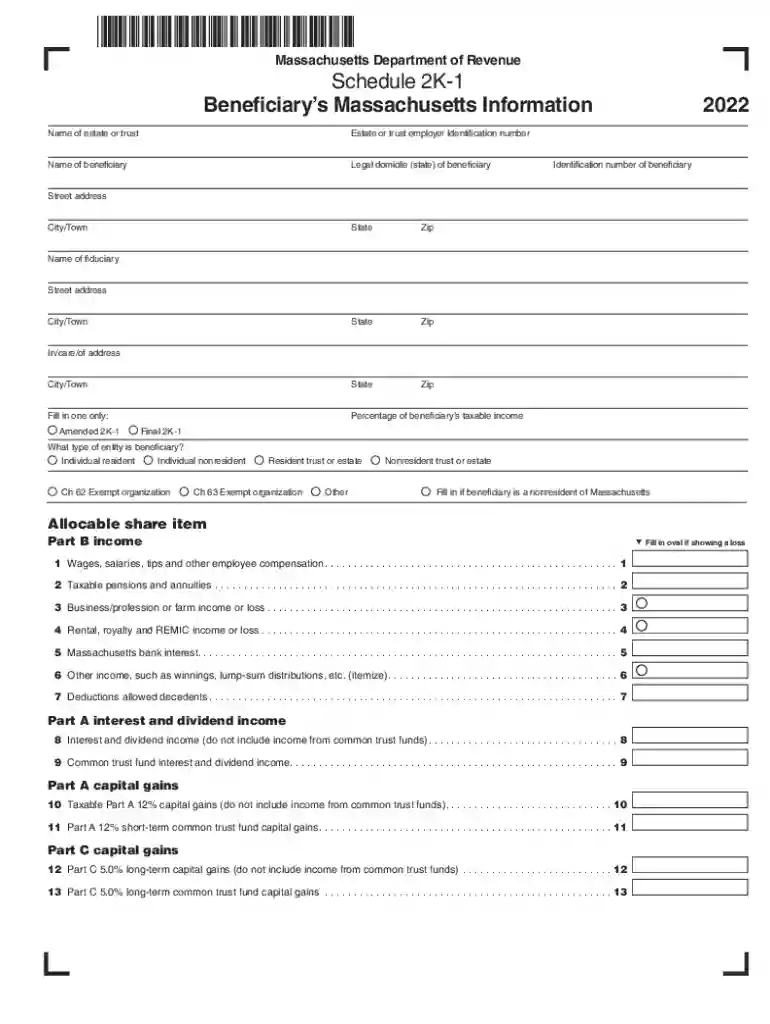
Type text, add images, blackout confidential details, add comments, highlights and more.

Draw your signature, type it, upload its image, or use your mobile device as a signature pad.

Send ma schedule 2k 1 via email, link, or fax. You can also download it, export it or print it out.
An Estate or Trust Employer Identification Number (EIN) is a nine-digit number assigned by the Internal Revenue Service (IRS) to identify a legal entity for tax purposes. This number is crucial when managing the financial activities of an estate or trust, as it allows the IRS to track tax filings and payments associated with these entities. The importance of an EIN lies in its role as a unique identifier for tax-related activities, helping to separate the financial responsibilities of an estate or trust from those of individuals involved.
In the context of an estate, the EIN is used to report income received by the estate from the date of the decedent's death until the closing of the estate. For a trust, an EIN is often required to open bank accounts, file tax returns, and conduct other financial activities separate from the individual trustees. Understanding the purpose and function of the EIN is essential for compliance with tax regulations and for maintaining the legal distinction between personal and fiduciary duties.
To obtain an EIN for an estate or trust, you must apply through the IRS. The process is straightforward but requires accuracy and attention to detail. Here's a step-by-step guide:
Determine Eligibility: Ensure that the estate or trust truly requires an EIN. Generally, if there is any income earned by the estate or trust, an EIN is necessary.
Choose an Application Method: You can apply for an EIN through the IRS website (the fastest method), by fax, or by mail. Applying online provides an immediate response, while fax and mail take longer.
Gather Required Information: You'll need the name and social security number (or ITIN) of the responsible party managing the estate or trust, as well as the legal name of the estate or trust and its physical address.
Complete the Application: Use the IRS Form SS-4, "Application for Employer Identification Number," to provide the necessary details. The form will guide you through the information needed for different types of legal entities.
Submit the Application: Depending on the chosen method, submit the form via the IRS website, fax, or mail. Ensure all information is accurate to avoid processing delays.
Receive Your EIN: If applying online, the EIN will be provided immediately. For other methods, expect to wait a few weeks for processing.
Using the EIN effectively involves understanding how it integrates into various financial and legal activities for an estate or trust:
Open Financial Accounts: Use the EIN to open bank accounts specifically for the estate or trust. This helps separate personal finances from fiduciary responsibilities.
File Tax Returns: The EIN is used when filing federal and state tax returns for the estate or trust. Different forms such as the IRS Form 1041 for income earned by the estate will require the use of an EIN.
Receive Income: Whether it's rental income or dividends, ensure that all income is reported under the EIN to maintain financial transparency and compliance.
Engage in Legal Transactions: Use the EIN when entering into contracts or any legal agreements that involve financial transactions.
Ensure Compliance: Regularly review IRS publications and guidance to ensure that the use of the EIN remains in compliance with evolving tax regulations.
Understanding the key elements involved in the EIN relates to knowing its function, application process, and how it integrates into broader financial obligations. Critical components include:
The IRS provides a comprehensive set of guidelines for estates and trusts managing EINs. Adhering to these guidelines ensures compliance with federal tax regulations:
Adhering to deadlines is critical in managing the financial responsibilities of an estate or trust:
Several documents are necessary for effectively managing and applying for an EIN:
EINs have specific legal uses that include:
Each of these sections explores distinct facets of the Estate or Trust Employer Identification Number, providing thorough insights into its purpose, application, and use in managing financial and legal responsibilities.
We've got more versions of the ma 2k 1 form. Select the right ma 2k 1 version from the list and start editing it straight away!
At DocHub, your data security is our priority. We follow HIPAA, SOC2, GDPR, and other standards, so you can work on your documents with confidence.


