
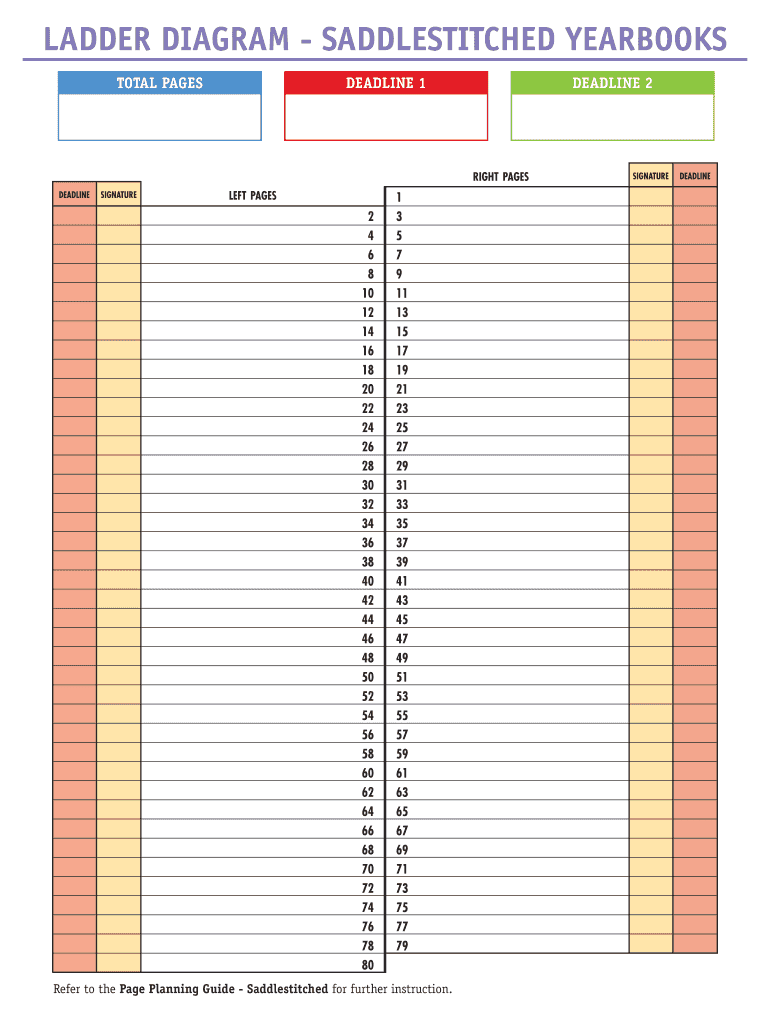







Definition and Meaning of Yearbook Ladder Template
The yearbook ladder template is an essential organizational tool used in the design and layout of school yearbooks. It provides a visual representation of how the pages of the yearbook will be structured, detailing the arrangement of various sections and ensuring that the desired content fits within the available pages. This template typically includes elements such as:
- Total number of pages
- Allocation of pages for each section (e.g., portraits, events, ads)
- Deadlines for submissions from teams or individual contributors
The primary goal of the yearbook ladder is to streamline the production process by providing a clear roadmap that guides editors and designers through the layout, thereby reducing the chance of content being overlooked or misallocated.
Importance of the Yearbook Ladder Template
A well-constructed yearbook ladder template helps maintain organization, making it easier to manage contributions from multiple sources. It also aids in keeping the yearbook team aligned with their timelines, ensuring that important milestones do not get missed, which can have implications for printing and delivery.
How to Use the Yearbook Ladder Template Effectively
Using the yearbook ladder template involves several key steps:
- Determine the Total Number of Pages: Understand the limitations based on budget or print specifications.
- Outline Sections of the Yearbook: Divide the yearbook into distinct sections (e.g., cover, index, faculty, student photos, events) to streamline content gathering.
- Assign Pages to Each Section: Distribute the total pages among the various sections based on priority and content availability.
- Set Deadlines for Each Section: Establish a timeline for each part of the yearbook to ensure timely completion of content and adherence to print schedules.
- Regularly Review Progress: Use the ladder as a live document, adjusting as needed to reflect any changes in content or deadlines.
Collaboration Tips
Engaging the entire yearbook team is crucial. Regular check-ins should be scheduled to track progress and address any challenges that may arise. Utilizing tools like Google Docs for collaborative editing can help coordinate efforts in real-time.
How to Obtain the Yearbook Ladder Template
Yearbook ladder templates can be obtained through various sources:
- Online Resources: Numerous educational and yearbook-focused websites offer free downloadable templates in various formats, including PDF and Google Docs.
- Yearbook Software: Some yearbook publishing companies provide proprietary software that includes templates as part of their services.
- Custom Creation: Users can create a tailored yearbook ladder from scratch using programs such as Microsoft Word, Google Docs, or design software like Adobe InDesign.
Including easy access to pre-built templates streamlines the setup process and allows for immediate customization to fit specific needs.
Steps to Complete the Yearbook Ladder Template
Completing the yearbook ladder template involves methodical steps:
- Choose a Base Template: Whether from scratch or a pre-made design, start with a framework.
- Input Page Count and Sections: Begin filling in the total pages and designated sections.
- Allocate Each Section: Assign pages based on the determined distribution from previous discussions.
- Fill in Content Details: Start noting specific content or contributor details for each section.
- Finalize and Distribute: Once completed, share the template with the team for their input and confirmation.
Ensuring Accuracy
Reviewing the template regularly during the yearbook process helps ensure accuracy and alignment with deadlines, contributing to the overall success of the project.
Why Should You Use a Yearbook Ladder Template?
Utilizing a yearbook ladder template provides numerous benefits, including:
- Visual Organization: It offers a clear overview of the yearbook structure.
- Improved Time Management: Helps keep the project within deadlines and material planning.
- Content Tracking: Facilitates better tracking of submissions from various contributors, reducing the chance of missing important elements.
- Standardization: Ensures that all sections of the yearbook are treated consistently, presenting a unified look and feel.
Implementing a yearbook ladder template optimizes both workflow efficiency and the overall quality of the final product.
Key Elements of the Yearbook Ladder Template
A comprehensive yearbook ladder template typically includes several crucial elements:
- Sections Overview: Clearly labeled sections such as cover, index, portraits, and events.
- Page Allocation: A chart or list reflecting the distribution of pages for each section.
- Deadline Calendar: An integrated schedule showing deadlines for submissions and reviews.
- Contributors' Names: Inclusion of individuals responsible for specific sections or pages.
- Notes Section: Space for additional comments or requirements related to certain pages, ensuring no detail is overlooked.
These elements together ensure that the planning and execution of the yearbook project align with the team's overall vision and timelines.


