
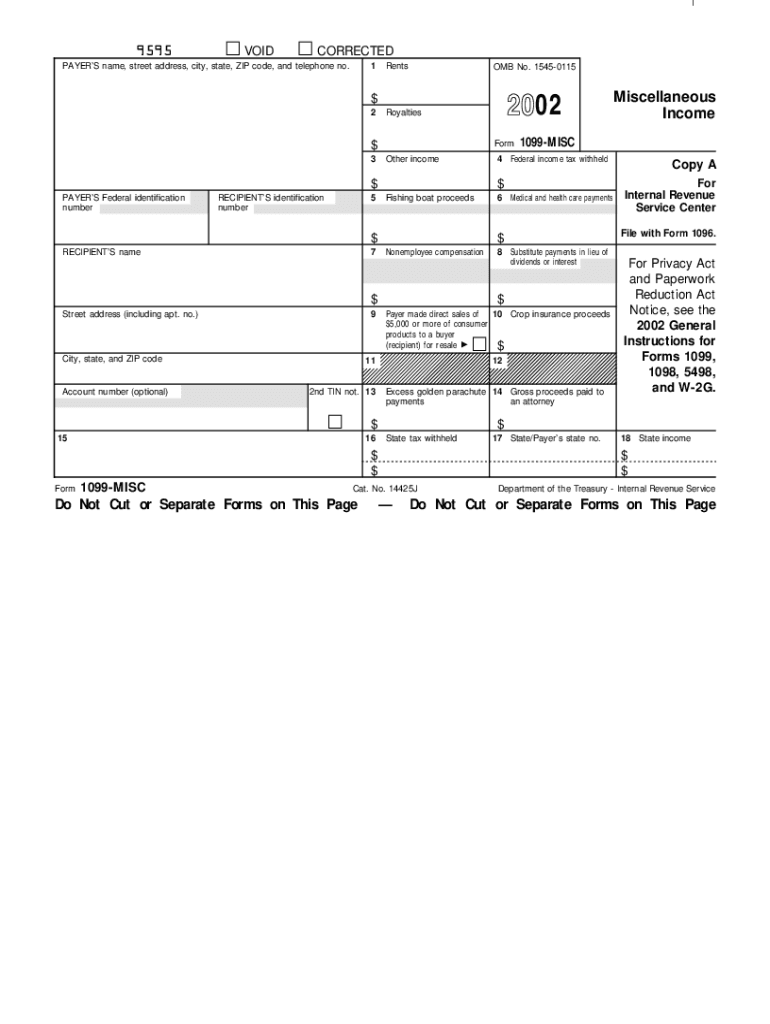







Definition and Meaning
A "2002 form" generally refers to a specific type of document from the year 2002. In many circumstances, this may denote a form used by the IRS or other governmental bodies for reporting various financial activities, compliance, or legal documentation. These forms are pivotal in ensuring the correct flow of information between individuals, businesses, and government entities. When referring specifically to a tax form, it typically includes essential legal or financial information that must be submitted accurately to avoid penalties or compliance issues.
Key Elements of the 2002 Form
Understanding the key components of a 2002 form is vital for proper completion and submission. These forms usually feature sections requiring detailed information about income, business operations, or personal data, such as:
- Personal Information: Typically includes name, address, Social Security Number (SSN), or other identifiers.
- Income Details: Explicitly outlines various income streams, including wages, dividends, and interest.
- Deductions and Credits: Includes potential deductions or credits applicable based on your financial activities.
Steps to Complete the 2002 Form
- Gather Required Documents: Collect all necessary documentation, such as income statements, receipts for deductions, or other relevant financial records.
- Read Instructions Clearly: Each form comes with specific guidelines on how to fill it out. Instructions can clarify which sections are applicable to you.
- Fill Out Each Section Carefully: Provide accurate information in each part of the form to ensure compliance.
- Review and Double-check: Go through the completed form to verify accuracy and completeness.
- Submit by the Deadline: Ensure the form is filed with the appropriate authority by the required date to avoid potential legal issues.
How to Obtain the 2002 Form
To obtain a 2002 form, one can access archived IRS documents if it's a tax-related document, or contact the issuing agency directly. Alternatively, some forms may be accessed electronically through online financial management platforms that archive past forms for user convenience. Typically, these forms are available in digital format for easy downloading and printing.
Legal Use of the 2002 Form
The legal use of the 2002 form typically refers to fulfilling reporting obligations as required by state or federal law. This may involve:
- Fulfilling Tax Obligations: Reporting income or deductions accurately to avoid IRS penalties.
- Complying with Business Regulations: Providing mandated information to maintain compliance with corporate laws.
- Documentation for Legal Proceedings: Using the form as evidence or documentation in legal matters or audits.
IRS Guidelines
IRS guidelines for the 2002 form dictate how the document should be completed, filed, and maintained. These guidelines:
- Define Reporting Standards: Specify what financial activities need to be reported on the form.
- Establish Filing Deadlines: Provide explicit deadlines to ensure timely submission.
- Offer Clarification: Include additional instructions for understanding complex sections of the form.
Penalties for Non-Compliance
Failure to properly complete or submit the 2002 form can result in penalties, such as:
- Fines or Fees: Monetary penalties may be imposed for late or inaccurate filings.
- Interest Charges: Accumulation of interest on unpaid amounts if relevant financial reporting is delayed.
- Legal Actions: Potential legal proceedings if non-compliance is deemed deliberate or fraudulent.
State-Specific Rules for the 2002 Form
While the 2002 form operates under federal guidelines, various states may have additional requirements or modifications. These differences can include:
- Different Filing Dates: Some states may have earlier deadlines than federal requirements.
- Additional Documentation: Certain states might require supplemental forms or additional data.
- Local Exemptions or Deductions: State-specific credits or deductions might apply, altering the form completion process.
Software Compatibility
For those using tax preparation software like TurboTax or QuickBooks, ensuring compatibility with older forms, such as the 2002 form, is necessary for accurate filing. These programs typically offer:
- Past Year Support: Ability to handle forms from previous tax years, integrating current and past data.
- Guided Instructions: Step-by-step assistance to minimize errors and ensure compliance with older requirements.
- Automatic Calculations: Properly calculating totals and deductions based on entered data to synchronize with IRS standards.
Filing Deadlines / Important Dates
Being aware of essential filing dates ensures compliance and helps avoid penalties. The primary filing date for annual forms is generally April 15, though deadlines can vary based on extensions or state regulations. Keeping track of these deadlines and planning submissions accordingly is fundamental.




