




01. Edit your coaching and counseling form online
Type text, add images, blackout confidential details, add comments, highlights and more.

Type text, add images, blackout confidential details, add comments, highlights and more.

Draw your signature, type it, upload its image, or use your mobile device as a signature pad.

Send employee counseling form via email, link, or fax. You can also download it, export it or print it out.
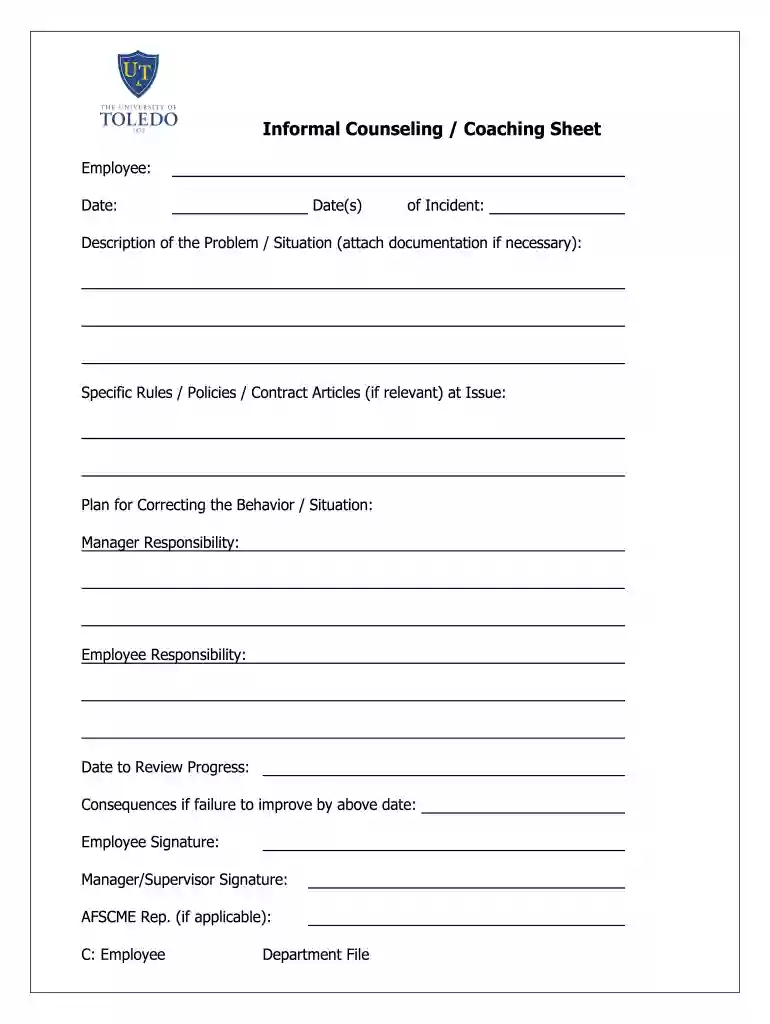
Coaching and counseling forms are structured documents used by managers and supervisors to address employee performance issues or provide support for personal and professional development. These forms facilitate the documentation of discussions and actions taken regarding employee performance, behavior, or progress in achieving specific goals. The primary objective is to ensure that employees understand expectations and have a clear path for improvement. This form plays an essential role in maintaining a productive workplace by formalizing feedback and creating accountability between the employee and management.
Key aspects of coaching and counseling forms include:
These forms can vary in complexity, and may be tailored to fit the specific needs of different organizations or industries. They often include sections for performance observations, areas for improvement, proposed action plans, and follow-up mechanisms.
Utilizing coaching and counseling forms effectively requires careful preparation, open communication, and thorough understanding of the form’s components. This process starts with gathering necessary information regarding the employee’s performance and the specific issues to be addressed.
Steps to utilize the form effectively include:
Preparation:
Conducting the Session:
Filling Out the Form:
Follow-Up:
By approaching the coaching and counseling form as a collaborative tool, both managers and employees can benefit, leading to improved performance and workplace satisfaction.
A coaching and counseling form typically consists of several key elements that guide the process of performance management and personal development. Understanding these elements can help ensure that the form is completed accurately and effectively.
Essential components include:
These elements work together to form a comprehensive approach to employee development and ensure that both parties are aligned in their goals.
Real-world examples of using coaching and counseling forms can help contextualize their importance in the workplace. These examples illustrate how various organizations apply these forms in different scenarios:
Performance Management:
Behavioral Concerns:
Career Development:
By demonstrating these examples, organizations can highlight the multifunctional nature of coaching and counseling forms, promoting both improvement and personal development within the workplace.
Understanding the legal implications associated with coaching and counseling forms is crucial for ensuring compliance and protecting both employees and employers. When utilized properly, these forms can serve as valuable documentation in the event of disputes or grievances.
Key legal considerations include:
Employers should ensure that they are familiar with local and federal employment laws relevant to coaching and counseling practices, adopting policies that safeguard both employees and the organization.
This systematic approach aids in leveraging coaching and counseling forms as a crucial tool in maintaining workforce integrity and promoting continuous improvement.
At DocHub, your data security is our priority. We follow HIPAA, SOC2, GDPR, and other standards, so you can work on your documents with confidence.
Employee Coaching Form. Effective Date: Date. Employee ID: ID #. Employee Name: Name. Supervisor Name: Name. This form confirms in writing that you are aware ofRead more
Troika Consulting: Rapid peer counseling in which three people take turns playing the client role for ten minutes.Read more


