




01. Edit your form online
Type text, add images, blackout confidential details, add comments, highlights and more.

Type text, add images, blackout confidential details, add comments, highlights and more.

Draw your signature, type it, upload its image, or use your mobile device as a signature pad.

Send it via email, link, or fax. You can also download it, export it or print it out.
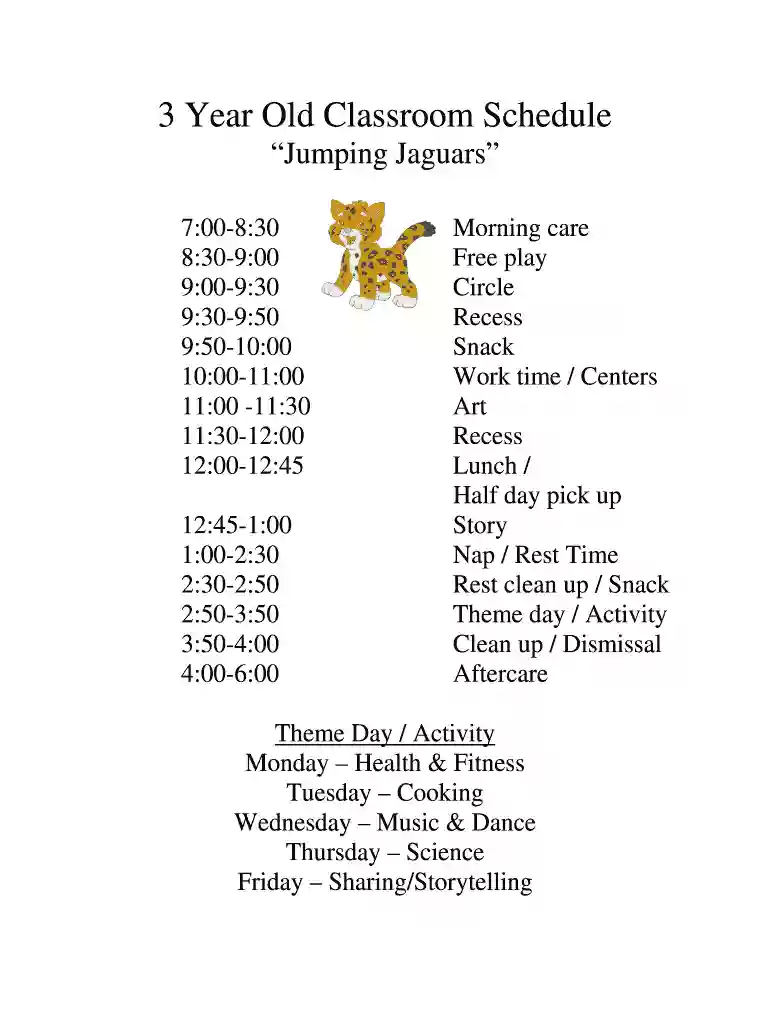
The "3 Year Old Classroom Schedule" refers to a structured daily plan designed for organizing activities and transitions throughout the day in a classroom setting for three-year-old children. It details the sequence of events including free play, instructional time, meals, rest periods, and special thematic activities. This type of schedule aims to provide a consistent routine that supports the developmental needs of young children, promoting a balance between structured learning and play-based activities.
Implementing a classroom schedule for three-year-olds involves understanding and adapting the flow to meet the unique dynamics of the classroom. Teachers and caregivers use it to plan the day efficiently, ensuring all necessary activities are included while allowing flexibility to accommodate the children's moods and energy levels.
A clear understanding of various terms helps effectively implement and follow the schedule. Familiarize yourself with key phrases commonly used in early childhood education environments.
The schedule's effectiveness lies in its comprehensive design, ensuring each activity serves a developmental purpose.
Three-year-old classroom schedules can be adapted to fit various educational settings and philosophies. Various real-world examples demonstrate the schedule's adaptability and effectiveness.
A structured schedule offers numerous benefits that contribute to the holistic development of young children, preparing them for future educational success.
Completing a schedule effectively involves strategic planning and consideration of the unique needs of both the group and individual children.
We've got more versions of the 3 Year Old Classroom Schedule form. Select the right 3 Year Old Classroom Schedule version from the list and start editing it straight away!
| Versions | Form popularity | Fillable & printable |
|---|---|---|
| 2015 | 4.2 Satisfied (57 Votes) |
At DocHub, your data security is our priority. We follow HIPAA, SOC2, GDPR, and other standards, so you can work on your documents with confidence.
by WW BRIEFS The teachers set up a basic class schedule with pictures representing activities and centers, which allowed the children to visit three centers during aRead more
6:00 7:30 Arrival/ Routine 7:30 8:30 BREAKFAST/Hand-washing/Tooth-brushing/ Clean up 8:30 8:45 Planned Activities 8:45 10:00 Self-selected. Play 10


