




01. Edit your sc 100 info online
Type text, add images, blackout confidential details, add comments, highlights and more.

Type text, add images, blackout confidential details, add comments, highlights and more.

Draw your signature, type it, upload its image, or use your mobile device as a signature pad.

Send sc100 info via email, link, or fax. You can also download it, export it or print it out.
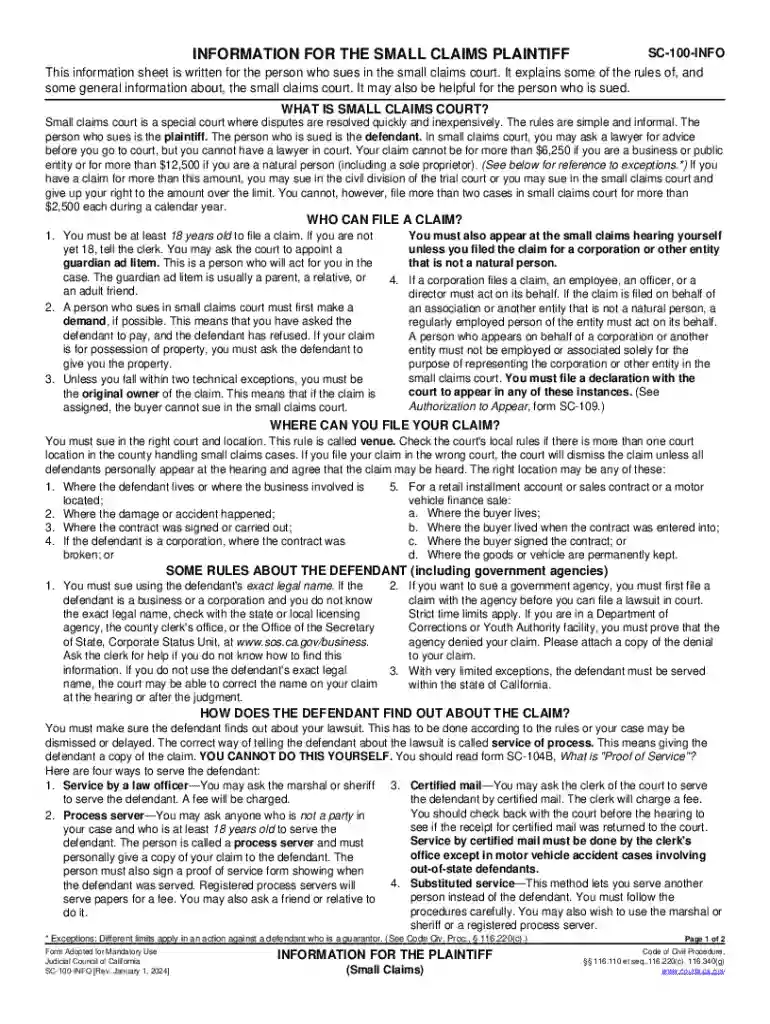
The SC-100-INFO serves as an essential guide for individuals who intend to file a claim in small claims court. This document is specifically tailored for the plaintiff's use, providing comprehensive details on the procedures and rules governing small claims cases. It aims to demystify the process, ensuring that individuals understand their rights and obligations when seeking resolution for disputes. The document emphasizes the function of small claims court as a venue for quick and inexpensive resolution, highlighting the monetary limits applicable for claims.
To effectively utilize the SC-100-INFO document, begin by familiarizing yourself with the layout and the different types of information it covers. Each section is designed to guide you through a segment of the process, from understanding the court's purview to preparing your documentation. Use the checklists and detailed instructions to streamline your preparation and ensure you address every requirement. Refer to the examples provided to understand typical cases and expected documentation.
The document is primarily used by individuals or businesses seeking resolution for financial disputes in a small claims court setting. It is designed for those who are either representing themselves or requiring clear guidance on the small claims process. Small business owners, tenants, landlords, and consumers often find the SC-100-INFO particularly helpful due to its focus on layperson-oriented legal proceedings.


While the SC-100-INFO provides a general framework, it is crucial to consult any state-specific variations in rules or procedures. Some states may have differing monetary limits, additional forms, or unique filing requirements that could impact your case. Be sure to verify local guidelines to ensure compliance with all relevant legal standards.
The SC-100-INFO may have alternatives or related forms that address other aspects of small claims filing, such as forms tailored for counterclaims or specific to defendants. Occasionally, updated versions of the SC-100-INFO are issued to reflect changes in procedure or legislation. Check for the most current version before proceeding with your claim to avoid discrepancies or outdated information.
The SC-100-INFO outlines multiple methods for submitting your small claims form. You may file online via the court's electronic filing system, send the completed form through mail, or submit it in person at the courthouse. Each method has its own set of requirements and timelines, so choose the one most convenient and feasible for your situation, ensuring that you comply with deadlines for submission.
The SC-100-INFO provides a legal roadmap for filing claims within the small claims court framework. It ensures that plaintiffs understand their rights and the obligations they must meet to pursue a claim. Utilizing this document accurately can help avoid procedural errors that may cause delays or jeopardize the case. Accurate use of this document is critical for ensuring that your case is filed correctly and proceeds smoothly through the small claims court system.
We've got more versions of the sc 100 info form. Select the right sc 100 info version from the list and start editing it straight away!
At DocHub, your data security is our priority. We follow HIPAA, SOC2, GDPR, and other standards, so you can work on your documents with confidence.
Apr 30, 2021 After filing the claim, the Plaintiff will receive documentation that will include the SC-100 form with a case number and scheduled court date,Read more
This information sheet is written for the person who sues in the small claims court. Your claim cannot be for more than $6,250 if you are a business or public


