
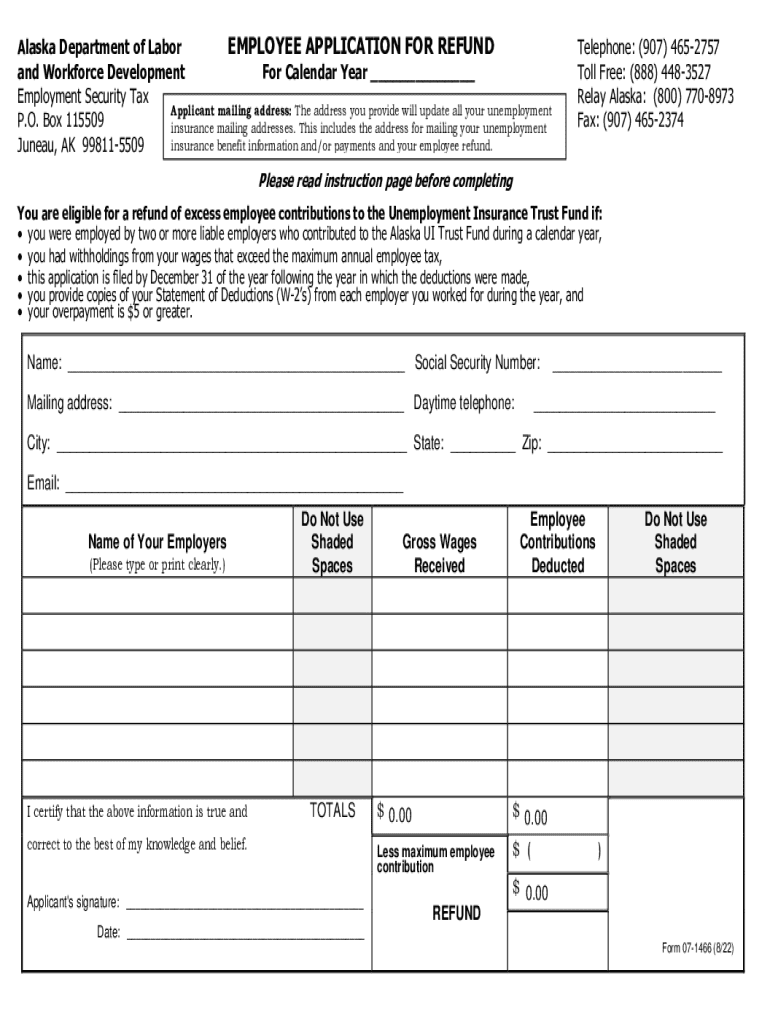







Definition and Purpose of Alaska Employer Tax Information
The Alaska Employer Tax Information form is a vital resource for businesses operating within the state. It serves to report and manage employer-related taxes, including unemployment insurance contributions. Understanding these tax obligations ensures compliance with state laws and helps maintain the financial integrity of a business. Employers need this information to accurately calculate and remit taxes owed to the state, ensuring that they meet their fiscal responsibilities while avoiding penalties.
- Unemployment Insurance Contributions: Employers are responsible for contributing to the state's unemployment insurance fund, which supports workers who lose their jobs through no fault of their own.
- Reporting Requirements: The form allows employers to report wages paid and taxes due, ensuring transparency and accuracy in tax filings.
How to Use the Alaska Employer Tax Information
The Alaska Employer Tax Information can be utilized by employers to streamline and automate their tax reporting processes. Here's how it can be effectively used:
- Gather Employee Information: Employers should collect complete wage and demographic details for all employees.
- Calculate Contribution Rates: Use the form to determine the appropriate unemployment insurance contribution rates based on the business type and employee classifications.
- Submit Returns: Ensure timely submission of tax returns, whether quarterly or annually, depending on state requirements.
- Digital Integration: Employers can use software that integrates with Alaska's tax systems to submit forms electronically, reducing paperwork and enhancing accuracy.
- Review and Adjust: Regularly reviewing submitted information can help identify discrepancies and make timely corrections.
Steps to Complete the Alaska Employer Tax Information
Proper completion of the Alaska Employer Tax Information form is critical for compliance. Follow these steps to ensure accuracy:
- Download the Form: Access the latest version of the form from the Alaska Department of Labor and Workforce Development's website.
- Fill Out Business Details: Include the business name, address, and Federal Employer Identification Number (FEIN).
- Report Employee Wages: Detail the wages paid to each employee during the reporting period.
- Calculate Taxes Due: Utilize the provided guidelines to compute the accurate amount of taxes owed.
- Review for Errors: Carefully check for any inaccuracies before submission to avoid penalties.
- Submit the Form: File the completed form via recommended submission methods, such as online portals or by mail.
- Keep Records: Retain copies of all submissions for future reference and as a record of compliance.
Eligibility Criteria for Filing
Not every business is required to file the Alaska Employer Tax Information form. Eligibility largely depends on the type of employment and the nature of the business operations.
- Liable Employers: Businesses meeting specific wage and employee thresholds may be considered liable and thus must file the form.
- Multi-Employer Situations: Employees who work for more than one employer liable for Alaska taxes should ensure no excess contributions are made.
- Non-Profit and Government Entities: Some organizations may have different filing requirements or exemptions based on state regulations.


Important Terms Related to Alaska Employer Tax Information
Understanding key terminology is essential for accurately completing and filing tax information. Here's a look at some critical terms:
-
Unemployment Insurance (UI): A program that provides temporary income to eligible workers who lose their jobs.
-
Quarterly Reporting: Most employers are required to file tax information every quarter.
-
Contribution Rate: The percentage of employee wages that employers must pay towards unemployment insurance.
-
Wage Base Limit: The maximum amount of wages subject to unemployment tax.
Penalties for Non-Compliance
Failure to comply with the filing requirements associated with the Alaska Employer Tax Information can result in significant repercussions for a business.
-
Financial Penalties: Non-compliance may result in fines or increased tax rates for repeated offenses.
-
Legal Implications: Businesses may face legal challenges if they fail to accurately file required information.
-
Delayed Benefits: Employees may experience delays in receiving unemployment benefits if employer contributions are not timely.
-
Reputational Risks: Non-compliance can harm a business's reputation, affecting stakeholder relations.
Key Elements of the Alaska Employer Tax Information
Several critical components must be accurately completed within the Alaska Employer Tax Information form to ensure compliance:
-
Employer Identification: Clearly detailed information related to the business, including FEIN and contact details.
-
Employee Wages: Precise reporting of all wages paid to employees within the designated period.
-
Tax Contributions: Exact calculation and reporting of the contributions due based on the listed employee wages.
-
Filings and Attachments: Ensure all required documents and attachments, such as wage reports, are included when submitting the form.
Application Process and Approval Time
The application process for Alaska Employer Tax Information involves several steps, and understanding the timeline is essential for effective planning.
-
Submission Timeline: Employers must be aware of filing deadlines, typically on a quarterly basis.
-
Processing Duration: Once submitted, forms undergo a review process, with typical approvals aligning with the Department of Labor's schedules.
-
Follow-Up Requirements: Employers should be prepared to address any discrepancies or additional documentation requests promptly.
-
Automated Updates: Use technology solutions to handle updates or changes efficiently, maintaining compliance with minimal manual intervention.




