




01. Edit your form online
Type text, add images, blackout confidential details, add comments, highlights and more.

Type text, add images, blackout confidential details, add comments, highlights and more.

Draw your signature, type it, upload its image, or use your mobile device as a signature pad.

Send it via email, link, or fax. You can also download it, export it or print it out.
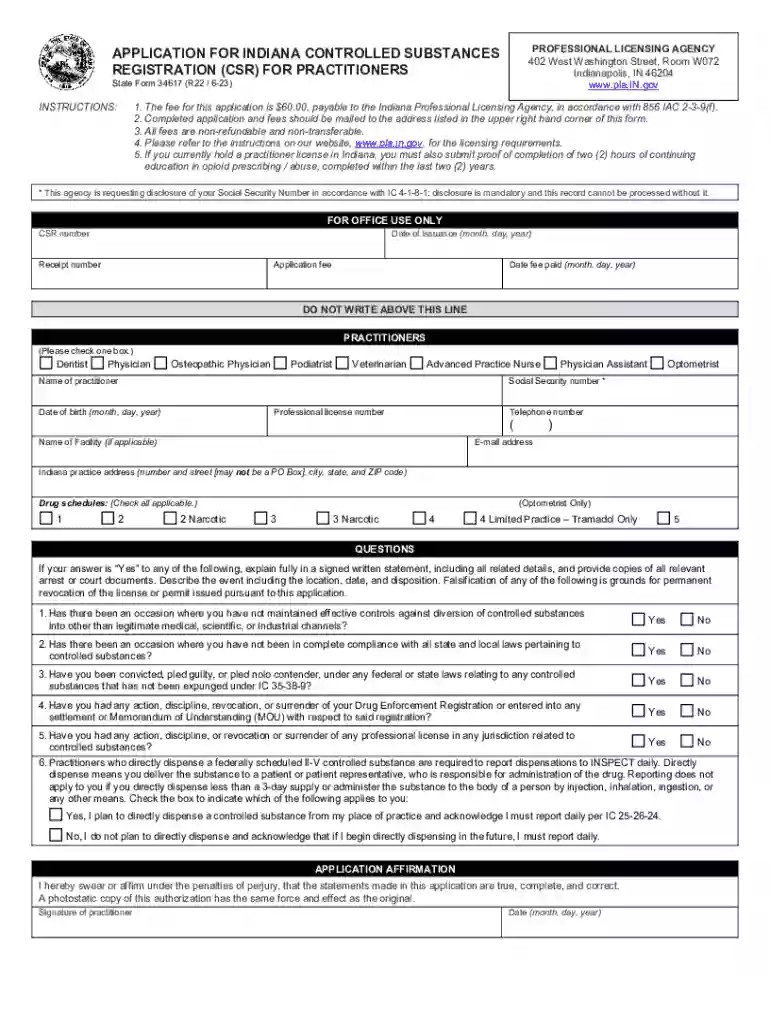
The Practitioner Controlled Substances Registration (CSR) Application, commonly referred to as the PLA, is a critical document for healthcare practitioners in Indiana. This application is essential for those who intend to prescribe, administer, or dispense controlled substances legally. By obtaining this registration, practitioners demonstrate compliance with state regulations designed to monitor and control the use of substances that have potential for abuse or misuse.
The PLA serves not only as a regulatory requirement but also as a safeguard for public health. It ensures that only qualified individuals are authorized to handle controlled substances, thereby reducing the risk of diversion and enhancing accountability among healthcare providers. This application is a fundamental part of a practitioner's credentials in Indiana, affirming their commitment to adhering to legal standards while providing necessary medical care.
To qualify for the Practitioner Controlled Substances Registration, applicants must meet specific eligibility criteria set by the state of Indiana. Primarily, applicants must hold a valid and active professional license in their respective healthcare field, such as medicine, dentistry, or veterinary medicine. This prerequisite ensures that only those with proper qualifications and training can apply for the CSR.
Continuing education is another crucial component for eligibility. Practitioners must demonstrate completion of a certain number of hours in opioid prescribing and pain management as part of their ongoing professional development. This requirement highlights the emphasis on informed and responsible prescribing practices, which is particularly significant in the context of the opioid epidemic. Additionally, applicants must not have any history of disciplinary actions related to substance misuse or unethical practices.


Completing the PLA requires careful attention to detail and adherence to the specified procedures. Here's a step-by-step guide to ensure a successful application:
Obtain the Application Form: Practitioners can acquire the form from the Indiana Professional Licensing Agency's website or request a physical copy.
Gather Required Documents: Prepare necessary documentation, including proof of professional licensure, continuing education certificates, and any other requested materials.
Complete Personal and Professional Information: Fill out sections detailing personal information, professional credentials, and practice details accurately.
Disclose Necessary Information: Answer all questions regarding compliance with controlled substances regulations, personal background, and any legal disclosures, such as your Social Security Number.
Submit the Application: After completing the form, submit it either online or by mail as directed. Ensure that all sections are filled and required documents are attached.
Pay the Application Fee: Include the appropriate payment for the application fee as specified, which varies depending on the applicant’s profession and the scope of practice.
Await Confirmation: Once the application is submitted, wait for confirmation and further instructions from the licensing agency regarding the status of the application.
The Practitioner Controlled Substances Registration Application encompasses several critical elements that applicants must understand and complete thoroughly:
Personal Information: This includes the applicant's name, contact details, and Social Security Number, which are essential for processing the application and verifying identity.
Professional Licensure Information: This section requires details of the practitioner's current professional license, including the license number, issuance date, and any specializations.
Continuing Education Documentation: Proof of completed coursework in relevant areas such as opioid training must be submitted to assure compliance with educational requirements.
Compliance and Disclosure Statements: Applicants must declare their capacity to comply with controlled substances regulations and share any previous disciplinary actions or criminal convictions.
The focus on these elements ensures that only competent and compliant practitioners can secure a CSR, thereby fostering responsible healthcare practices.
The legal use of the PLA is heavily embedded in its function to regulate the handling of controlled substances within Indiana. Once granted, the CSR authorizes practitioners to prescribe, administer, and dispense controlled substances within the legal framework established by state and federal laws. This legal standing is crucial not only for patient safety but also for protecting practitioners from liability and legal repercussions associated with unauthorized substance use.
The application plays a preventive role in reducing the potential for substance abuse and diversion. By controlling who can handle these medications, the state aims to lower incidences of illegal distribution and misuse, contributing to broader public health efforts. It is also an integral part of a practitioner's professional responsibilities, serving as a testament to their commitment to ethical and lawful medical practices.
Practitioners in Indiana must be aware of state-specific regulations that govern the application and use of the CSR. These rules are crucial for navigating the legal landscape effectively and ensuring compliance:
State-Specific Requirements: Unlike some states, Indiana mandates continuing education in pain management and opioid prescribing as a part of the licensing process. Practitioners must stay updated with any changes in these educational mandates.
Renewal and Expiration: The registration must be renewed periodically, with specific deadlines set for renewal applications. Failure to renew on time can result in the suspension or revocation of the CSR.
Understanding these rules allows practitioners to maintain their registration without interruption and align their practices with state laws.
To illustrate the practical utility of the PLA, consider these scenarios:
A Physician in Family Practice: A family doctor uses the CSR to prescribe controlled medications for chronic conditions like anxiety and pain, ensuring these prescriptions comply with stringent regulations.
A Dentist Performing Surgeries: A licensed dentist might require the registration to manage post-operative pain with controlled substances for patients undergoing significant dental procedures.
A Veterinarian Treating Animals: Veterinarians utilize the CSR to administer controlled medications to animals in their care, particularly for pain management and surgical recovery.
These examples demonstrate the diverse applications of the CSR across various fields of medical practice, highlighting its role in facilitating safe and legal treatment options.
The application process for the PLA is straightforward but must be followed meticulously to avoid delays. Initially, applicants should allow several weeks for processing and verification of submitted information. The exact approval time can vary, subject to workload and the complexity of each application.
Applicants can expedite the process by ensuring all documentation is complete and accurate before submission. Any discrepancies or missing information can result in processing delays, emphasizing the need for precision and thoroughness in the preparation stage.
By understanding this process, practitioners can better manage their timelines and ensure their applications are smooth and successful.
We've got more versions of the PLA: Practitioner Controlled Substances Registration Application form. Select the right PLA: Practitioner Controlled Substances Registration Application version from the list and start editing it straight away!
At DocHub, your data security is our priority. We follow HIPAA, SOC2, GDPR, and other standards, so you can work on your documents with confidence.
To obtain a controlled substance license, you must submit a License Application to Engage in a. Controlled Substance Activity (DOH-4330) to the DOH BureauRead more
Applicants must have an Active Primary Indiana Practitioner License before they can obtain a CSR. Application fee: $60.00 by credit or debit card.


