






Definition and Meaning
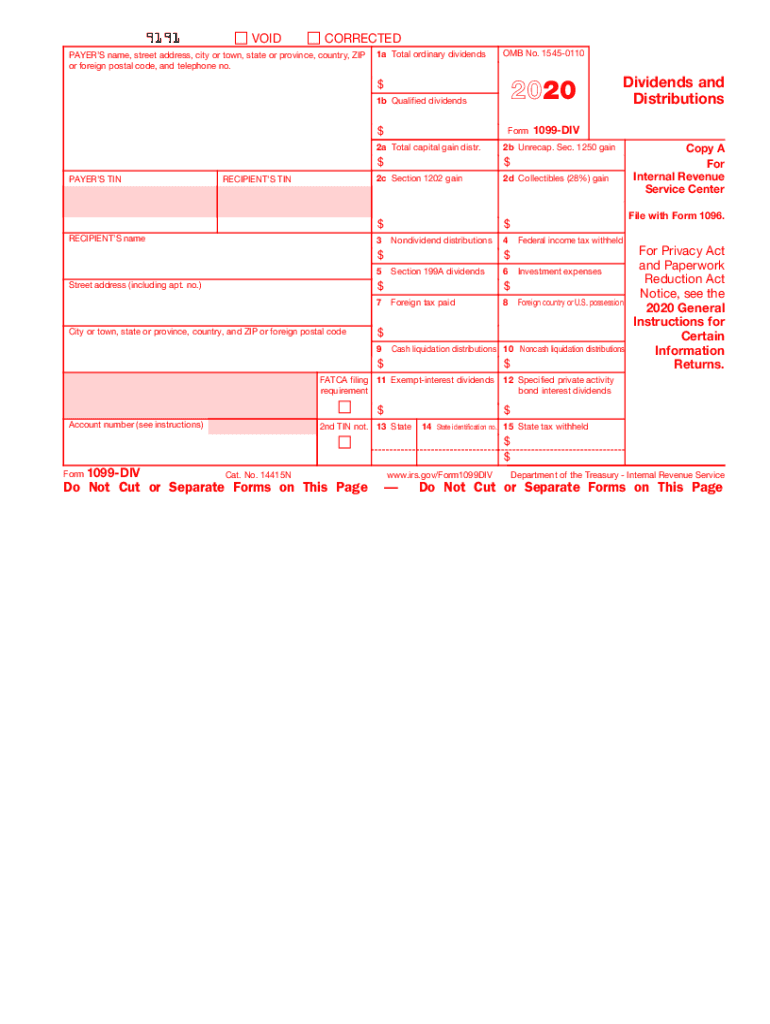
Form 1099-DIV is used by companies to report dividends and distributions to investors and the Internal Revenue Service (IRS). It ensures that dividends received by investors are properly accounted for and taxed. The form includes details about ordinary dividends, qualified dividends, and total capital gain distributions. Understanding the structure and purpose of 1099-DIV helps investors align with tax regulations.
How to Use the 1099-DIV
Investors use 1099-DIV to accurately report dividend income on their tax returns. This involves identifying various dividend categories, such as ordinary and qualified dividends, each of which has specific tax implications. Properly reporting these details helps ensure compliance with IRS rules, potentially influencing tax liabilities. Investors must accurately differentiate to apply correct tax rates.
Steps to Complete the 1099-DIV
- Gather Necessary Information: Collect details such as total dividends, qualified dividends, and capital gain distributions.
- Review for Accuracy: Ensure all figures match with those provided by your investment firm.
- Fill in Required Boxes: Enter relevant information, including taxpayer identification number and recipient's name.
- Verify with Original Records: Cross-check with investment account statements for accuracy.
- Consult IRS Guidelines: Follow IRS instructions to avoid common errors and misreporting.
Filing Deadlines and Important Dates
The IRS mandates that 1099-DIV forms be distributed to recipients by January 31 each year. Filing the tax return, with the information from the form, must align with the standard tax filing deadline, generally April 15. Timely filing avoids penalties and ensures dividends are reported within the correct tax year.
Penalties for Non-Compliance
Failure to correctly file 1099-DIV forms can result in penalties. Late filing or incorrect information can incur fines ranging from $50 to $270 per form, depending on the lateness and accuracy. Severe discrepancies might lead to further IRS scrutiny, making accurate initial filing crucial to avoid financial and legal consequences.
Important Terms Related to 1099-DIV
- Ordinary Dividends: Typically taxed at regular income rates.
- Qualified Dividends: Eligible for lower tax rates similar to long-term capital gains.
- Capital Gain Distributions: Related to the selling of securities within mutual funds and ETFs. Understanding these terms helps correctly categorize income and reduce confusion during tax preparation.
Who Typically Uses the 1099-DIV
Investors who receive dividends from stocks, mutual funds, or other investment securities commonly use the 1099-DIV. This includes individual investors, trusts, estates, and even some business entities that receive income from investments. Each group must adhere to IRS guidelines to ensure proper tax computation and compliance.


IRS Guidelines for Form 1099-DIV
The IRS provides comprehensive guidance on completing and submitting Form 1099-DIV. It outlines categories, tax rates, and filing procedures, with additional resources for electronic filing. Awareness of these guidelines helps in avoiding errors. Updated instructions each year reflect the latest tax policy changes, encouraging proactive review before completion.