







Definition and Purpose of the Pediatric (Pre-Pubertal) Form
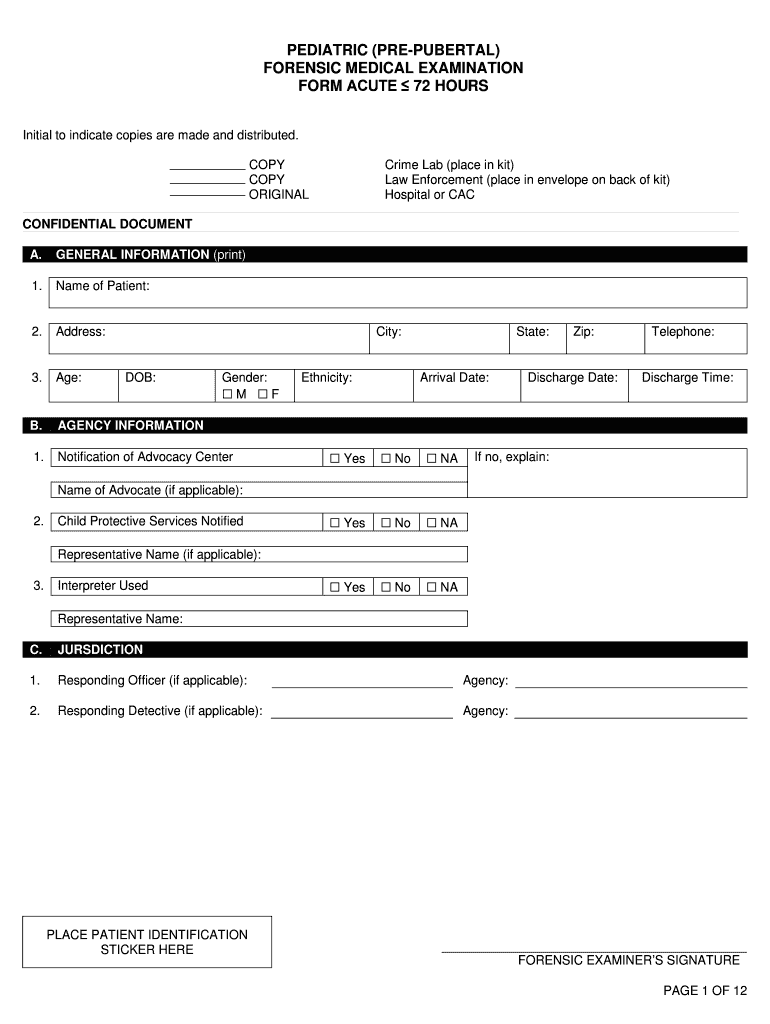
The Pediatric (Pre-Pubertal) form is a specialized document used in forensic medical examinations. It is designed specifically for pediatric patients who have not yet reached puberty and may have experienced sexual assault or abuse. This form includes sections for documenting general patient information, obtaining consent for examination and evidence collection, and recording details of the incident. It plays a crucial role in ensuring comprehensive documentation and supporting victims while facilitating communication with law enforcement and advocacy centers.
Key Components of the Form
- General Patient Information: This section captures essential details about the patient, including name, date of birth, and demographics.
- Consent for Examination and Evidence Collection: Obtaining informed consent is vital. This section ensures legal compliance and willingness of the guardian or parent for the examination.
- Patient History and Details of the Assault: Collects detailed information about the incident to assist in the medical and legal process.
How to Use the Pediatric (Pre-Pubertal) Form
Appropriate use of the Pediatric (Pre-Pubertal) form is vital in clinical and legal settings. Healthcare professionals must be trained to fill out each section thoroughly and sensitively.
Step-by-Step Instructions
- Patient Reception: Collect basic information and offer comfort. Ensure the presence of a guardian.
- Explanation and Consent: Explain the purpose of the exam and gain informed consent.
- Medical Examination: Conduct the exam and fill out the form with detailed observations.
- Document Evidence: Describe any evidence collected with specificity.
- Secure and Submit: Safeguard the completed form and submit it to the appropriate authorities and advocacy groups.
Steps to Complete the Pediatric (Pre-Pubertal) Form
Completing this form requires attention to detail and specific procedures to ensure accuracy and integrity of information.
-
Pre-examination Preparation: Gather necessary tools and ensure patient comfort.
-
Form Sections Completion:
- Patient Demographics: Fill in personal and contact details.
- Incident Description: Accurately document the patient’s account and any observed injuries.
- Consent Sections: Ensure all parties understand and agree to the terms.
-
Post-examination Review: Double-check all entered information for accuracy before sealing the report for submission.
Legal Use of the Pediatric (Pre-Pubertal) Form
This form is imperative in legal proceedings involving minors who have experienced assault, ensuring that documented evidence and patient information are admissible.
Compliance with Legal Standards
- Federal Compliance: Adheres to U.S. regulations regarding minors and forensic evidence.
- State-Specific Variations: Modifications may be needed according to state-specific child protection laws.
- Attorney and Law Enforcement Collaboration: Tools like DocHub can be used to securely share these documents with legal teams.
Important Terms Related to Pediatric (Pre-Pubertal) Examinations
Understanding terminology associated with the Pediatric (Pre-Pubertal) form is essential for professionals handling these sensitive cases.
Key Terms
- Pre-Pubertal: Refers to children who have not yet reached puberty.
- Forensic Examination: A medical assessment for legal purposes.
- Evidence Collection: Gathering of medical or physical evidence related to the assault.
Required Documents for Completing the Pediatric (Pre-Pubertal) Form
A thorough forensic examination requires auxiliary documents to complement the form, ensuring all necessary information is captured.
Document Checklist
- Guardian Consent Form: Required for legal examination.
- Medical History Records: Provides context for the examination.
- Photographic Evidence: Visual documentation of injuries, with consent.
Examples of Using the Pediatric (Pre-Pubertal) Form
Practical scenarios and case studies highlight the importance of accurate documentation using this form.
Real-World Scenarios
- Case Study: A young patient alleging assault is examined, and the form documents crucial evidence that aids in court proceedings.
- Scenario: The form facilitates communication and coordination among medical, legal, and advocacy teams ensuring a cohesive approach to the case.
Digital vs. Paper Versions of the Form
Selecting between digital and paper forms can impact workflow efficiency and data security.
Considerations
- Digital Version: Offers easy sharing and editing capabilities, enhanced by platforms like DocHub for secure management.
- Paper Version: Useful in settings lacking digital infrastructure but increases risk of physical document misplacement.




