





Understanding Form 1098-E
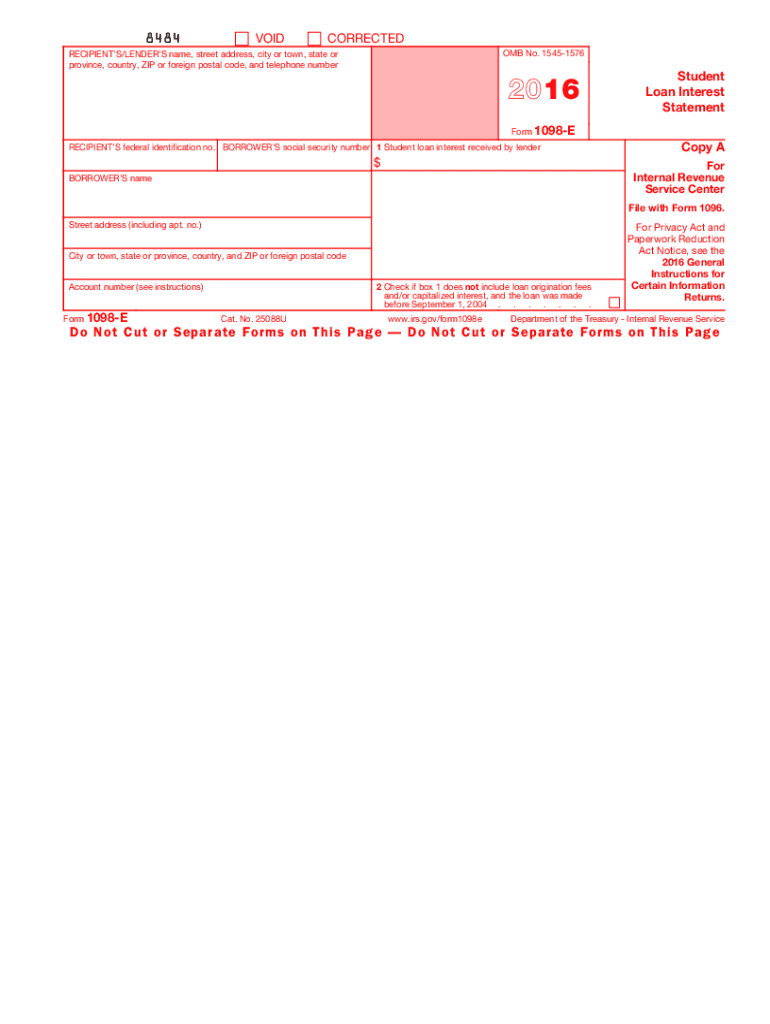
Form 1098-E is a Student Loan Interest Statement provided by lenders to borrowers who have paid over $600 in interest on qualified student loans during the tax year. The form is essential for borrowers as it allows them to deduct the interest paid on their student loans from their taxable income, ultimately reducing their overall tax liability.
Key Elements of the 1098-E Form 2016
- Lender Information: Includes the name, address, and taxpayer identification number of the lender.
- Borrower Details: Contains the borrower’s name, address, and social security number, ensuring that the information is accurately associated with the correct taxpayer.
- Interest Paid: The form lists the total amount of interest paid on the student loan, which is the primary figure for deduction claims.
- Loan Servicer Details: Identifies the servicer managing the loan, not always the same as the lender, which can be important for any questions regarding the figures reported.
How to Use Form 1098-E
Borrowers use Form 1098-E to report the amount of student loan interest they paid during the tax year, which can be deducted up to a certain limit, depending on their income and filing status. The process includes:
- Reviewing the form upon receipt to ensure that all information is accurate.
- Including the reported interest amount when filing taxes, using tax software or consulting a tax professional.
- Filing the form by any applicable state-specific rules and deadlines, which might affect the deduction.
Obtaining the 1098-E Form 2016
To obtain Form 1098-E, taxpayers who paid more than $600 in student loan interest should receive it automatically from their lender. However, if not received:
- Contact the Lender: Directly request the form from the lender or loan servicer.
- Online Access: Many loan servicers offer the option to download the form via their online portal or to request a mailed copy.
Steps to Complete Form 1098-E
Completing the 1098-E form involves ensuring correct receipt and understanding its components:
- Verify Information: Cross-check your personal and loan details as reported.
- Calculate Deduction Eligibility: Using software or tax guidance, verify your eligibility to deduct the reported interest.
- Incorporate in Tax Filing: Apply the interest deduction to your tax filing to potentially lower your taxable income.
Who Typically Uses the Form 1098-E
The form is primarily used by:
- Students and Graduates: Those who have paid interest on educational loans.
- Parents: If loans were co-signed or taken out for children’s education.
- Tax Professionals: To assist their clients in accurately reporting interest deductions.


Legal Significance and IRS Guidelines
The IRS requires accurate reporting of student loan interest to ensure proper tax deduction claims:
- Accuracy is Key: Misreporting can lead to audits or penalties.
- IRS Publications: Refer to IRS guidelines, such as Publication 970, for detailed information on tax benefits for education.
Penalties for Non-Compliance
Failing to report or incorrectly reporting student loan interest can result in:
- Fines and Penalties: The IRS can levy fines against taxpayers who inaccurately report their interest payments.
- Loss of Deduction: Incorrectly filed forms may nullify the deduction benefit.
- Reduced Refunds: Errors may lead to adjusted refunds or additional taxes owed.
Examples of Using the 1098-E Form
- Scenario 1: A graduate deducts $1,200 in loan interest, lowering their taxable income and reducing tax owed.
- Scenario 2: A parent who paid interest on a loan taken out for their child's education uses the deduction to benefit from education-related tax savings.
Filing Deadlines and Important Dates
- IRS Deadline: Usually by April 15, for including the interest deduction within the annual tax return.
- Lender Mailing: By January 31, lenders must send the 1098-E form to ensure borrowers have adequate time for tax filing.
Form Submission Methods and Software Compatibility
Borrowers can file their tax returns and include Form 1098-E information using:
- Tax Software: Platforms like TurboTax and QuickBooks support 1098-E inputs and calculations.
- Professional Services: Tax preparers can assist in optimizing the tax implications of student loan interest.
Eligibility Criteria for Deduction
- Income Limits: Deductions phase out for higher income levels; taxpayers need to check the IRS guidelines for specific thresholds.
- Qualified Loans: Only interest from loans used for qualified education expenses is deductible.
By understanding and accurately utilizing the 1098-E Form, borrowers can effectively manage their tax obligations related to student loan interest, ensuring compliance and optimizing tax benefits.