
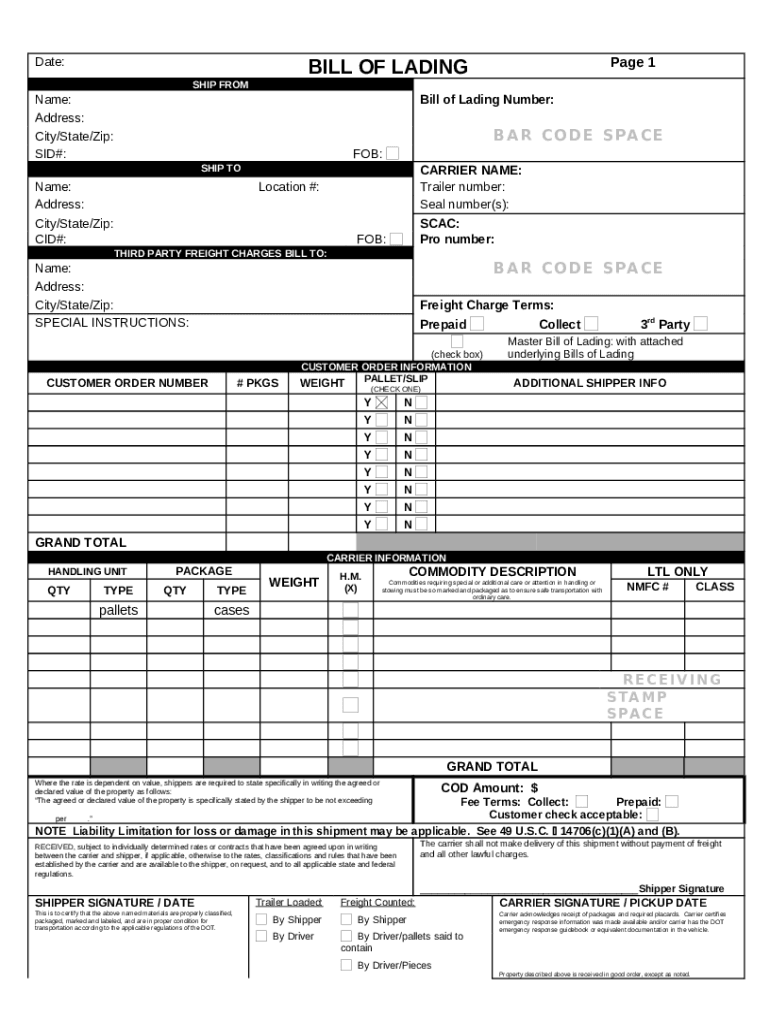







Definition & Meaning
A Bill of Lading (Shipsforsale) is a pivotal document in the shipping industry, serving dual purposes as both a shipping receipt and a contract between the shipper and carrier. This document outlines the agreement for the transportation of goods, specifying details such as the shipper and receiver information, freight charges, and handling instructions. Furthermore, it delineates the liabilities and responsibilities of each party, ensuring a clear framework for the conditions of delivery and payment. The Bill of Lading acts as a key instrument in the logistics chain, facilitating smooth operations between companies engaged in goods transportation.
How to Use the Bill of Lading (Shipsforsale)
Using the Bill of Lading (Shipsforsale) involves understanding its role in the shipping process and leveraging its features effectively. The document should be filled out carefully, ensuring all sections are completed accurately to reflect the agreement between the carrier and the shipper. Typical fields include the description of the goods, the quantity being shipped, and specific shipping instructions. Once completed, the Bill of Lading should be reviewed and signed by both parties to validate the contract. In practice, the Bill of Lading is presented to the carrier at the time of pickup, providing a receipt that confirms goods have been loaded and are being transported under specified conditions.
How to Obtain the Bill of Lading (Shipsforsale)
Obtaining a Bill of Lading (Shipsforsale) typically involves coordinating with the shipping company's logistics department or using an online portal where the form can be downloaded or electronically generated. Often, shipping companies provide standardized templates that can be tailored to specific shipments. In some cases, third-party services offer customizable Bill of Lading templates for different types of shipments. To acquire an accurate form, ensure that the template complies with industry standards and any specific requirements set by the parties involved in the shipment.
Steps to Complete the Bill of Lading (Shipsforsale)
- Shipper Details: Begin by entering the shipper’s full name and contact information.
- Receiver Information: Provide the name and address of the receiver.
- Description of Goods: Accurately describe the types, quantities, and condition of goods being shipped.
- Freight Charges: Specify who is responsible for freight charges and the payment terms.
- Handling Instructions: Outline any special handling requirements for the shipment.
- Signatures: Obtain signatures from both the shipper and carrier to confirm agreement.
Accurate completion of each step ensures the Bill of Lading fulfills its role as a legal contract and receipt.
Why You Should Use the Bill of Lading (Shipsforsale)
Utilizing a Bill of Lading (Shipsforsale) is essential for legal protection and operational efficiency in shipping transactions. This document provides proof of shipment and serves as a contractual agreement, reducing the risk of disputes regarding delivery responsibilities or payment terms. By detailing the shipment’s specifics, the Bill of Lading minimizes misunderstandings and helps streamline logistics processes. Moreover, it is a safeguard against liabilities, as it clearly outlines the carrier's and shipper's duties, making it a vital tool in business logistics.
Key Elements of the Bill of Lading (Shipsforsale)
The Bill of Lading (Shipsforsale) contains several critical elements, each serving a specific function:
- Shipper and Receiver Information: Contact details for both parties.
- Shipment Description: Nature and specifics of the goods or products being transported.
- Payment Terms: Details of freight charges and payment responsibilities.
- Handling Instructions: Specific guidelines for handling goods.
- Signatures: Acknowledgement from the shipper and carrier, validating the contract.
These elements are strategically designed to ensure clarity and enforceability of the shipping contract, reducing logistical hiccups.
Legal Use of the Bill of Lading (Shipsforsale)
The legal aspect of a Bill of Lading (Shipsforsale) cannot be overstated, as it functions as a binding agreement enforceable by law. It provides evidence of the carrier’s receipt of goods and the terms under which transportation is occurring. The document outlines liability limitations and details liabilities in case of goods loss or damage during transit. In legal disputes, a well-executed Bill of Lading is invaluable for proving compliance with agreed shipping terms and conditions, minimizing legal exposure and providing a basis for resolution.
Examples of Using the Bill of Lading (Shipsforsale)
Real-world scenarios better illustrate the versatility and importance of the Bill of Lading (Shipsforsale):
- Export Shipments: When exporting goods, the Bill of Lading serves as a document of title, enabling the transfer of ownership.
- Bulk Goods Shipping: For bulk shipments, the document specifies weight and volume for clarity in billing and customs documentation.
- Sensitive Cargo: It includes specific instructions for handling fragile or perishable goods, reducing the risk of damage.
Each example reflects the adaptability of the Bill of Lading, ensuring it meets the unique needs of various shipping scenarios.




