







Definition & Meaning
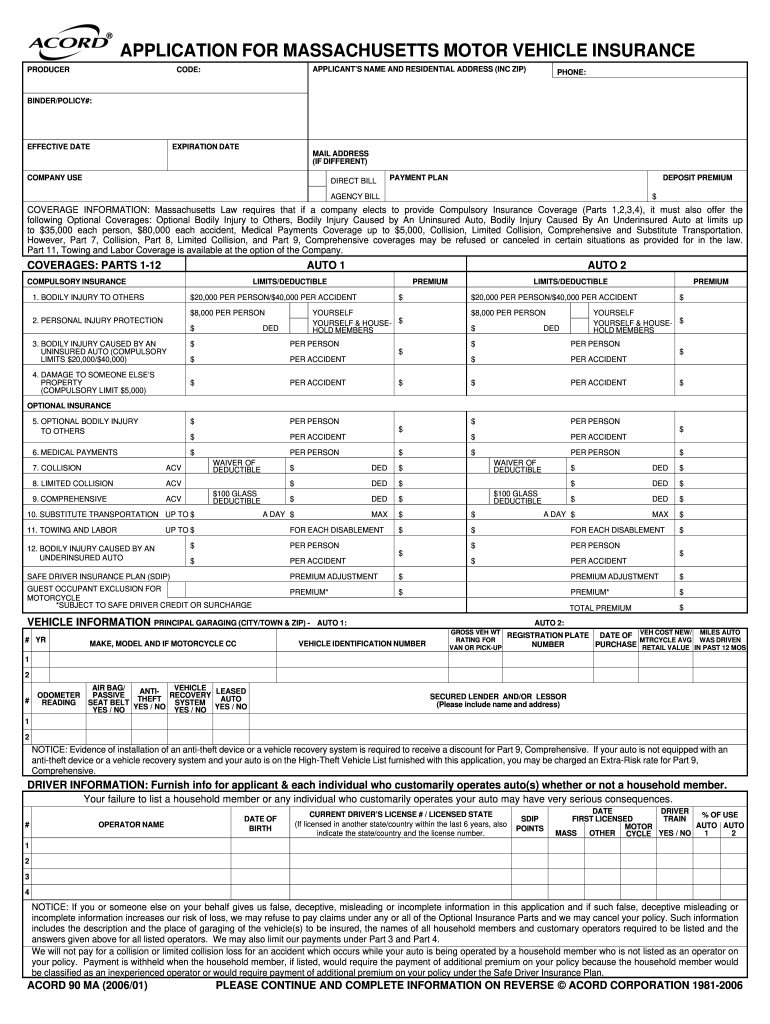
The "application for Massachusetts motor vehicle insurance form" is a document used to apply for vehicle insurance coverage within the state of Massachusetts. This form is essential for individuals seeking compliance with state insurance laws and acquiring financial protection for their vehicles. It serves as a detailed record of a driver's insurance needs and preferences, encompassing various insurance coverages as mandated by Massachusetts law. The form also collects critical personal, vehicle, and driving history information necessary for insurers to assess risk and determine premium rates.
Key Elements of the Application
The application form consists of several sections that gather vital information needed for processing. Key elements include:
- Applicant’s Personal Information: Name, address, contact details, social security number, and driver's license number.
- Vehicle Details: Make, model, year, vehicle identification number (VIN), and current odometer reading.
- Coverage Options: Selections for mandatory coverages such as bodily injury, property damage, and personal injury protection, along with optional coverages like collision and comprehensive insurance.
- Driver Information: Details about all drivers covered under the policy, including age, relationship to the primary applicant, and any historical driving violations.
- Declarations: Affirmation of the accuracy of the information provided and acknowledgment of terms and responsibilities.
How to Use the Application for Massachusetts Motor Vehicle Insurance Form
Using the application form effectively involves several steps to ensure all necessary information is accurately provided. Here’s a basic overview:
- Gather Information: Compile all relevant personal, vehicle, and driving history information before beginning the application.
- Select Coverage Options: Understand Massachusetts state insurance mandates, and choose additional coverages as necessary for comprehensive protection.
- Complete Each Section: Fill out each part of the form with precision, ensuring all data is current and factual.
- Review and Verify: Double-check the entire application to catch any errors or omissions that might delay processing.
- Submit the Form: Follow the submission guidelines to send the accurate and completed form to the insurance-provider.
Legal Use of the Application Form
The application form is a legal document used to formalize an insurance contract between the applicant and the insurance company. It must truthfully represent the applicant's insurability and comply with Massachusetts insurance regulations. Falsifying information can lead to the denial of insurance claims and potential legal consequences, emphasizing the importance of integrity when completing this form.
Steps to Complete the Application Form
Completion of the form requires detailed attention to ensure accuracy. Here is a step-by-step guide:
- Read Instructions: Familiarize yourself with form instructions to understand each section’s requirements.
- Enter Personal Details: Provide full name, address, and other identifying information.
- Detail Vehicle Specifications: Fill out vehicle-related inquiries with accurate, up-to-date details.
- Select Desired Coverages: Assess and choose the insurance coverage options that align with risk management needs.
- List All Drivers: Include information for all insured drivers, ensuring full disclosure.
- Sign Declarations: Electronically or manually sign the form to affirm the truthfulness of the provided information.
- Submit as Per Guidelines: Follow the insurer’s directions for mailing, emailing, or uploading the form to the appropriate platform.
Important Terms Related to the Form
Understanding specific terms is key to navigating the application process. Some important terms include:
- Bodily Injury Liability: Covers costs related to injuries sustained by others in an accident you are legally liable for.
- Property Damage Liability: Insures against damages to another individual's property while driving.
- Personal Injury Protection (PIP): Pays for the treatment of injuries to the policyholder and passengers.
- Collision Coverage: Covers loss or damage to the policyholder's vehicle resulting from a collision.
- Comprehensive Coverage: Protects against non-collision damages such as fire, theft, or vandalism.
State-Specific Rules for Massachusetts
Massachusetts has distinct rules regulating vehicle insurance:
- Mandatory Minimum Coverage: All drivers must carry a minimum amount of bodily injury liability, property damage liability, and personal injury protection.
- Insurance Verification: Massachusetts requires proof of insurance to be accessible in the vehicle at all times.
- No-Fault State: Massachusetts operates under a no-fault insurance system, requiring insurers to cover their policyholders' expenses regardless of fault in an accident.
Required Documents
When applying for a motor vehicle insurance policy in Massachusetts, ensure you have:
- Proof of Identity: Such as a valid driver's license.
- Vehicle Registration: Documentation proving vehicle ownership.
- Driving Records: A list of known violations or accidents relevant to all drivers listed on the application.
- Existing Insurance Policy: If applicable, details of your current coverage to avoid lapses during the transition.
By meticulously completing these necessary sections and understanding the implications of each element, individuals can navigate the Massachusetts motor vehicle insurance application with confidence.




