
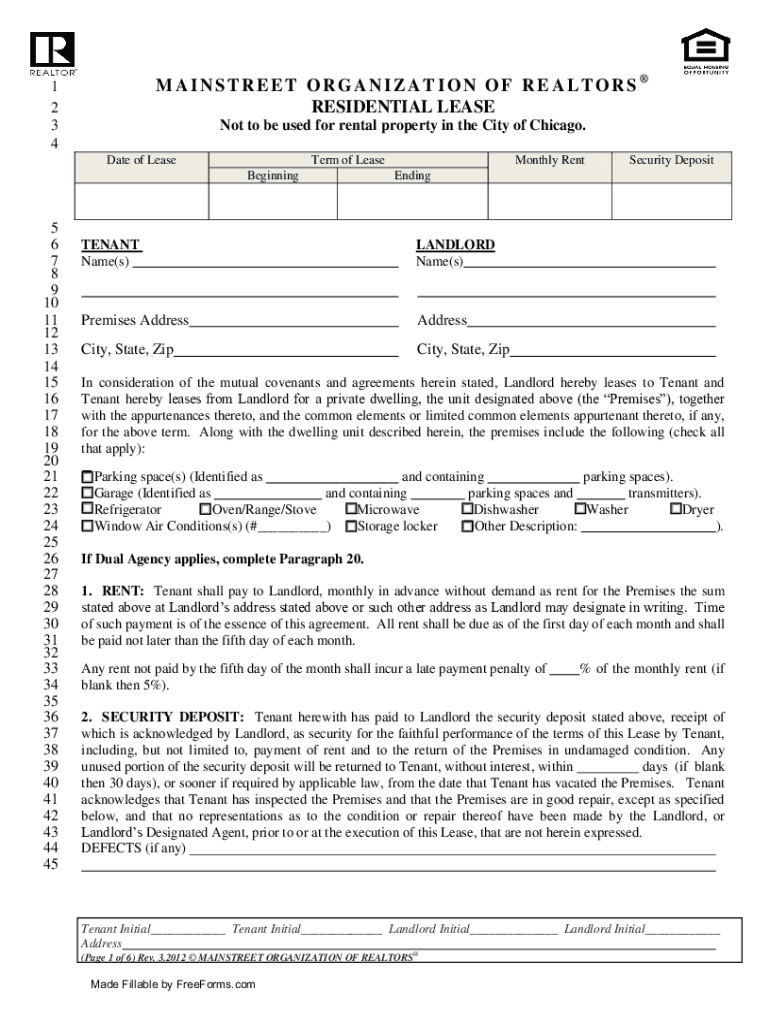







Definition and Purpose of the Mainstreet Organization of Realtors Residential Lease Agreement
The Mainstreet Organization of Realtors Residential Lease Agreement serves as a legal contract between landlords and tenants. Its primary purpose is to outline the terms and conditions governing the rental of residential property. This document ensures that both parties understand their rights and responsibilities, promoting a transparent and fair rental experience.
Key components included in the lease agreement are:
- Lease Term: This specifies the duration of the rental period, which can range from month-to-month to an annual agreement.
- Rent Details: The agreement stipulates the amount due each month, payment methods, and any penalties for late payments.
- Security Deposit: This section clarifies the amount of the security deposit, conditions for its return, and permissible deductions for damages caused by the tenant.
- Property Details: This includes the address and specific details about the rental unit, ensuring both parties are clear on the property being rented.
- Utilities and Maintenance Responsibilities: The document outlines who is responsible for which utilities and the maintenance of premises, helping to prevent disputes between the tenant and landlord.
By defining these key elements, the Mainstreet Organization of Realtors Residential Lease Agreement protects both parties and provides a framework for resolving disputes.
How to Use the Mainstreet Organization of Realtors Residential Lease Agreement
Using the Mainstreet Organization of Realtors Residential Lease Agreement effectively requires understanding its structure and contents.
-
Selection of Template: Begin by selecting the correct lease template provided by the Mainstreet Organization of Realtors. The form is available in various formats, including PDF, to ensure compatibility with editing tools.
-
Filling in Required Information: Enter information specific to the lease arrangement:
- Landlord and Tenant Details: Include names, contact addresses, and phone numbers.
- Property Information: Describe the rental property, including its address and any specific identification details.
- Financial Obligations: Clearly outline the rent amount, payment periods, and security deposit information.
-
Review Legal Obligations: Both parties should thoroughly review their responsibilities, including maintenance obligations and any restrictions on property use.
-
Signatures: Once both parties agree to the terms, they should sign and date the agreement. Ensure that all signatures are witnessed if required by local laws.
-
Distribution: Each party should keep a copy of the signed agreement for their records, ensuring that all terms are readily accessible in case of disputes.
This process ensures that the Mainstreet Organization of Realtors Residential Lease Agreement is used effectively, fostering a smooth landlord-tenant relationship.
How to Obtain the Mainstreet Organization of Realtors Residential Lease Agreement
Obtaining the Mainstreet Organization of Realtors Residential Lease Agreement is a straightforward process. The following steps can guide individuals seeking to acquire this important legal document:
-
Visit the Official Website: Navigate to the Mainstreet Organization of Realtors website or the designated document repository where the lease agreement template is available.
-
Select the Appropriate Form: Look for the residential lease agreement section. Ensure you select the form that corresponds to your needs, as various templates may cater to different rental situations.
-
Download: Once identified, download the form in your preferred format. Many users opt for PDF or DOC format for ease of use and compatibility with editing software.
-
Contact Mainstreet Organization: If needed, reach out to the Mainstreet Organization of Realtors for guidance on using the lease form, especially if unfamiliar with legal terminology or specific requirements.
This process provides a clear path to securing the Mainstreet Organization of Realtors Residential Lease Agreement, allowing for effective rental management.
Key Elements of the Mainstreet Organization of Realtors Residential Lease Agreement
The Mainstreet Organization of Realtors Residential Lease Agreement includes several key elements that are essential for a clear understanding of the rental terms.
-
Tenant and Landlord Information: Detailed identification of both parties helps establish clear responsibilities.
-
Term of Lease: This section highlights the duration of the rental agreement, indicating the start and end dates.
-
Rent Payment Terms: Clear stipulations regarding the monthly rent amount, due dates, acceptable payment methods, and penalties for late payment ensure financial transparency.
-
Security Deposit Conditions: Provisions regarding the collection, usage, and return of the security deposit are critical for protecting both the landlord's interests and the tenant's rights.
-
Maintenance Responsibilities: Outlining who is responsible for various maintenance tasks—ranging from minor repairs to major upkeep—prevents misunderstandings.
-
Alterations Clause: This specifies whether tenants are allowed to make changes to the property and under what conditions.
-
Termination Conditions: The agreement should provide clear guidelines on how either party can legally terminate the lease, including notice periods and acceptable reasons.
Understanding these key elements is vital for both landlords and tenants, as it establishes clear expectations and helps mitigate potential disputes throughout the lease term.
Important Legal Considerations for the Mainstreet Organization of Realtors Residential Lease Agreement
Legal considerations surrounding the Mainstreet Organization of Realtors Residential Lease Agreement are crucial for its enforceability and compliance with applicable laws.
-
State Laws: Different states impose specific regulations governing landlord-tenant relationships and lease agreements. Familiarity with local housing laws is necessary to ensure that the lease complies with these statutes.
-
Fair Housing Act: The agreement must adhere to the Fair Housing Act, which prohibits discrimination based on race, color, national origin, religion, sex, familial status, or disability in housing practices.
-
Local Housing Codes: Compliance with local health and safety codes is mandatory. The lease should ensure that the rental property meets all housing quality standards and that both parties are aware of their rights concerning safe living conditions.
-
Right to Privacy: The lease agreement should reflect the tenant's right to privacy while ensuring that landlords can enforce access rights for maintenance and safety inspections within reasonable time frames.
Understanding these legal aspects can prevent disputes and legal action, ensuring a smoother rental experience for both landlords and tenants.
Examples of Using the Mainstreet Organization of Realtors Residential Lease Agreement in Practice
Practical examples help illustrate how the Mainstreet Organization of Realtors Residential Lease Agreement functions in real-life scenarios.
-
Short-Term Rental Agreement: A landlord may use the Mainstreet Organization of Realtors Residential Lease Agreement to rent a property for a short-term basis, like month-to-month arrangements. The flexibility in this type of lease allows both parties to reassess their agreement frequently.
-
Long-Term Residential Lease: A standard case involves using the document for a year-long rental. The terms would clearly outline the rental rate, payment schedules, and security deposits, establishing a formal structure for the tenant's stay.
-
Co-Signing Scenario: If a young tenant requires a co-signer due to lack of credit history, the lease can include terms that outline the responsibilities and liabilities of the co-signer.
-
Negotiation of Terms: Tenants and landlords can negotiate specific terms, such as pet policies or maintenance responsibilities, which can be explicitly recorded in the lease to avoid future misunderstandings.
These examples highlight the versatility of the Mainstreet Organization of Realtors Residential Lease Agreement, demonstrating how it adapts to various rental situations and jurisdictions.




