




01. Edit your 14157 form online
Type text, add images, blackout confidential details, add comments, highlights and more.

Type text, add images, blackout confidential details, add comments, highlights and more.

Draw your signature, type it, upload its image, or use your mobile device as a signature pad.

Send 14817 form via email, link, or fax. You can also download it, export it or print it out.
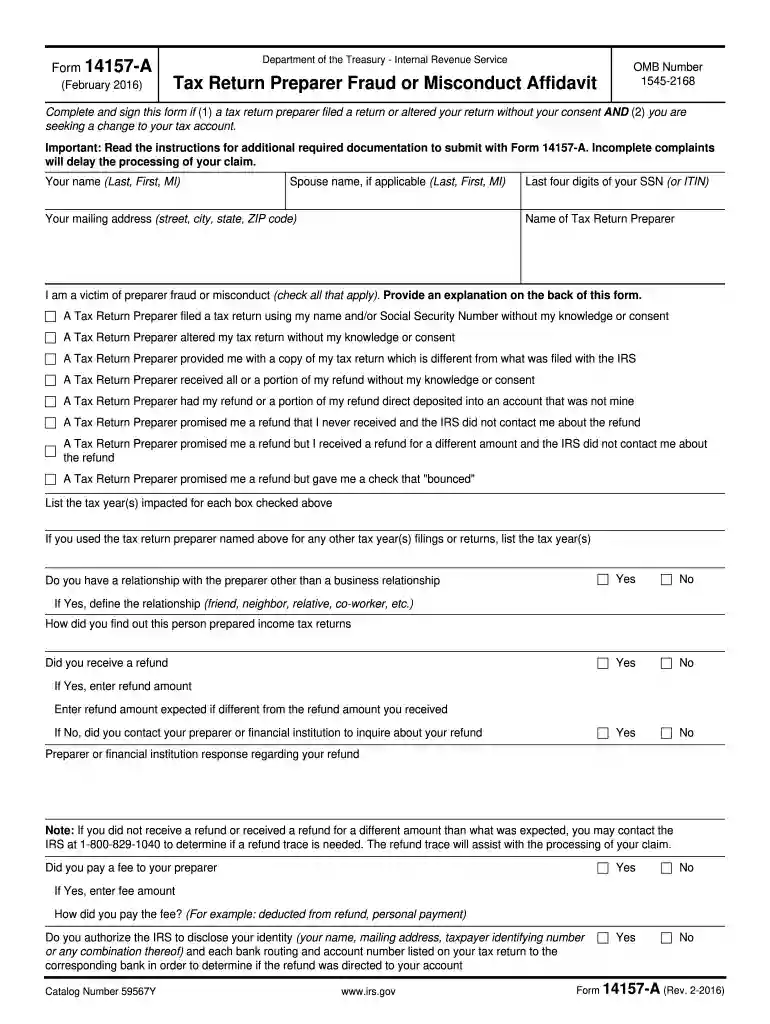
IRS Form 14157-A is a crucial affidavit for taxpayers to report fraud or misconduct by tax return preparers. This document serves as an official record to outline instances where a preparer has filed or altered tax returns without the taxpayer's consent. By documenting these occurrences, taxpayers can formally lodge complaints with the IRS, thus initiating an investigation into inappropriate actions by tax preparers.
Securing the IRS Form 14157-A can be done through various channels to ensure accessibility:
Properly completing the IRS Form 14157-A requires careful adherence to instructions to avoid processing delays. Here’s a step-by-step breakdown to guide taxpayers through the process:
The form is primarily utilized by individuals who suspect misconduct or fraudulent activity by their tax preparers. Typical users of the IRS Form 14157-A include:
Understanding the key components of the IRS Form 14157-A is critical for accurate completion. The main sections include:
The legal framework surrounding IRS Form 14157-A ensures that it is used appropriately to trigger investigations into fraudulent behavior. It is important to understand that:
Reporting untruthful information on IRS Form 14157-A or failing to use it correctly can lead to serious consequences. This includes:
The timely submission of the IRS Form 14157-A is crucial to ensure investigatory actions are taken promptly:
By following these detailed guidelines and ensuring comprehensive, correct information is submitted, taxpayers can effectively utilize IRS Form 14157-A to report and address preparer misconduct.
We've got more versions of the 14157 form form. Select the right 14157 form version from the list and start editing it straight away!
At DocHub, your data security is our priority. We follow HIPAA, SOC2, GDPR, and other standards, so you can work on your documents with confidence.
The tax preparer should complete Form 14157, Complaint: Tax Return. Preparer Prior Year (2015 2016). Form 945. Current Year (2017). Prior Year (2015 2016).Read more
Feb 4, 2021 Securities registered pursuant to Section 12(g) of the Act: None. Indicate by check mark if the Registrant is a well-known seasoned issuer,Read more
Use Form 14157 to file a complaint against a tax return preparer or tax preparation business. Tax professionals can use this form to report events that impactRead more


