
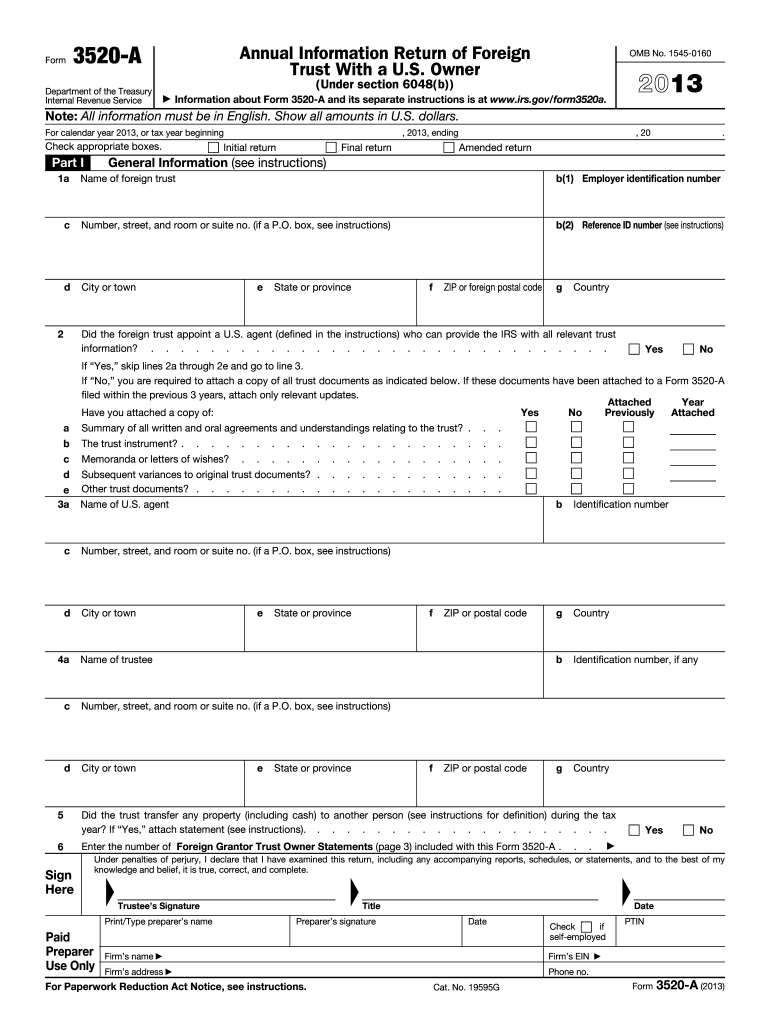







Definition and Purpose of the 2013 Form 3520
Form 3520, also known as the Annual Return to Report Transactions with Foreign Trusts and Receipt of Certain Foreign Gifts, is a critical document used by U.S. taxpayers. This form is required to report certain transactions with foreign trusts, ownership of foreign trusts, and the receipt of large foreign gifts or bequests. The primary aim of Form 3520 is to ensure compliance with U.S. tax regulations concerning foreign assets and financial interactions involving foreign entities.
Key Components of the Form
- General Information: The form captures basic details about the taxpayer and the foreign trust involved, including names, addresses, and identifying numbers.
- Trust Transaction Reporting: It necessitates reporting various transactions with foreign trusts, emphasizing distributions received or loans made to the trust owners.
- Foreign Gift Reporting: U.S. persons must report substantial gifts or inheritances from foreign individuals or estates that exceed specific threshold amounts.
Who Typically Uses the 2013 Form 3520
This form is commonly used by U.S. taxpayers who have significant interactions with foreign trusts or have received large gifts or inheritances from foreign sources. The individuals who might find themselves needing to file this document include:
- Trustees and Beneficiaries: Any U.S. person acting as a trustee, or beneficiaries of a foreign trust, might have filing obligations.
- Recipients of Foreign Gifts: Those receiving non-trivial gifts or bequests from foreign nationals or estates.
- U.S. Owners of Foreign Trusts: Individuals who are considered owners of a foreign trust’s assets for federal income tax purposes.


Steps to Complete the 2013 Form 3520
Filing Form 3520 requires a systematic approach to ensure all necessary details are accurately reported:
- Download the Form: Access the form from the IRS website to ensure you have the correct version.
- Gather Necessary Documents: Collect statements, transaction records, and any correspondence with the foreign trust or related parties.
- Provide Information on Transactions: Include detailed accounts of any distributions, loans, or interactions with the foreign trust during the tax year.
- Report Foreign Gifts: If applicable, note any gifts or bequests received above the threshold necessitating disclosure.
- Review and Sign: Double-check for completeness and accuracy before signing the form.
- Submit: File the completed form with your annual tax return by the due date specified by the IRS.
Filing Deadlines and Important Dates
The deadline to file Form 3520 typically aligns with the due date of the taxpayer’s income tax return, including any extensions. Generally, for a calendar year taxpayer, this occurs on April 15. Extensions for filing may grant additional time, often extending the deadline to October 15. It is crucial to adhere to these deadlines to avoid penalties.
Penalties for Non-Compliance
Failing to file Form 3520 or submitting incorrect information can attract significant penalties. The IRS imposes fines starting at $10,000 or could rise to 35% of the gross reportable amount for transactions with the foreign trust or the value of gifts received. Such severe penalties underscore the importance of accurate and timely filing.
How to Obtain the 2013 Form 3520
The 2013 Form 3520 can be acquired directly from the IRS website. It is available in both digital and printable formats, allowing taxpayers to choose between filling it out online or completing it manually on paper. Ensuring you have the correct version relevant to the reporting year is critical for compliance.
IRS Guidelines for 2013 Form 3520
The IRS provides comprehensive guidelines to aid in the correct completion of Form 3520. These guidelines outline filing instructions, provide examples of reportable transactions, and detail the types of foreign gifts that must be disclosed. Familiarizing yourself with these instructions is vital to ensure compliance with tax obligations.
Software Compatibility and Submission Methods
Form 3520 can be completed using various tax preparation software systems that cater to complex international tax reporting, such as TurboTax or QuickBooks. Taxpayers can choose to submit the form electronically via these platforms or print and mail a physical copy to the IRS. It is important to confirm that the software used is updated to include the 2013 form specifications.




