







Definition and Meaning
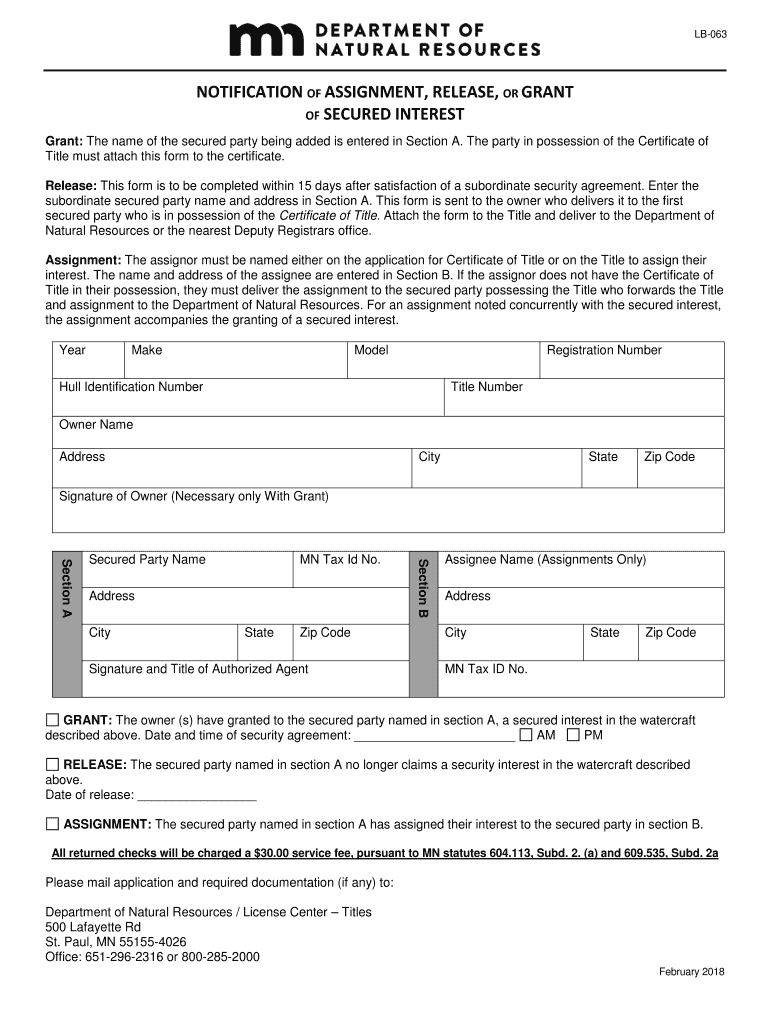
The "Notification of Assignment, Release, or Grant of Secured Interest" serves as a formal declaration related to the change in secured interests over an asset, often within contexts like real estate or personal property. It facilitates the communication of changes or updates in the rights of secured parties, which is crucial in ensuring that all stakeholders are informed of shifts such as assignments of interest, releases from past obligations, or new grants of secured interests.
How to Use the Notification of Assignment, Release, or Grant of Secured Interest
Utilizing this notification effectively requires familiarity with its role in the context of secured transactions. Here's a step-by-step guide:
-
Identification of Stakeholders: Clearly identify the involved parties, including assignor, assignee, and any secured parties.
-
Document Preparation: Gather all relevant documents proving ownership and past agreements. Include a comprehensive account of the transaction history.
-
Form Completion: Accurately fill out the form, ensuring all details such as names, addresses, and terms of the assignment, release, or new grant are recorded.
-
Verification: Double-check the filled form for accuracy and completeness, then share it with all involved parties for acknowledgement before submission.
Steps to Complete the Notification of Assignment, Release, or Grant of Secured Interest
Filling out the form involves several critical steps:
-
Acquire the Form: Obtain the form from relevant departments like the Department of Natural Resources or equivalent offices.
-
Detail the Secured Interest: Provide exact details regarding the nature of the secured interest, whether it is an assignment, release, or new grant.
-
Fill Personal and Transaction Details: Include the names, addresses, and role (e.g., assignor, assignee) of each party, along with a precise description of the asset involved.
-
Signatures: Ensure signatures from all parties involved are obtained to validate the transaction or change.
-
Submit the Form: After thorough review, submit the completed form to the relevant authority within the prescribed timeframe.
Key Elements of the Notification of Assignment, Release, or Grant of Secured Interest
The form comprises several crucial components:
-
Identification of Parties: Lists assignor, assignee, including any third parties such as lenders.
-
Asset Description: Detailed description of the asset or rights involved in the secured interest.
-
Transaction Nature: Clarification on whether the form represents an assignment, release, or new secured interest.
-
Signatories: All participants must sign, confirming their consensus and understanding of the transaction details.
Legal Use of the Notification of Assignment, Release, or Grant of Secured Interest
The legal utility of this notification lies in its ability to document and communicate changes in secured interests. It typically aligns with U.S. Uniform Commercial Code (UCC) regulations and may be required to perfect the interest, ensuring it holds up against conflicting claims by third parties.
Important Considerations
-
Jurisdiction: Ensure compliance with state-specific regulations that may affect filing requirements or interpretation.
-
Accuracy: Details must be meticulously verified to avoid legal disputes or rejection by authorities.
Who Typically Uses the Notification of Assignment, Release, or Grant of Secured Interest
This form is widely used across sectors involving secured transactions, commonly by:
-
Financial Institutions: Such as banks or lending companies involved in loans secured by collateral.
-
Business Entities: Engaged in mergers, acquisitions, or asset reallocation.
-
Legal Professionals: Acting on behalf of clients to formalize changes in secured interests.
-
Property Owners: Addressing property rights and transfers.


State-Specific Rules for the Notification of Assignment, Release, or Grant of Secured Interest
Each state in the U.S. may have distinct provisions and timelines for filing this notification. Essential differences may include:
-
Filing Procedures: Some states might require additional documentation or have specific forms different from others.
-
Registration Fees: Varying fee structures for filing the notification with state registrars.
-
Timing Requirements: Deadlines for submission can also differ, impacting when a notice must be filed post-transaction.
Examples of Using the Notification of Assignment, Release, or Grant of Secured Interest
Real-world scenarios exemplify the form's application:
-
Real Estate Transactions: Notification to change the secured interest due to a property's mortgage refinance.
-
Corporate Mergers: Updating or transferring secured interests among merging companies.
-
Loan Payoffs: Issuing a release once a loan secured by personal property is fully paid.
Required Documents
Effective preparation involves submitting pertinent documents alongside the notification:
-
Previous Security Agreements: To substantiate the current transaction.
-
Identification Proof: For all parties involved to verify identities.
-
Consent Documents: Consent forms or agreements, if applicable, illustrating all parties are informed and agree to the transaction modifications.
Penalties for Non-Compliance
Failure to properly submit this notification could result in various penalties:
-
Legal Challenges: Other parties may contest the validity of the claimed interest.
-
Fines and Penalties: Imposed by governmental bodies for non-compliance with statutory obligations.
-
Delayed Transactions: Complications may arise resulting in stalled or nullified asset transfers.
By following these guidelines and understanding the critical role the "Notification of Assignment, Release, or Grant of Secured Interest" plays in secured transactions, entities can ensure legal compliance and streamline procedural requirements efficiently.




