
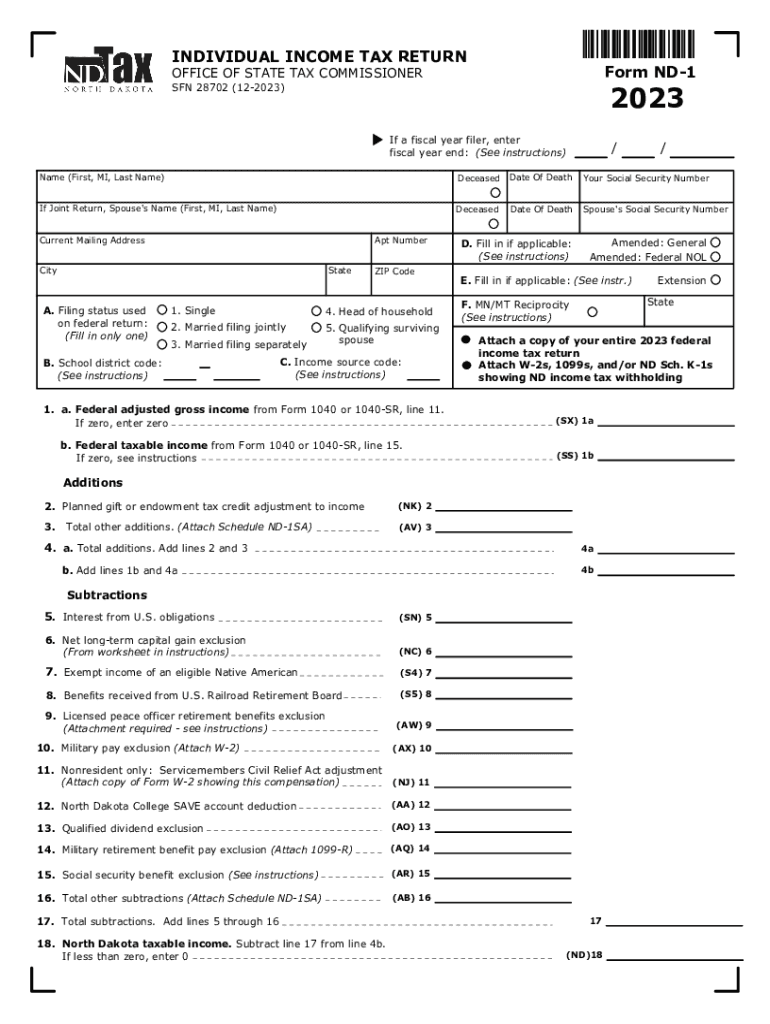







Definition and Purpose of Form ND-1
The ND-1 is the Individual Income Tax Return form for 2023, issued by the North Dakota Office of State Tax Commissioner. It allows taxpayers to report their financial status regarding income, deductions, credits, and tax liabilities. Critical components include personal information, filing status, income sources, tax calculations, and details about payments made or refunds due. The form is essential for residents of North Dakota to fulfill state income tax obligations.
How to Obtain Form ND-1
Form ND-1 can be accessed through several channels to accommodate different preferences and needs. It is available for download from the North Dakota Office of State Tax Commissioner's official website. Taxpayers can also acquire it in person from regional offices or through mail requests by contacting the state's tax department. For those using tax preparation software, the form is often integrated into these platforms, streamlining the filing process.
Steps to Complete Form ND-1
-
Personal Information: Begin by entering your personal details, including name, address, and social security number.
-
Filing Status: Choose the applicable filing status—options include single, married filing jointly, married filing separately, or head of household.
-
Income Reporting: Report all sources of income. This includes wages, dividends, and other taxable income.
-
Deductions and Credits: Enter eligible deductions and credits to lower your taxable income.
-
Tax Calculation: Calculate your tax liability using the provided instructions, taking into account any applicable deductions and credits.
-
Payments and Refunds: Report any tax payments already made and compute the final amount due or refund expected.
-
Signature and Submission: Review the completed form for accuracy, sign, and submit it through mail or electronic filing systems.
Who Typically Uses Form ND-1
Form ND-1 is primarily used by residents of North Dakota who need to file their state individual income tax returns. This includes individuals with various employment statuses such as full-time employees, self-employed professionals, and retirees. It is also applicable for part-year residents or nonresidents who earn income within the state.
Key Elements of Form ND-1
- Personal and Filing Information: Basic details and filing status.
- Income Details: Comprehensive reporting of all income types.
- Adjustments: Space to include deductions, adjustments, and credits.
- Tax Calculation: Steps to compute tax liabilities.
- Payments and Refund Information: Details to determine overpayments or amounts owed.
State-Specific Rules for ND-1
North Dakota has distinct guidelines that influence the completion of Form ND-1. For instance, the state may have unique tax credits available only to its residents. Furthermore, North Dakota offers specific instruction sheets to ensure taxpayers meet all state-specified requirements when completing the form. Residents must be aware of any state-specific deadlines which might differ from federal timelines.
Filing Deadlines and Important Dates
Typically, the filing deadline for Form ND-1 aligns with the federal tax deadline, which is April 15. However, if this date falls on a weekend or holiday, the deadline is pushed to the next business day. It is crucial for taxpayers to stay updated on any changes to deadlines, which can occur due to legislative adjustments or other state-level decisions.
Required Documents for ND-1
When preparing Form ND-1, taxpayers should have access to:
- W-2 forms for income documentation.
- 1099 forms for dividends and other non-wage income.
- Records of deductible expenses and qualifying credits.
- Proof of payments made towards estimated taxes.
These documents ensure accurate reporting and compliance with state tax requirements.
Form Submission Methods
Form ND-1 can be submitted through multiple channels:
- Online: Electronic submission through the official state tax commissioner's website or approved tax software.
- Mail: Physical forms can be mailed to the specified address detailed in the form’s instructions.
- In-Person: Submission can also be completed at designated North Dakota tax offices.
Penalties for Non-Compliance
Failure to file Form ND-1 or inaccuracies in filing can result in penalties from the state tax authority. These penalties may include fines, interest on unpaid taxes, and possible audits. Ensuring timely and accurate filing can prevent these consequences. Taxpayers are encouraged to consult with tax professionals if they have doubts or complex filing situations.
Software Compatibility with ND-1
Numerous tax preparation software programs incorporate support for Form ND-1, including popular solutions like TurboTax and QuickBooks. These platforms simplify the filing process by providing guided prompts, automatically populating fields based on user input, and allowing the electronic submission of tax forms directly through the software. This integration offers a more efficient means of managing tax responsibilities for North Dakota residents.




